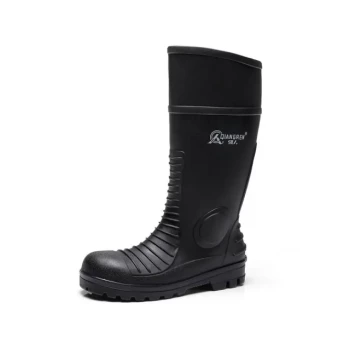
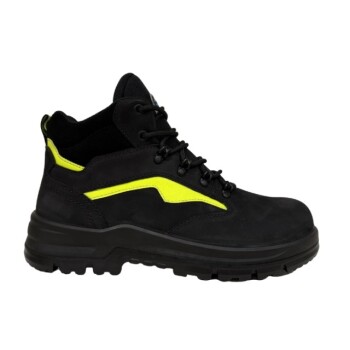
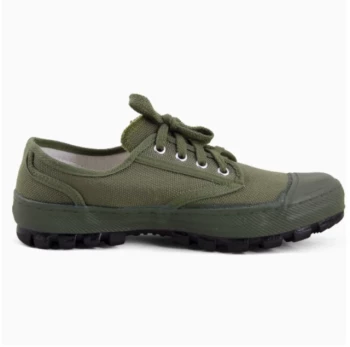
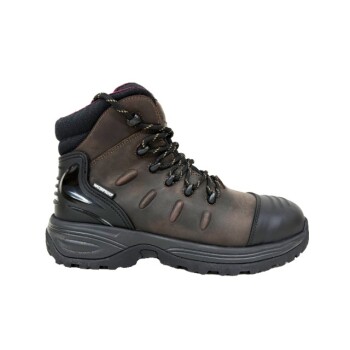
Macrofoam swab sampling is a fundamental verification method used to confirm that personnel are not physically transporting hazardous biological agents out of industrial zones. By sampling both the deep treads of the sole and the interior of the boot, safety teams can identify if pathogenic spores are effectively contained or if they are being tracked into clean environments like offices and homes.
Work boots act as primary vectors for cross-contamination between production environments and clean zones. Swab sampling provides the empirical data required to map transmission paths and validate the effectiveness of your decontamination procedures.
Preventing Cross-Contamination
The Boot as a Biological Carrier
Work boots maintain constant, direct contact with the production floor, making them the most likely equipment to pick up contaminants.
Because they bridge the gap between the industrial site and the outside world, they pose a high risk of physically carrying harmful microorganisms.
Sampling identifies if this protective equipment has become a vehicle for hazard transmission.
Protecting Clean Zones
The primary goal of this sampling is to protect areas that should remain uncontaminated, such as administrative offices and employee homes.
Without rigorous sampling, there is no way to know if pathogenic spores are migrating off-site on the footwear of your personnel.
This protects the community and family members from occupational hazards that should remain isolated at the site.
Optimizing Safety Protocols
Mapping Transmission Paths
Data derived from macrofoam swabs allows safety officers to visualize exactly how hazards are moving through a facility.
By analyzing where positive samples occur—whether on the sole or the interior—you can trace the specific "occupational hazard transmission paths."
This insight reveals breaches in containment zones that might otherwise go unnoticed.
Verifying Decontamination Effectiveness
Sampling is the only objective way to determine if your current decontamination procedures are actually working.
If post-operation swabs return positive results for spores, it indicates that the cleaning protocols are insufficient.
This allows for immediate optimization of hygiene stations to ensure boots are truly clean before they leave the "dirty" zone.
Understanding the Trade-offs
The Risk of Partial Assessment
A common pitfall is sampling only the exterior treads while neglecting the interior of the boot.
Harmful microorganisms can bypass external defenses, and failing to sample the interior leaves a blind spot in your safety data regarding direct personnel exposure.
Comprehensive assessment requires swabbing both surfaces to ensure the entire piece of equipment is free from pathogenic spores.
Making the Right Choice for Your Goal
To ensure your industrial hygiene program is effective, apply the sampling results based on your specific objectives:
- If your primary focus is Hazard Containment: Prioritize sampling exterior sole treads to ensure spores are not physically tracking into clean zones or homes.
- If your primary focus is Protocol Validation: Use the sampling data to rigorously test and adjust your decontamination procedures until swabs consistently return negative results.
Systematic swab sampling transforms boot hygiene from a passive assumption into a verified, data-driven safety barrier.
Summary Table:
| Sampling Area | Focus of Analysis | Primary Safety Objective |
|---|---|---|
| Exterior Sole | Deep treads and debris | Prevent tracking hazards into clean zones and homes |
| Interior Lining | Personnel perspiration/spores | Identify direct exposure and internal containment breaches |
| Tread Crevices | Bio-agent accumulation | Validate the effectiveness of mechanical decontamination |
| Full Surface | Total microbial load | Map facility-wide hazard transmission pathways |
Secure Your Global Footwear Supply Chain with 3515
As a large-scale manufacturer serving distributors and brand owners worldwide, 3515 delivers more than just footwear—we provide a verified safety barrier for industrial environments. Our comprehensive production capabilities cover all footwear types, from our flagship Safety Shoes series to specialized work and tactical boots, outdoor shoes, training sneakers, and professional Dress & Formal footwear.
By partnering with 3515, you gain a manufacturing ally committed to durability and hygiene standards that simplify your decontamination protocols. Whether you need to meet diverse bulk requirements or develop high-performance protective gear for hazardous zones, we offer the scale and expertise to support your brand's growth.
Ready to elevate your inventory with industry-leading safety footwear?
Contact Us Today to Discuss Your Bulk Requirements
References
- Patrick Dawson, Alex R. Hoffmaster. Epidemiologic Investigation of Two Welder’s Anthrax Cases Caused by Bacillus cereus Group Bacteria: Occupational Link Established by Environmental Detection. DOI: 10.3390/pathogens11080825
This article is also based on technical information from 3515 Knowledge Base .
Related Products
- Durable Leather Work Boots for Wholesale & Custom Manufacturing
- Durable Leather Work Boots for Wholesale & Custom OEM Manufacturing
- Durable Leather Work Boots Wholesale Manufacturer & Custom Factory
- Durable Leather Moc Toe Work Boots for Wholesale & Custom Manufacturing
- Wholesale Leather Work Boots with Customizable Wedge Sole for Brands
People Also Ask
- What is the difference between full-grain and top-grain leather? Premium Material Guide for Boot Manufacturers
- What are the common workplace hazards that can be mitigated with the right work boots? Protect Your Workforce
- What are the common foot issues workers face due to uncomfortable work boots? Prevent Pain & Deformities
- What are the advantages of leather versus synthetic work boots? A Guide to Choosing the Right Material
- What are the key components of modern work boots? Engineered for Ultimate Durability and Comfort