Properly storing your moc toe boots is a simple discipline that protects your investment by focusing on three critical factors: a controlled environment, structural support, and pre-storage preparation. This ensures the leather remains healthy and the boot's iconic shape is preserved between wears.
The goal of storage isn't just to put your boots away; it's an active process of preservation. The right conditions prevent the degradation of leather and maintain the boot's foundational structure, directly extending its functional lifespan.
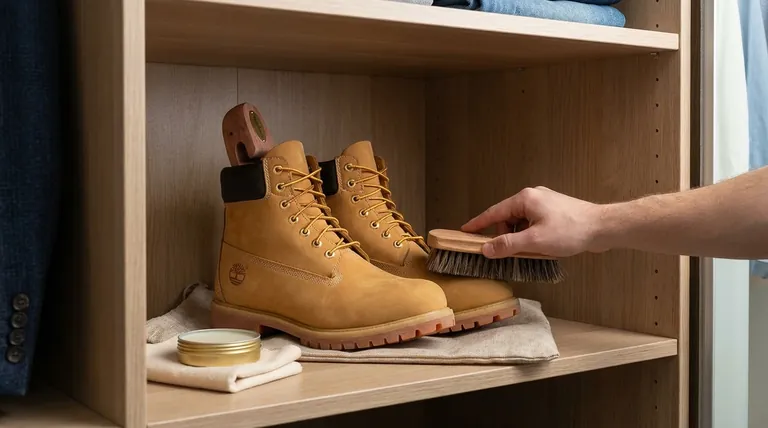
The Core Principles of Proper Storage
To effectively preserve your boots, you must manage their environment and provide internal support. These two areas work together to combat the common causes of wear and damage that occur even when boots aren't being worn.
Controlling the Environment
The surrounding air, temperature, and light have a significant impact on leather health.
-
Find a Cool, Dry Location: Extreme temperatures can cause leather to dry out and crack. High humidity creates an ideal environment for mold and mildew, which can permanently damage the material. A closet is far better than a garage or basement.
-
Avoid Direct Sunlight: UV rays from the sun will bleach the color out of the leather and accelerate the process of it becoming dry and brittle. Never store boots on a windowsill or in a spot that gets direct, sustained sunlight.
-
Ensure Proper Airflow: Leather needs to breathe. Storing boots in sealed plastic containers or bags traps moisture, which can lead to mildew. It's best to keep them on an open shelf or in a breathable shoe bag.
Maintaining Structural Integrity
The unique shape of a moc toe boot is prone to creasing and collapsing without proper support.
-
Use Shoe Trees: This is the single most important step. Shoe trees, preferably made of cedar, absorb residual moisture and odor from your feet while maintaining the boot's original shape. They prevent deep creases from setting into the vamp and toe box.
-
Clean Before Storing: Always brush off any dirt, dust, or salt before putting your boots away. Abrasive particles can work their way into the leather over time, weakening the fibers. For stubborn stains, a damp cloth is sufficient.
-
Condition for Long-Term Storage: If you're storing the boots for an entire season, apply a quality leather conditioner after cleaning. This keeps the leather supple and prevents it from drying out over several months of inactivity.
Common Pitfalls to Avoid
Many well-intentioned storage methods can inadvertently cause damage. Understanding these common mistakes is crucial for preserving your footwear.
The Problem with Airtight Containers
While it may seem like a good way to protect from dust, storing boots in a sealed plastic bin is a mistake. It traps moisture and eliminates airflow, creating a perfect breeding ground for mold.
The Risk of Stacking or Crowding
Never stack boots on top of each other or cram them into a tight space. This pressure can permanently deform the leather, create scuffs, and prevent the materials from airing out properly.
Forgetting to Rotate Footwear
Even with perfect storage, wearing the same boots every single day prevents them from fully drying out. Giving them at least a day to rest with shoe trees inserted is essential for their long-term health.
Making the Right Choice for Your Goal
Your storage strategy can be adapted based on how frequently you wear your boots.
- If your primary focus is daily wear: The most critical habit is inserting cedar shoe trees immediately after taking the boots off and letting them air out overnight.
- If your primary focus is seasonal storage: Ensure the boots are meticulously cleaned and conditioned, insert shoe trees, and place them in a dark, well-ventilated closet away from temperature extremes.
Ultimately, treating storage as an essential step in your boot care routine guarantees your investment will serve you well for years to come.
Summary Table:
| Storage Factor | Key Consideration | Why It Matters |
|---|---|---|
| Environment | Cool, dry, dark location with airflow | Prevents mold, mildew, and leather drying/cracking |
| Structure | Use cedar shoe trees | Maintains boot shape and absorbs moisture/odors |
| Preparation | Clean and condition before long-term storage | Removes damaging particles and keeps leather supple |
| Common Mistakes | Avoid airtight containers and stacking | Prevents moisture trapping and permanent deformation |
Ready to build a durable, high-quality footwear collection?
As a large-scale manufacturer, 3515 produces a comprehensive range of footwear for distributors, brand owners, and bulk clients. Our production capabilities encompass all types of shoes and boots, including durable moc toe styles built to last with proper care.
Let us help you source or create the perfect boots for your market. Contact our team today to discuss your manufacturing needs and explore our catalog.
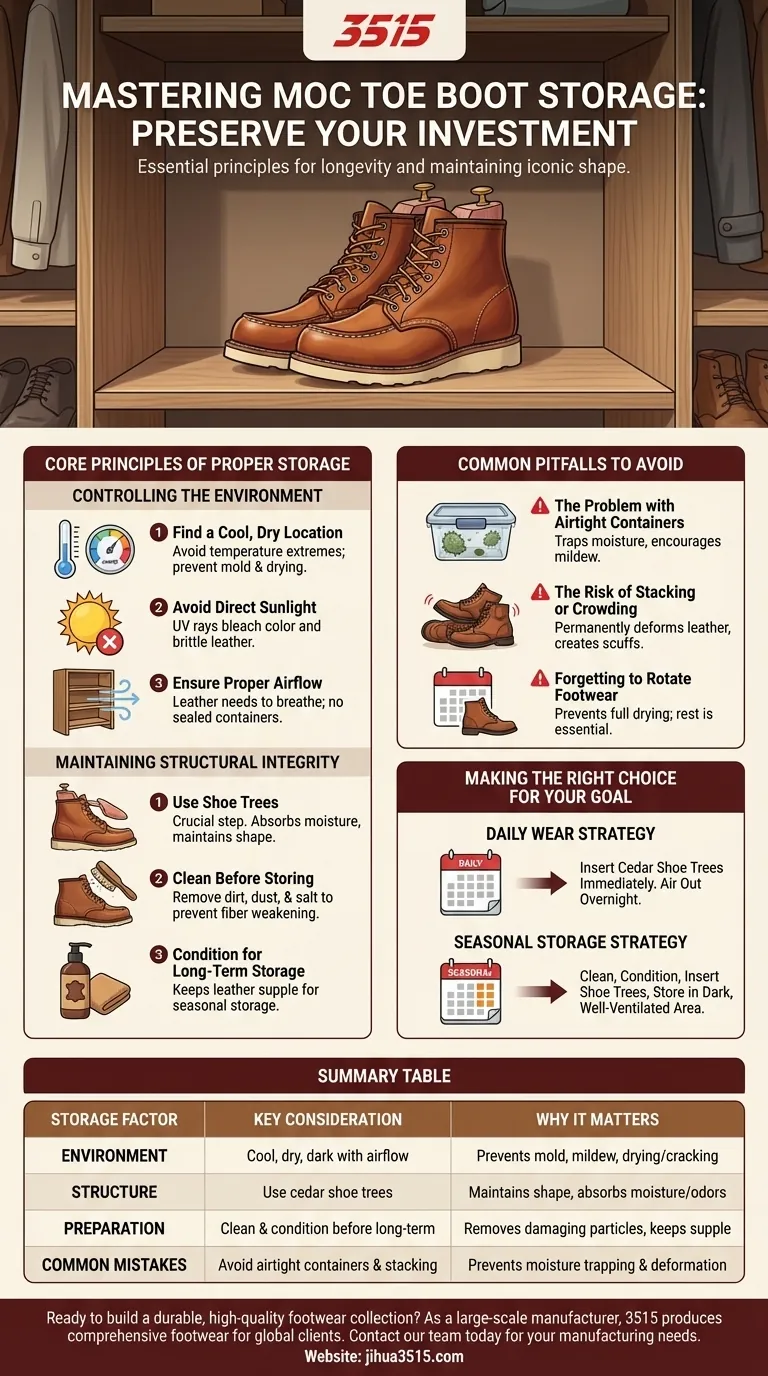
Visual Guide
Related Products
- Durable Leather Moc Toe Work Boots for Wholesale & Custom Manufacturing
- Durable Moc Toe Wedge Sole Work Boots for Wholesale and Private Label
- Durable Moc-Toe Wedge Work Boots | Wholesale Manufacturing for Brands
- Wholesale Durable Safety Boots Manufacturer Customizable Steel Toe Work Boots
- Wholesale Customizable Safety Boots Durable & Protective Footwear Manufacturing
People Also Ask
- What are moc toe work boots designed for? Superior Comfort and Mobility for Tradespeople
- What are the key features to look for when purchasing moc toe boots? A Guide to Durability & Fit
- How did moc toe boots originate? A Legacy of Workwear Durability and Style
- What clothing items complement the Outdoorsman/Heritage Look with moc toe boots? Build a Timeless, Rugged Wardrobe
- What types of outfits can moc toe boots be worn with? Versatile Style Guide