
Properly styling your boots is important because it is the fastest way to either elevate or undermine your entire outfit. The right pairing creates a cohesive, intentional look suitable for a wide range of occasions, while the wrong choice can make an otherwise well-assembled outfit appear clumsy and uncoordinated. It's the critical final detail that signals polish and understanding.
The core principle is not about memorizing rules, but about understanding how a boot's design—its shape, material, and height—interacts with the proportions and formality of your clothing to create a balanced and purposeful silhouette.
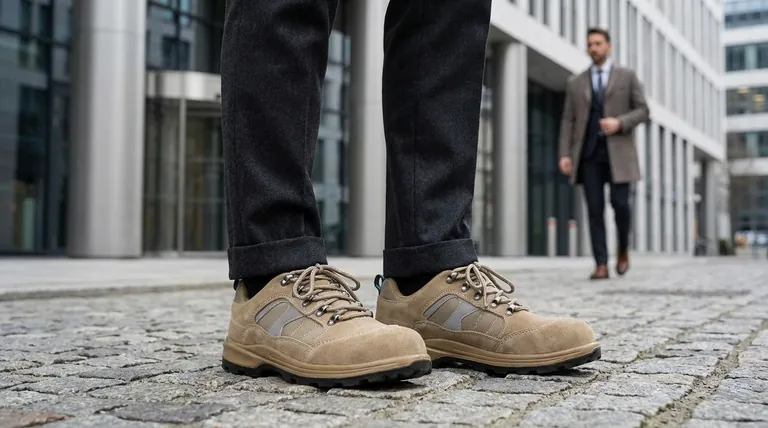
The Foundation of a Cohesive Outfit
Getting your boots right means they should support your outfit, not compete with it. This synergy is achieved by paying attention to the fundamentals of proportion and formality.
Aligning Formality Levels
Every boot has a built-in level of formality. A rugged, thick-soled work boot is inherently casual, while a sleek, polished leather Chelsea boot leans more formal.
The primary goal is to match the boot's formality to the rest of your attire. Pairing hiking boots with a business suit creates a visual clash because the contexts are mismatched.
Balancing Proportions
The interaction between your trousers and your boots is critical. The width of your pant leg opening should complement the boot's shaft.
For example, slim-fit jeans work best with slender boots, allowing the pant leg to sit cleanly over the top. Trying to force a slim pant over a bulky, wide-shaft boot creates awkward bunching and ruins the line of the leg.
Creating a Deliberate Silhouette
Boots anchor your entire look. A higher-shaft boot worn with a tucked-in pant can create a longer, uninterrupted leg line, making you appear taller.
Conversely, a heavier boot can provide a strong, grounded foundation for more substantial cold-weather layers, ensuring your frame doesn't look top-heavy.
Common Pitfalls to Avoid
Many common styling mistakes can be easily corrected by understanding a few key interaction points between your boots and your pants.
The Awkward Trouser-Boot Gap
One of the most frequent errors is a visible gap of sock or skin between the top of the boot and the hem of the pants when standing.
Your pants should be long enough to cover the top of the boot shaft entirely. This creates a seamless transition that elongates your silhouette.
Ignoring the Pant 'Break'
The "break" refers to how much your pant hem folds or creases when it hits the top of your footwear. A slim boot pairs well with little to no break for a sharp, modern look.
Heavier, more rugged boots can handle a fuller break or even a "stack" of fabric, which contributes to a more casual, relaxed aesthetic. The wrong break-to-boot combination looks unintentional.
Mismatched Visual Weight
This goes beyond formality and into texture and bulk. A delicate suede chukka boot can be visually overwhelmed by heavy, raw denim or thick corduroy.
Likewise, a substantial combat boot can look out of place with lightweight linen or fine-wool trousers. Ensure the visual weight of your boots and pants feels balanced.
Making the Right Choice for Your Goal
To apply these principles effectively, start by defining the aesthetic you want to achieve with your outfit.
- If your primary focus is a sharp, business-casual look: Pair sleek leather boots like Chelseas or dress chukkas with tailored trousers or dark-wash denim that has a clean hem and no break.
- If your primary focus is a rugged, everyday style: Choose work boots or combat boots and allow your jeans or canvas pants to stack naturally over the top for an effortless, practical feel.
- If your primary focus is maximum versatility: Select a classic boot in brown or black leather with a simple silhouette, which gives you the flexibility to dress it up or down with nearly any pant in your wardrobe.
Mastering these fundamentals transforms your boots from simple footwear into a deliberate and impactful style statement.
Summary Table:
| Key Styling Principle | Goal | Common Mistake to Avoid |
|---|---|---|
| Align Formality | Match boot style to outfit context (e.g., casual vs. formal). | Pairing rugged work boots with a business suit. |
| Balance Proportions | Ensure pant leg width complements boot shaft. | Forcing slim pants over bulky boots, causing awkward bunching. |
| Create a Silhouette | Use boot height to elongate or ground your frame. | A visible gap of sock/skin between pant hem and boot top. |
| Match Visual Weight | Balance texture and bulk between boots and pants. | Wearing delicate boots with heavy fabrics, or vice versa. |
Ready to Build Your Perfect Boot Collection?
As a large-scale manufacturer, 3515 produces a comprehensive range of footwear for distributors, brand owners, and bulk clients. Our production capabilities encompass all types of boots—from sleek leather Chelseas to rugged work boots—ensuring you have the right styles to meet any market demand.
Partner with us to:
- Access a vast catalog of high-quality boots designed for every style and occasion.
- Ensure consistent supply for your retail or brand needs with our reliable manufacturing scale.
- Deliver on-trend products that help your customers master their style.
Contact 3515 today to discuss your footwear requirements and discover how we can support your business growth.
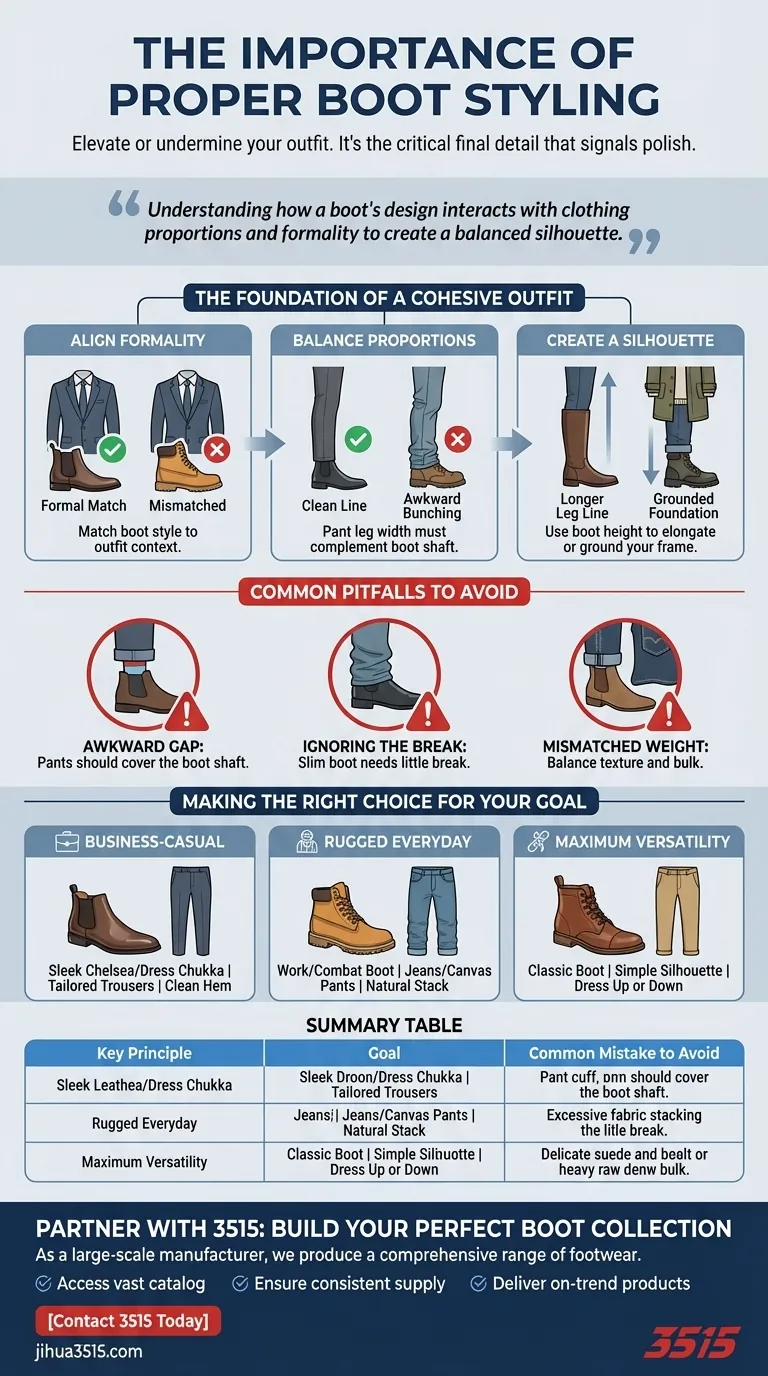
Visual Guide
Related Products
- Wholesale Durable Safety Boots | Custom Steel Toe & Puncture-Resistant Manufacturing
- Premium Wholesale Tactical Style Safety Shoes Boots with Quick Lacing
- Durable Goodyear Welt Leather Work Boots for Wholesale & Private Label
- Premium Wholesale Waterproof Safety Boots High Performance Protection for Industrial Markets
- Durable Leather Work Boots for Wholesale & Custom Manufacturing
People Also Ask
- What are the consequences of not wearing safety boots? Protect Your Finances and Career
- Why is proper storage important for safety boots? Preserve Protection and Extend Lifespan
- What are the key features of safety boots? Essential Protection for Hazardous Workplaces
- How should safety boots be cleaned to avoid damage? A Gentle Guide to Preserve Your Boots
- What are the risks of using ordinary rubber boots in forest clearing? Why professional safety boots are essential



















