
Keeping your walking boot dry is a critical component of a safe and successful recovery. A damp environment inside the boot creates a breeding ground for bacteria and fungi, leading to significant skin irritation, unpleasant odors, and a serious risk of infection. This danger is especially high if you are healing from surgery or have an open wound.
The core principle is simple: a walking boot is a medical device designed to support healing, but moisture transforms it from a protective tool into a potential source of complications. A dry environment is essential to maintain skin integrity and prevent infections that can delay your recovery.
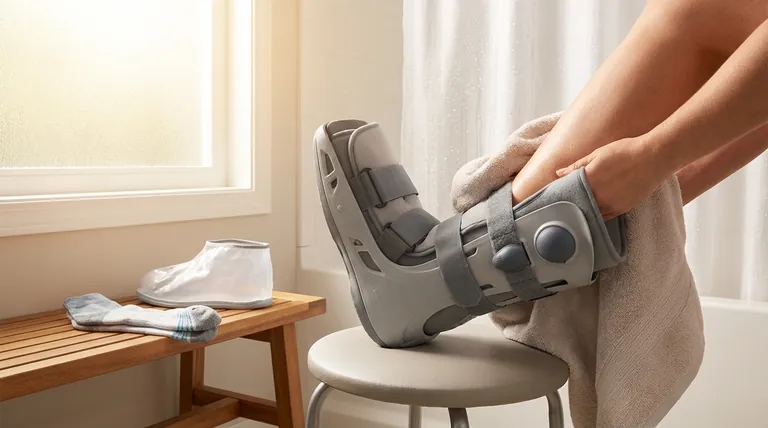
The Risks of a Damp Environment
The space inside your boot is naturally warm and dark. When you add moisture from sweat, bathing, or weather, you create the perfect conditions for problems to develop.
Compromising Your Skin's Natural Barrier
Your skin is your body's first line of defense. Prolonged exposure to moisture softens and breaks down the outer layers of your skin, a process called maceration. This weakened skin is far more susceptible to friction, rashes, and breakdown.
Creating a Breeding Ground for Bacteria
Bacteria and fungi thrive in warm, damp, and dark places. A moist boot liner becomes an ideal incubator, allowing these microorganisms to multiply rapidly. This buildup is the primary cause of skin infections and persistent, unpleasant odors.
The Direct Threat to Wounds and Incisions
For anyone recovering from surgery or managing a wound, moisture is a significant threat. Bacteria introduced into a damp wound can lead to a serious infection, a major medical complication that can compromise healing, require additional treatment, and significantly set back your recovery timeline.
Common Pitfalls to Avoid
Maintaining a dry boot requires conscious effort. Overlooking simple daily habits is the most common reason patients experience moisture-related complications.
Neglecting Daily Hygiene
The boot is not a "set it and forget it" device. You must clean and dry your foot and leg daily. It's also crucial to allow the boot's liner to air out completely to prevent a cumulative buildup of sweat and bacteria.
Using the Wrong Type of Sock
Cotton socks are a poor choice for a walking boot as they absorb and hold moisture directly against your skin. This keeps the skin in a constant state of dampness, promoting irritation.
Ignoring Environmental Moisture
Showering without a proper, waterproof boot cover or walking in the rain can saturate the boot's liner. This introduces a large amount of moisture that will not evaporate easily on its own and creates an immediate high-risk environment.
A Practical Checklist for a Dry, Healthy Recovery
Your specific situation dictates your primary focus. Use these guidelines to manage moisture effectively.
- If you have a surgical incision or open wound: Your absolute priority is preventing infection by using a waterproof cover for bathing and keeping the area meticulously clean and dry at all times.
- If your primary concern is skin health and comfort: Focus on wearing moisture-wicking synthetic or wool socks and consider using foot powders to absorb excess sweat throughout the day.
- If you are concerned about preventing odor: Ensure you allow the boot's liner to air out overnight and wipe it down with a damp cloth as needed, allowing it to dry completely before you wear it again.
Proactive moisture management is the key to ensuring your walking boot aids your recovery, rather than hindering it.
Summary Table:
| Risk of a Damp Boot | Key Consequence | Prevention Tip |
|---|---|---|
| Skin Maceration | Softens skin, increases friction & rash risk | Use moisture-wicking socks, keep skin dry |
| Bacterial/Fungal Growth | Leads to infection and unpleasant odors | Air out the boot liner daily, clean regularly |
| Wound/Surgical Site Contamination | Can cause serious infection, delaying recovery | Use a waterproof cover for bathing, keep area clean |
Ensure a Comfortable and Infection-Free Recovery with High-Quality Footwear
As a large-scale manufacturer, 3515 produces a comprehensive range of medical and protective footwear for distributors, brand owners, and bulk clients. Our expertise ensures products that support healing by prioritizing materials and designs that aid in moisture management and skin health.
Let us help you provide your customers with reliable recovery solutions. Contact our team today to discuss your footwear needs and explore our production capabilities.
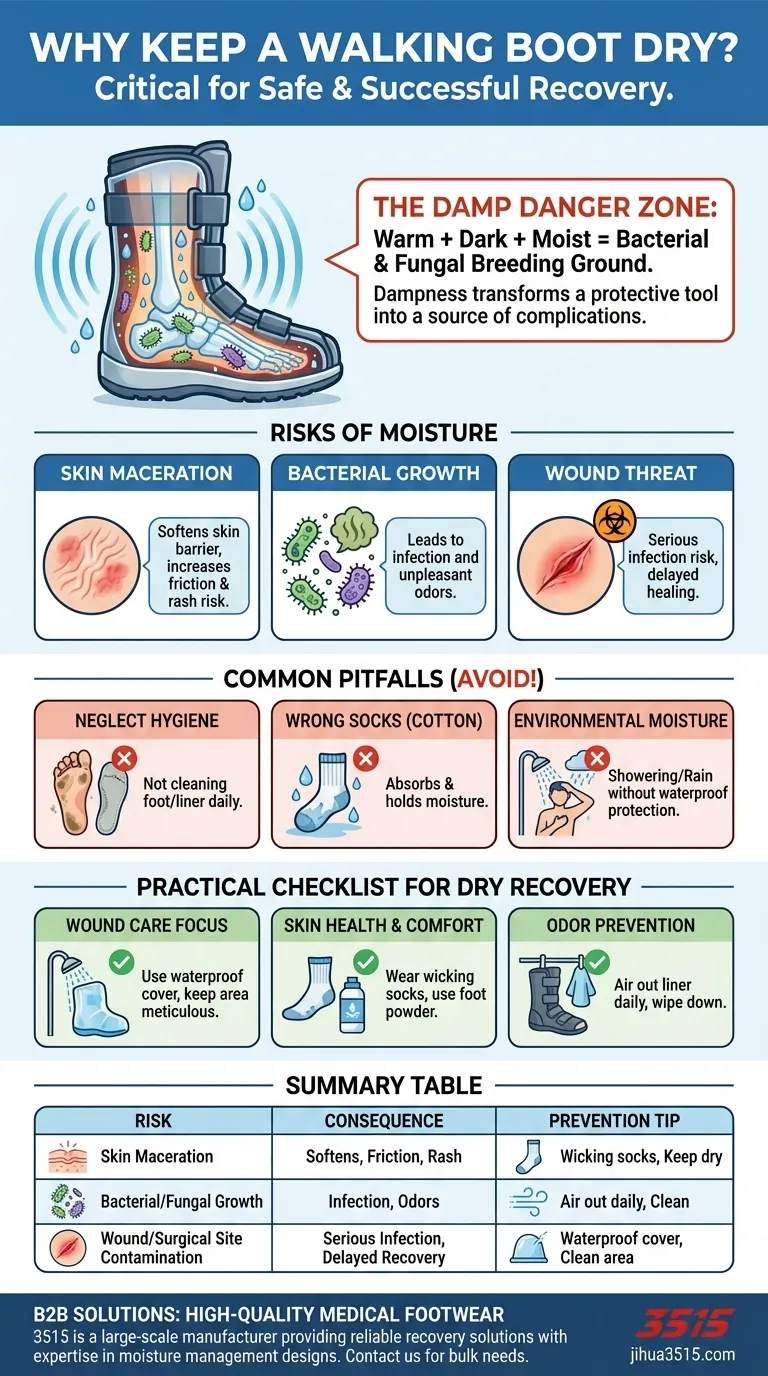
Visual Guide
Related Products
- Wholesale Durable Camouflage Canvas Shoes with High-Traction Cleated Rubber Sole
- Durable Rubber Sole Outdoor Shoes Wholesale & Custom Manufacturing
- Durable Goodyear Welt Leather Work Boots for Wholesale & Private Label
- Wholesale High-Traction Camo Boots - Custom Manufacturer for Brands
- Heavy-Duty Waterproof Nubuck Safety Boots Safety Shoes for Bulk Supply
People Also Ask
- Why is the selection of high-strength fabric materials necessary in the production of canvas shoes and training shoes?
- What are the properties of canvas as a shoe material? A Guide to Lightweight Comfort & Style
- Can canvas shoes be worn in rainy conditions? The Truth About Water Resistance
- What are some examples of vulcanized shoes? Discover the Flexibility and Board Feel of Classic Sneakers
- What are the characteristics of canvas as a shoe material? A Guide to Lightweight, Breathable Footwear



















