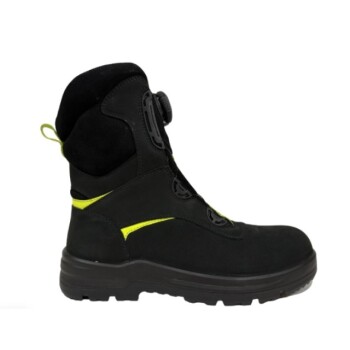
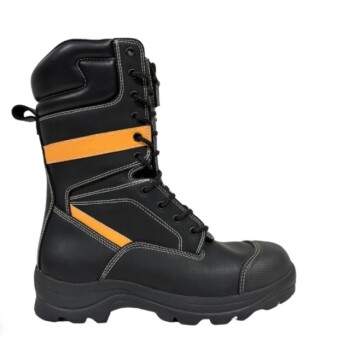
It is critically important for emergency responders to wear NFPA-approved boots because this certification is a guarantee of protection against specific, life-threatening hazards. Unlike standard work boots, footwear meeting National Fire Protection Association (NFPA) standards has been independently tested and proven to withstand extreme conditions, allowing responders to operate safely and effectively.
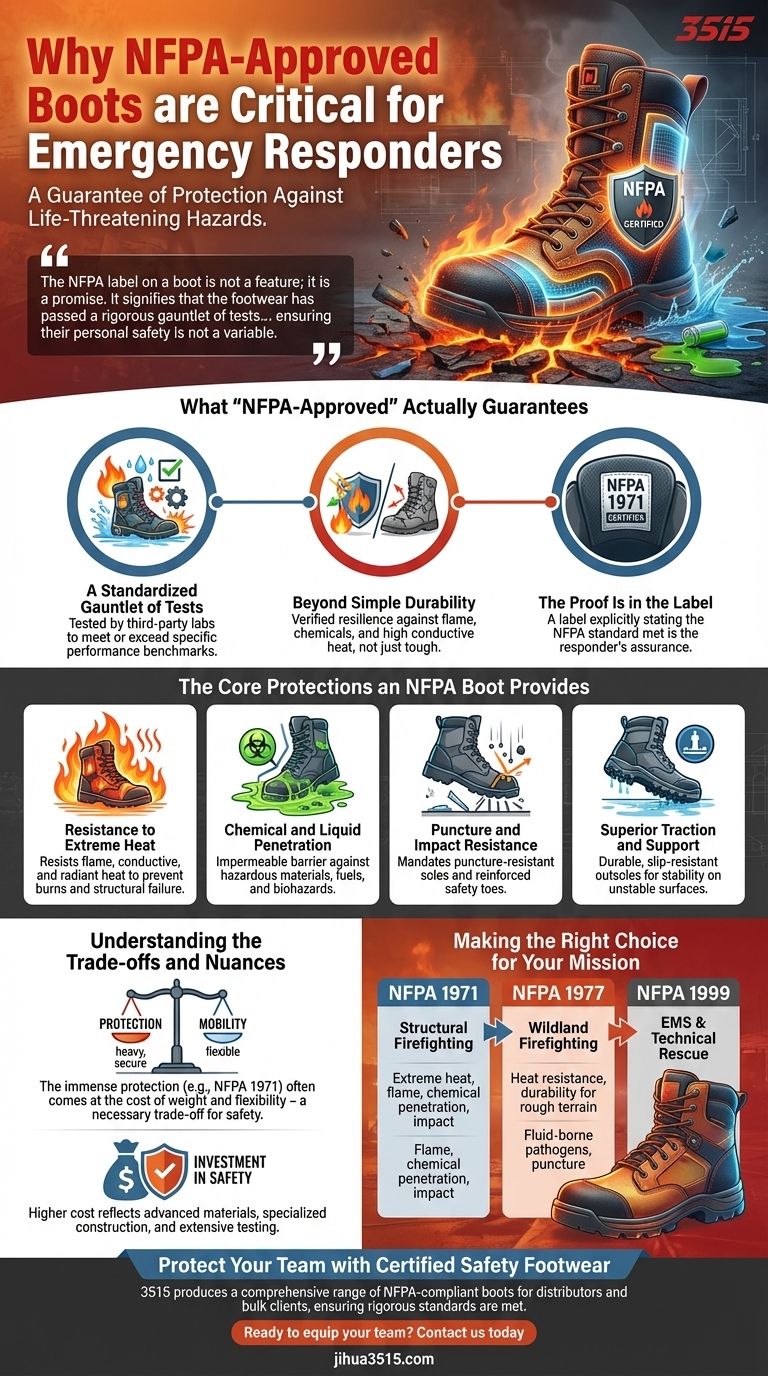
The NFPA label on a boot is not a feature; it is a promise. It signifies that the footwear has passed a rigorous gauntlet of tests designed to protect the wearer from the predictable and severe dangers of an emergency scene, ensuring their personal safety is not a variable.
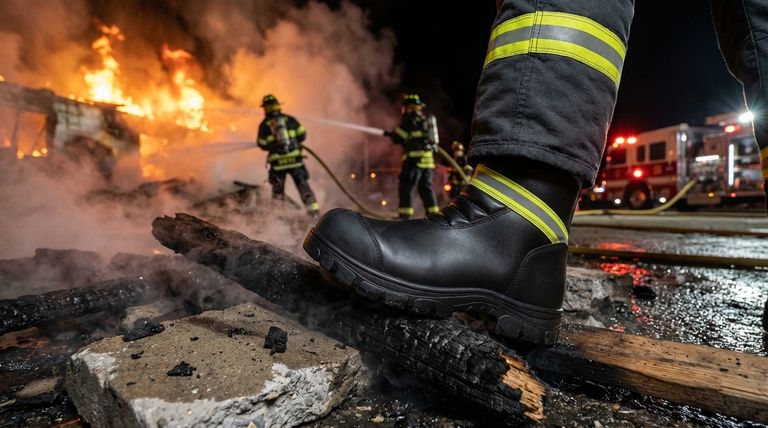
What "NFPA-Approved" Actually Guarantees
When you see an NFPA certification, it means the footwear is more than just durable. It represents a baseline of performance and safety that has been scientifically verified.
A Standardized Gauntlet of Tests
The NFPA develops and maintains minimum standards for personal protective equipment (PPE). For a boot to be "NFPA-approved," it must be tested by a third-party laboratory and proven to meet or exceed these specific performance benchmarks.
Beyond Simple Durability
A standard tactical or work boot might be tough, but it hasn't been verified to resist flame impingement, caustic chemical penetration, or high levels of conductive heat. NFPA certification provides this verified level of resilience.
The Proof Is in the Label
A genuinely compliant boot will have a label inside that explicitly states which NFPA standard it meets, such as "NFPA 1977" for wildland firefighting boots. This label is the responder's assurance of certified protection.
The Core Protections an NFPA Boot Provides
Emergency scenes are unpredictable, but the potential hazards are well-understood. NFPA standards are written to address these core dangers directly.
Resistance to Extreme Heat
For firefighters, this is paramount. NFPA-certified boots must resist flame, conductive heat from hot surfaces, and radiant heat to prevent burns and ensure the boot's structural integrity doesn't fail at a critical moment.
Chemical and Liquid Penetration
Emergency scenes can be contaminated with hazardous materials, fuel, or biohazards. Certified boots feature materials and construction that create an impermeable barrier, keeping the responder's feet dry and safe from chemical exposure.
Puncture and Impact Resistance
Responders navigate scenes filled with glass, nails, and falling debris. NFPA standards mandate features like puncture-resistant sole plates and reinforced safety toes to protect against these severe physical hazards.
Superior Traction and Support
In chaotic environments with unstable or slippery surfaces, a loss of footing can be catastrophic. NFPA boots are required to have durable, slip-resistant outsoles that provide stability and support during long, strenuous operations.
Understanding the Trade-offs and Nuances
While NFPA certification is the gold standard, it's essential to understand its context and limitations to make the right choice.
Not a One-Size-Fits-All Standard
Different roles require different standards. A boot certified for structural firefighting (NFPA 1971) has massive thermal protection but is heavy, while a wildland boot (NFPA 1977) is lighter and designed for hiking but offers less protection from physical impact. Using the wrong boot for the job can be dangerous.
The Balance of Protection and Mobility
The immense protection offered by a certified boot, particularly a structural firefighting boot, often comes at the cost of weight and flexibility. This is a necessary trade-off, prioritizing safety in high-threat environments over the comfort of a lighter, non-certified boot.
The Investment in Safety
NFPA-certified boots are significantly more expensive than their non-certified counterparts. This cost reflects the advanced materials, specialized construction, and extensive third-party testing required to meet the demanding standards. It is an investment in personal safety and operational readiness.
Making the Right Choice for Your Mission
Selecting the correct boot is as critical as selecting the right tool for the job. Your choice must align directly with your primary role and the hazards you expect to face.
- If your primary focus is structural firefighting: You require a boot certified to NFPA 1971, which provides the highest level of thermal, chemical, and physical protection.
- If your primary focus is wildland firefighting: Look for the NFPA 1977 label, which ensures heat resistance and durability for long treks over rough terrain.
- If your primary focus is EMS or technical rescue: Boots compliant with NFPA 1999 (Emergency Medical Operations) provide critical fluid-borne pathogen and physical protection without the bulk of a structural boot.
Choosing footwear that carries the proper NFPA certification is a foundational decision that directly enables your safety and your ability to perform under pressure.
Summary Table:
| NFPA Standard | Primary Use | Key Protections |
|---|---|---|
| NFPA 1971 | Structural Firefighting | Extreme heat, flame, chemical penetration, impact |
| NFPA 1977 | Wildland Firefighting | Heat resistance, durability for rough terrain |
| NFPA 1999 | EMS & Technical Rescue | Fluid-borne pathogens, puncture resistance |
Protect Your Team with Certified Safety Footwear
As a large-scale manufacturer, 3515 produces a comprehensive range of NFPA-compliant boots for distributors, brand owners, and bulk clients. Our production capabilities ensure every pair meets rigorous standards for heat, chemical, and puncture resistance—delivering the certified protection your emergency responders need.
Ready to equip your team with reliable, NFPA-approved footwear? Contact us today to discuss your specific requirements and benefit from our expertise in safety-focused manufacturing.
Visual Guide
Related Products
- High Performance Fire-Retardant Waterproof Safety Boots
- Premium High-Cut Waterproof Safety Boots Manufacturing & Wholesale Solutions
- Premium Wholesale Waterproof Safety Boots High Performance Protection for Industrial Markets
- Heavy-Duty Waterproof Nubuck Safety Boots Safety Shoes for Bulk Supply
- Premium Wholesale Tactical Style Safety Shoes Boots with Quick Lacing
People Also Ask
- Why are waterproof safety boots recommended for certain work environments? Essential Protection for Wet & Hazardous Jobs
- What roles do 3D vision systems and industrial robots play in the manufacturing of fire safety boots? Smart Automation
- How should you maintain waterproof boots? A Simple 3-Step Guide to Long-Lasting Performance
- What is the difference between waterproof and water-resistant boots? Choose the Right Footwear for Any Condition
- What's the difference between waterproof and water-resistant boots? Choose the Right Footwear for Your Environment