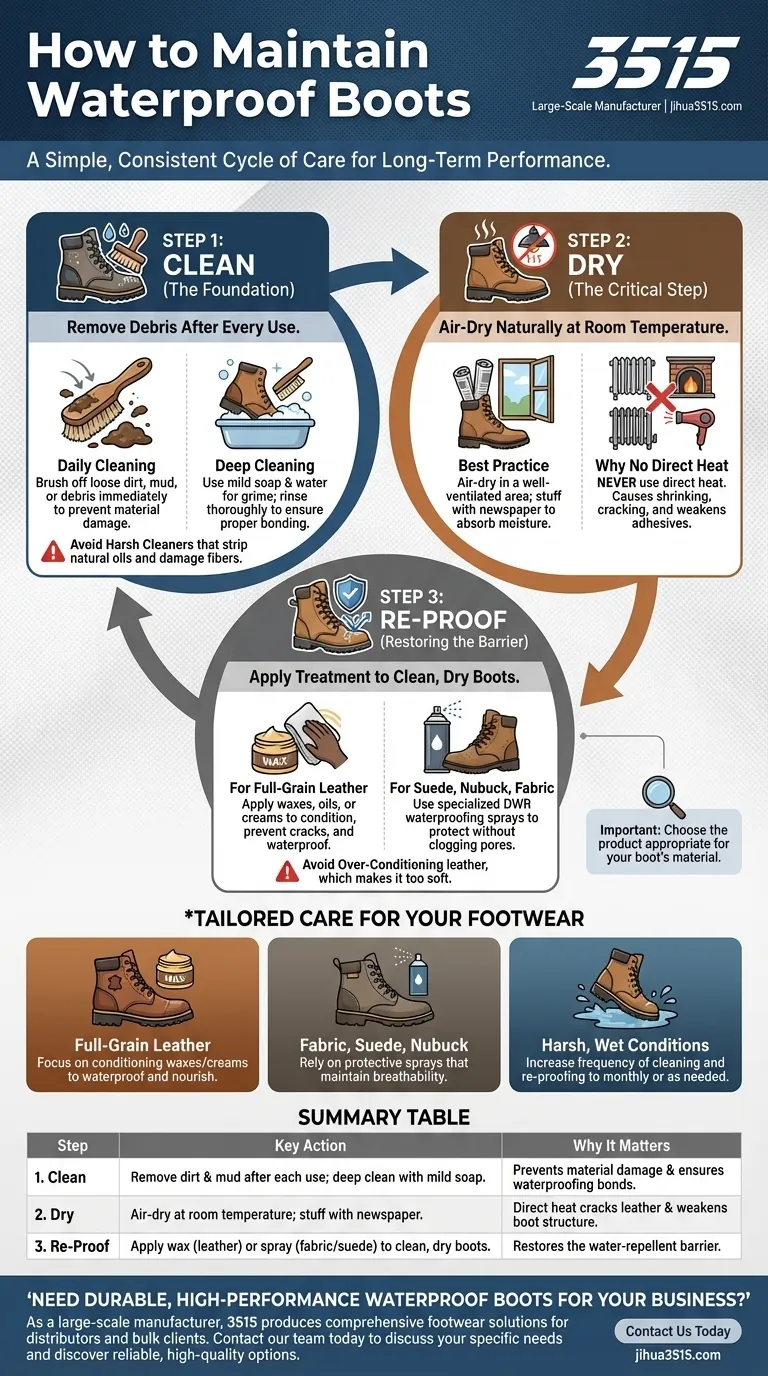
To properly maintain your waterproof boots, you must adopt a simple, consistent cycle of care. The core process involves cleaning off dirt and mud after each use, allowing the boots to dry naturally away from direct heat, and periodically reapplying a waterproofing treatment appropriate for the boot's material, such as a wax for leather or a spray for fabric and suede.
The key to long-term performance is understanding that "waterproof" is not a permanent state. It's a condition you maintain through a disciplined routine of cleaning, drying, and re-proofing, which protects the boot's materials from the wear and tear that leads to leaks.

The Foundation: A Consistent Cleaning Routine
Proper maintenance begins long before you apply any waterproofing product. A clean surface is essential for both the boot's health and the effectiveness of any treatment.
Step 1: Remove Debris After Every Use
After returning from the outdoors, immediately brush off any loose dirt, mud, or debris.
Caked-on mud can draw essential moisture out of leather as it dries, leading to brittleness and cracking over time. For fabric boots, embedded dirt acts as an abrasive, slowly wearing down the fibers.
Step 2: Perform a Deeper Clean as Needed
For a more thorough cleaning, remove the laces and use a boot brush with a gentle cleaner or a simple solution of mild soap and water.
This removes the fine grit and grime that brushing alone can't reach. Ensure you rinse the boots thoroughly with clean water to remove any soap residue, which can interfere with waterproofing treatments.
The Critical Step: Proper Drying
How you dry your boots is arguably the most critical step in preserving their integrity. Rushing this process is the fastest way to cause permanent damage.
Why Room Temperature is Non-Negotiable
Never use direct heat sources like a hairdryer, radiator, fireplace, or direct sunlight to speed up drying.
Intense heat can cause leather to shrink, crack, and become brittle. It can also weaken the adhesives that bond the sole to the upper, compromising the entire structure of the boot.
Best Practices for Effective Air-Drying
Always let your boots air-dry naturally in a well-ventilated area at room temperature.
To accelerate the process safely, you can stuff them with newspaper, which helps absorb internal moisture. Replace the paper whenever it becomes saturated.
Re-Proofing: Restoring the Water Barrier
Once your boots are clean and completely dry, it's time to re-establish their water-repellent shield. The product you use depends entirely on the material of your boot.
Understanding Your Boot's Material
Using the wrong product can be ineffective at best and damaging at worst.
Full-grain leather benefits from waxes, oils, or creams. These products penetrate the leather, conditioning it to prevent cracks while creating a robust waterproof barrier.
Suede, nubuck, and fabric boots require a waterproofing spray. These create a surface-level barrier known as a Durable Water Repellent (DWR) coating without clogging the material's pores or altering its texture.
Applying Waxes, Creams, or Oils
For leather boots, apply a thin layer of your chosen product with a soft cloth, paying special attention to the seams, where water is most likely to penetrate.
Gently work the conditioner into the leather. This not only restores waterproofing but also nourishes the material, keeping it supple and extending its lifespan.
Applying Waterproofing Sprays
For fabric or suede boots, hold the can at the distance recommended by the manufacturer and apply a light, even coat to the entire outer surface.
Allow the first coat to dry for a few minutes before applying a second for maximum coverage.
Common Pitfalls That Ruin Waterproof Boots
Avoiding a few common mistakes is just as important as following the right steps. These missteps can quickly undo your hard work and damage your investment.
The Mistake of Using Harsh Cleaners
Aggressive detergents can strip the natural oils from leather and damage the delicate fibers and factory-applied treatments on synthetic boots. Always stick to products specifically designed for footwear.
Neglecting to Clean Before Treating
Applying a waterproofing product over a dirty boot is a crucial error. You are essentially trapping abrasive dirt particles against the material and preventing the treatment from bonding correctly, rendering it ineffective.
Over-Conditioning Leather
While conditioning is vital for leather, too much of a good thing can be a problem. Over-applying oils or creams can make the leather too soft, causing it to lose its supportive structure. Follow product instructions and apply thin, even coats.
Making the Right Choice for Your Boots
Your specific maintenance routine should be tailored to your footwear and how you use it.
- If you have full-grain leather boots: Focus on conditioning with waxes or creams that both waterproof and nourish the material to prevent cracking.
- If you have fabric, suede, or nubuck boots: Rely on specialized waterproofing sprays that create a protective barrier without damaging the material's texture or breathability.
- If you use your boots in harsh, wet conditions: Increase the frequency of your cleaning and re-proofing cycle to monthly or as soon as you notice water soaking in rather than beading up.
A consistent maintenance routine is the definitive way to protect your investment and ensure your boots perform when you need them most.
Summary Table:
| Step | Key Action | Why It Matters |
|---|---|---|
| 1. Clean | Remove dirt & mud after each use; deep clean with mild soap. | Prevents material damage and ensures waterproofing treatments bond correctly. |
| 2. Dry | Air-dry at room temperature; stuff with newspaper. | Direct heat can crack leather and weaken boot structure. |
| 3. Re-Proof | Apply wax (leather) or spray (fabric/suede) on clean, dry boots. | Restores the water-repellent barrier, which degrades with wear. |
Need Durable, High-Performance Waterproof Boots for Your Business?
As a large-scale manufacturer, 3515 produces a comprehensive range of waterproof footwear for distributors, brand owners, and bulk clients. Our production capabilities encompass all types of durable shoes and boots built to withstand the elements.
Contact our team today to discuss your specific needs and discover how we can provide reliable, high-quality footwear for your market.
Visual Guide
Related Products
- Premium Wholesale Waterproof Safety Boots High Performance Protection for Industrial Markets
- High Performance Fire-Retardant Waterproof Safety Boots
- Wholesale Premium Waterproof Nubuck Safety Shoes Boots
- Premium Flame-Retardant Waterproof Safety Boots and Shoes
- Durable Waterproof Rain Boots | Custom Manufacturer for Wholesale & Brands
People Also Ask
- What weather and chemical protections do premium boots offer? Your Complete Guide to Safety & Performance
- Why are waterproof safety boots recommended for certain work environments? Essential Protection for Wet & Hazardous Jobs
- What are the primary protective functions of industrial safety boots in oil palm plantations? Master Rough Terrain Safety
- Why are oil-resistant and anti-slip properties critical for industrial safety boots? Expert Outsole Engineering Guide
- What are the best types of shoes for different gardening conditions? Find Your Perfect Match.