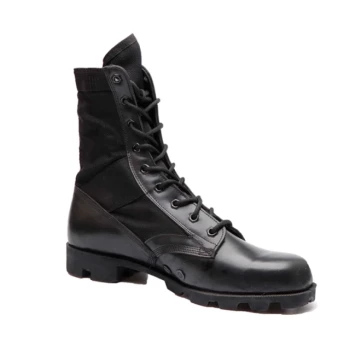
The geometric attributes of professional footwear are not merely aesthetic details; they are the governing variables in foot-ground mechanics.
Professional sports shoes and tactical boots function as the primary physical interface between the human body and the ground. To answer your question directly: incorporating attributes such as sole shape, arch support, and heel height is critical because these factors dictate the distribution of ground reaction forces. Relying on generic or barefoot models fails to capture the specific friction and impact characteristics inherent to specialized gear, rendering simulations clinically and practically inaccurate.
Core Takeaway By replacing generic inputs with specific footwear parameters, simulation models evolve from theoretical approximations to realistic representations of human movement. This precision is essential for accurately predicting how specialized gear redistributes mechanical loads and alters gait dynamics.
The Physics of the Interface
The Sole as a Transmission Layer
Professional footwear does not simply cover the foot; it modifies how force is transmitted.
The geometric shape of the sole, particularly the arch support and heel height, fundamentally changes the contact area and angle of impact.
This geometry acts as a filter, altering the magnitude and direction of the forces that eventually reach the skeletal system.
Material Properties and Friction
While geometry defines the shape of the interaction, material properties define its intensity.
Attributes such as elasticity and friction coefficients must be paired with geometric data.
These properties determine how much energy is absorbed or returned during a step, directly influencing the wearer's stability and movement efficiency.
Enhancing Model Fidelity
Moving Beyond Barefoot Models
A common error in biomechanical modeling is the reliance on generic "barefoot" simulations for subjects who are essentially never barefoot in operation.
Tactical boots and sports shoes introduce mass and stiffness that a barefoot model cannot account for.
Incorporating these specific parameters allows for a realistic simulation of impact characteristics, significantly increasing the clinical value of motion analysis.
Accurate Load and Vibration Assessment
Specific footwear alters the frequency and magnitude of vibrations transmitted up the leg.
By modeling the specific hardness and structure of a boot, you can define a more accurate load input range for a standard population.
This prevents the underestimation of extreme vibration responses that can lead to injury in high-impact scenarios.
Risks of Oversimplification
The Danger of Generic Data
Using a "one-size-fits-all" contact model introduces significant error margins.
If you ignore the specific geometry of a heavy tactical boot, you risk underestimating impact forces.
This can lead to ergonomic designs that fail to protect the wearer under actual working conditions.
Impact on Gait Recognition
Footwear is a significant regulator of gait variability.
Distinct sole structures change the step frequency distribution and plantar pressure features.
Models that fail to account for these shifts suffer from poor recognition robustness, meaning they may fail to correctly identify or analyze gait patterns across different environments.
Making the Right Choice for Your Goal
To maximize the utility of your contact models, apply these principles based on your specific objectives:
- If your primary focus is Clinical Analysis: Prioritize the inclusion of arch support and heel height geometry to accurately map the distribution of ground reaction forces on the skeletal structure.
- If your primary focus is Ergonomic Design: Focus on material elasticity and sole hardness to ensure your simulation correctly predicts vibration absorption and fatigue reduction.
- If your primary focus is Gait Recognition: Integrate plantar pressure features and friction coefficients to improve the robustness of your system across different footwear types.
Precision in modeling the foot-ground interface is the single most effective way to ensure your simulation data reflects physical reality.
Summary Table:
| Attribute | Biomechanical Impact | Modeling Benefit |
|---|---|---|
| Sole Geometry | Dictates force distribution & contact area | Prevents underestimation of impact forces |
| Heel Height | Shifts center of mass & impact angle | Increases clinical accuracy of skeletal loading |
| Arch Support | Governs plantar pressure patterns | Provides realistic gait recognition features |
| Material Elasticity | Controls energy return & vibration | Accurate prediction of fatigue & ergonomic performance |
| Friction Coeff. | Determines stability & slip resistance | Validates movement efficiency in high-impact scenarios |
Partner with 3515 for Precision-Engineered Footwear Solutions
As a large-scale manufacturer serving global distributors and brand owners, 3515 delivers the technical excellence required for high-performance footwear. Our comprehensive production capabilities allow us to integrate advanced geometric attributes across our flagship Safety Shoes series, as well as our extensive portfolio of tactical boots, outdoor shoes, training shoes, and sneakers.
Whether you need bulk production of Dress & Formal shoes or specialized tactical gear, we provide the manufacturing precision that ensures your products meet the highest biomechanical standards. Contact us today to leverage our expertise and scale for your next footwear line!
References
- Tatsuki Koshio, Kazunori HASE. Estimation of Ground Reaction Forces during Sports Movements by Sensor Fusion from Inertial Measurement Units with 3D Forward Dynamics Model. DOI: 10.3390/s24092706
This article is also based on technical information from 3515 Knowledge Base .
Related Products
- Durable Leather Tactical Boots Wholesale & Custom Manufacturing for Brands
- High-Traction Suede Tactical Boots Wholesale & Custom Manufacturing
- Durable Leather High-Ankle Tactical Boots for Wholesale & Custom Manufacturing
- Durable Mid-Cut Tactical Boots for Wholesale & Private Label
- Wholesale Waterproof Tactical Boots Custom Suede & High-Traction Soles
People Also Ask
- What specialized protections do tactical boots offer? Maximize Endurance with High-Performance Footwear
- What features should law enforcement officers look for in tactical boots? Essential Guide for Safety & Performance
- Importance of Professional Tactical Boots in Loess Gully Regions: Ensure Safety and Precision for Field Monitoring
- What is rucking, and why are tactical boots suitable for it? Discover the Ultimate Footwear for Heavy Loads
- What makes the traction of tactical boots superior? Unlock the Science of Unbeatable Grip