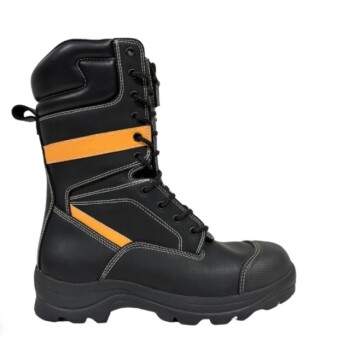
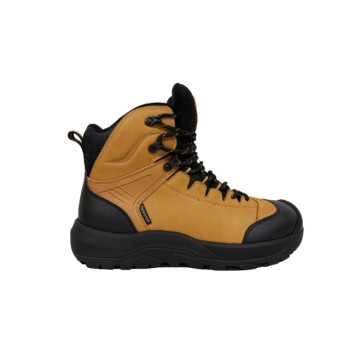
At its core, high-quality leather is the standard for firefighter boots because it provides an unmatched combination of flame resistance, durability against abrasion, and critical water resistance. This natural material is uniquely capable of withstanding the extreme conditions firefighters face while molding to the wearer's foot for a secure, supportive fit.
While modern synthetic materials excel in specific areas, specially treated, heavy-duty leather remains the material of choice because it offers a holistic balance of protection, long-term comfort, and structural integrity essential for firefighter safety and performance.

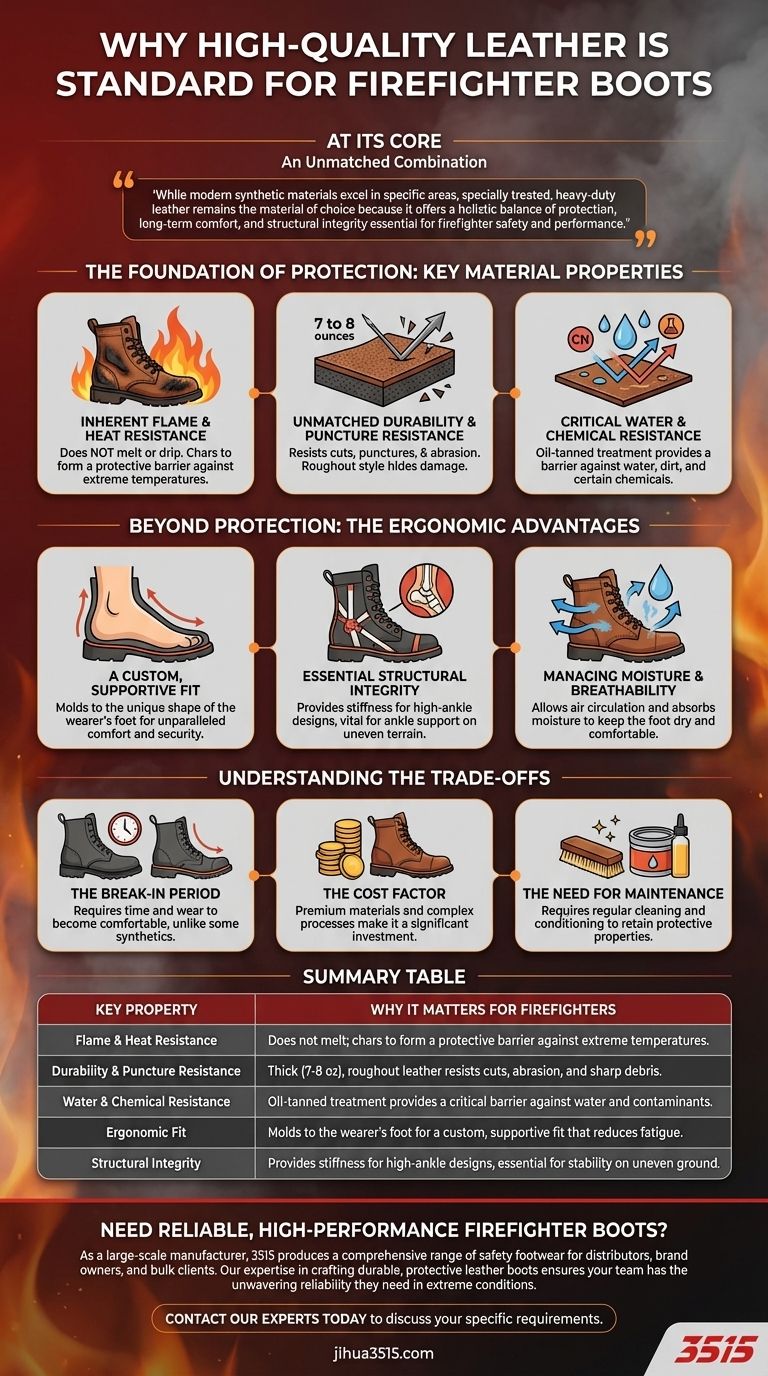
The Foundation of Protection: Key Material Properties
To understand why leather is so trusted, you must first appreciate its inherent physical properties. The specific type and treatment of the leather are engineered to maximize its protective capabilities in the most hostile environments imaginable.
Inherent Flame and Heat Resistance
Leather does not melt or drip when exposed to high heat, unlike many synthetic materials. It naturally chars and resists flames, providing a critical barrier between the firefighter and extreme temperatures. This is a non-negotiable safety feature.
Unmatched Durability and Puncture Resistance
Firefighting environments are filled with sharp, abrasive debris. Firefighter boots are constructed from heavy-duty leather, typically 7 to 8 ounces in thickness, to resist cuts, punctures, and abrasion. Using a roughout leather style, where the rougher side faces out, also helps to hide scuffs and damage, preserving the boot's integrity.
Critical Water and Chemical Resistance
Effective firefighter boots must keep the feet dry from both external water and internal perspiration. The tanning and finishing process involves treating the leather with oils, which makes it highly water-resistant. This treatment also provides a barrier against dirt, dust, and certain chemicals.
Beyond Protection: The Ergonomic Advantages
A boot that only protects is not enough; it must also support the firefighter's performance over long, grueling hours. Leather provides unique ergonomic benefits that synthetic materials often struggle to replicate.
A Custom, Supportive Fit
While initially stiff, leather possesses the remarkable ability to mold to the unique shape of the wearer's foot over time. This "break-in" period results in a custom fit that provides unparalleled comfort and security, reducing the risk of blisters and foot fatigue during extended incidents.
Essential Structural Integrity
Leather provides the stiffness and strength necessary to build high-ankle boot designs. This structure is vital for providing ankle support and preventing sprains or twists when navigating uneven and treacherous terrain.
Managing Moisture and Breathability
Despite its toughness and water resistance, leather remains a breathable material. It allows air to circulate and can absorb moisture from perspiration, which helps keep the foot dry, comfortable, and less prone to odor or bacterial growth.
Understanding the Trade-offs
No material is perfect. Acknowledging the trade-offs associated with leather provides a complete picture and reinforces why its benefits are so highly valued in this specific field.
The Break-In Period
The same property that creates a custom fit also means there is an initial period of stiffness. New leather boots require time and wear to become comfortable, a stark contrast to many synthetic boots that feel comfortable straight out of the box.
The Cost Factor
Premium, vegetable-tanned, heavy-duty leather is an expensive raw material. The complex tanning and construction processes further add to the cost, making high-quality leather firefighter boots a significant investment compared to standard work boots.
The Need for Maintenance
To retain its protective properties—particularly its water resistance and flexibility—leather requires regular cleaning and conditioning. If neglected, it can dry out, crack, and lose its effectiveness, demanding a level of care not always required by synthetic alternatives.
Making the Right Choice for Your Role
Ultimately, the material choice is directly tied to the non-negotiable demands of the job. Leather has remained the standard because it addresses the primary threats a firefighter faces.
- If your primary focus is maximum protection and long-term durability: A boot made from thick, oil-tanned, full-grain leather is the proven choice for frontline firefighting.
- If your primary focus is a boot that molds perfectly to your foot for stability: The custom-fit characteristic of leather is a key advantage that reduces fatigue and increases security.
- If your primary focus is balancing performance with required maintenance: Understand that the superior protection of leather is contingent on proper care to preserve its integrity over the life of the boot.
Choosing high-quality leather is an investment in unwavering reliability and personal safety when it matters most.
Summary Table:
| Key Property | Why It Matters for Firefighters |
|---|---|
| Flame & Heat Resistance | Does not melt; chars to form a protective barrier against extreme temperatures. |
| Durability & Puncture Resistance | Thick (7-8 oz), roughout leather resists cuts, abrasion, and sharp debris. |
| Water & Chemical Resistance | Oil-tanned treatment provides a critical barrier against water and contaminants. |
| Ergonomic Fit | Molds to the wearer's foot for a custom, supportive fit that reduces fatigue. |
| Structural Integrity | Provides stiffness for high-ankle designs, essential for stability on uneven ground. |
Need reliable, high-performance firefighter boots?
As a large-scale manufacturer, 3515 produces a comprehensive range of safety footwear for distributors, brand owners, and bulk clients. Our expertise in crafting durable, protective leather boots ensures your team has the unwavering reliability they need in extreme conditions.
Contact our experts today to discuss your specific requirements and discover how we can support your operations.
Visual Guide
Related Products
- High Performance Fire-Retardant Waterproof Safety Boots
- Premium Flame-Retardant Waterproof Safety Boots and Shoes
- Durable Military Combat Boots with Water Drainage for Wholesale & OEM
- Wholesale Lightweight Tactical Boots Custom Manufacturer for Desert & Combat Use
- High-Traction Suede Tactical Boots Wholesale & Custom Manufacturing
People Also Ask
- Why are waterproof safety boots recommended for certain work environments? Essential Protection for Wet & Hazardous Jobs
- What roles do 3D vision systems and industrial robots play in the manufacturing of fire safety boots? Smart Automation
- How should you maintain waterproof boots? A Simple 3-Step Guide to Long-Lasting Performance
- What's the difference between waterproof and water-resistant boots? Choose the Right Footwear for Your Environment
- What are the primary benefits of incorporating waterproof technology into professional and outdoor boots? Boost Value