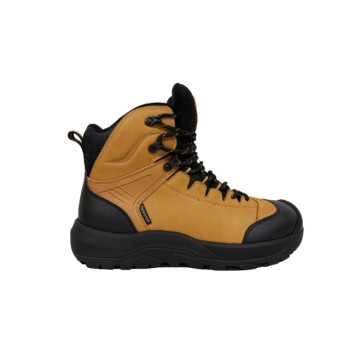
In short, grip is the single most critical safety feature on winter Wellington boots. It is the primary defense against slips and falls on treacherous surfaces like ice, wet leaves, snow, and mud, providing the stability and confidence needed to navigate challenging winter terrain.
The grip on your winter boots is the foundation of your safety. While warmth and waterproofing ensure comfort, a reliable grip is what prevents injury and allows you to move with confidence in hazardous conditions.
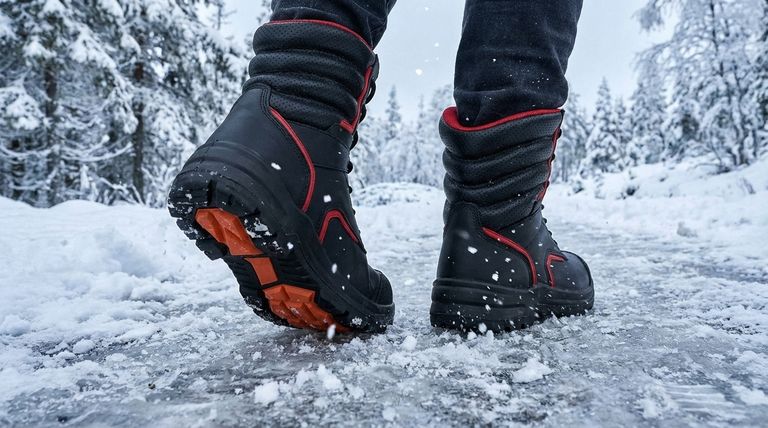
Why Grip is Your Foundation for Winter Safety
When selecting winter footwear, it's easy to focus on warmth or style. However, the design of the sole and its ability to grip the ground is what fundamentally determines how safe you will be.
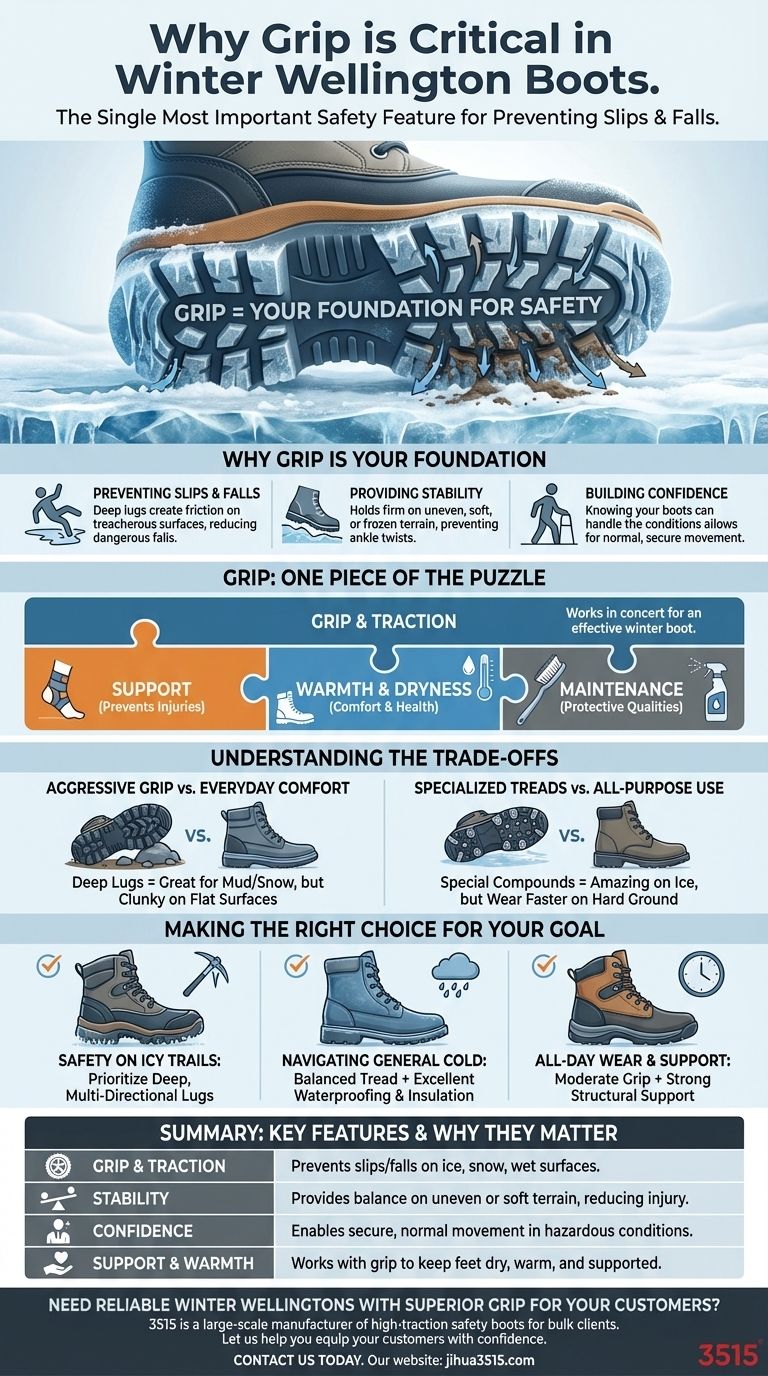
Preventing Slips and Falls
The most obvious function of good grip is to create friction on slippery surfaces. Deep, well-spaced lugs on the outsole channel away water, slush, and mud, allowing the rubber to make solid contact with the ground. This significantly reduces the risk of dangerous falls on ice or wet rocks.
Providing Stability on Uneven Terrain
Winter ground is rarely flat. A reliable grip helps your foot hold firm on uneven, frozen, or soft ground. This stability is essential for maintaining your balance and preventing ankle twists or other injuries that can occur when your footing is insecure.
Building Confidence in Movement
Knowing your boots can handle the conditions gives you the confidence to walk normally and without hesitation. This psychological benefit is crucial, as tentative steps can often lead to unsteadiness and an increased risk of falling.
Grip is Only One Piece of the Puzzle
While grip is paramount for safety, it works in concert with other features to create a truly effective winter boot. A great outsole is of little use if the rest of the boot fails to protect you from the elements.
The Role of Support
Proper foot and ankle support is crucial for preventing injuries like sprains, fractures, and tendonitis. A well-structured boot with a firm build complements a high-traction sole by keeping your foot securely in place, ensuring the grip works as intended.
The Necessity of Warmth and Dryness
The core purpose of winter footwear is to keep your feet warm and dry. Cold, wet feet are not only uncomfortable but can lead to health issues and make you less focused on your footing. Effective insulation and waterproofing are non-negotiable partners to good grip.
The Importance of Maintenance
The materials that provide grip and waterproofing can degrade over time. Regular cleaning and applying appropriate waterproofing treatments are essential to maintain your boots' protective qualities throughout the season.
Understanding the Trade-offs
Not all grip designs are created equal, and the ideal choice depends on your specific use case. Understanding the compromises is key to selecting the right boot.
Aggressive Grip vs. Everyday Comfort
Boots with very deep, aggressive lugs are excellent for deep mud or snow. However, they can feel clunky and uncomfortable when walking on hard, flat surfaces like pavement.
Specialized Treads vs. All-Purpose Use
Some outsoles are made with special rubber compounds or embedded particles designed specifically for gripping ice. While incredibly effective in freezing conditions, these specialized soles may wear down faster during regular use on non-icy ground.
Making the Right Choice for Your Goal
Select your winter boots by prioritizing the feature that best matches your most common activity.
- If your primary focus is safety on icy or snowy trails: Prioritize a boot with deep, multi-directional lugs and a sole designed for cold-weather traction.
- If your primary focus is navigating general wet and cold conditions: A balanced tread pattern combined with excellent waterproofing and insulation is your best choice.
- If your primary focus is all-day wear and support: Look for a boot that combines moderate grip with strong structural support around the ankle and arch.
Ultimately, choosing the right winter Wellington is about understanding that grip is the feature that keeps you upright and safe.
Summary Table:
| Feature | Why It Matters for Winter Safety |
|---|---|
| Grip & Traction | Prevents slips and falls on ice, snow, and wet surfaces. |
| Stability | Provides balance on uneven or soft terrain, reducing injury risk. |
| Confidence | Enables secure, normal movement in hazardous conditions. |
| Support & Warmth | Works with grip to keep feet dry, warm, and properly supported. |
Need reliable winter Wellington boots with superior grip for your customers?
As a large-scale manufacturer, 3515 produces a comprehensive range of high-traction footwear for distributors, brand owners, and bulk clients. Our production capabilities include all types of safety-focused boots designed to prevent slips and provide stability on winter terrain. Let us help you equip your customers with the confidence they need—contact us today to discuss your requirements!
Visual Guide
Related Products
- Durable Waterproof Rain Boots | Custom Manufacturer for Wholesale & Brands
- Premium Insulated Safety Boots and Shoes for Wholesale & Bulk Orders
- Factory Direct Wholesale Rain Boots Durable Waterproof & Fully Customizable
- Durable Goodyear Welt Leather Work Boots for Wholesale & Private Label
- Wholesale Waterproof Tactical Boots Custom Suede & High-Traction Soles
People Also Ask
- What are the main materials for waterproof rain boots? Choose the Right Material for Durability & Comfort
- What is the overall recommendation for choosing rain boot materials? A Guide to Rubber vs. PVC
- How does boot height affect waterproofing? Choose the Right Height for Ultimate Protection
- Why are rain boots more flexible and comfortable than snow boots? The Key Differences Explained
- What are the best types of shoes for different gardening conditions? Find Your Perfect Match.