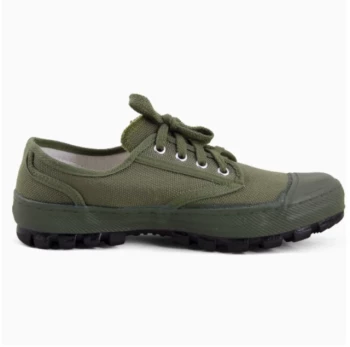
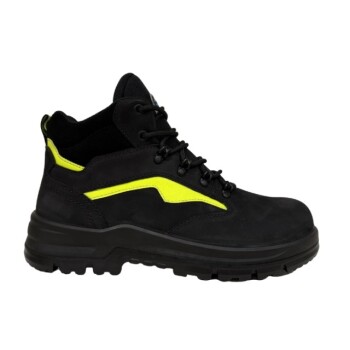
Choosing the right work boot outsole is a foundational safety decision, not a minor detail. This single component is your primary point of contact with your work environment, directly determining your stability, protection, and even long-term comfort. The correct outsole is specifically engineered to provide the traction and resilience required for your unique job, preventing slips and ensuring the boot performs as intended for its entire lifespan.
The outsole of a work boot is not merely a layer of material; it is a piece of engineered safety equipment. The fundamental challenge is to correctly match the outsole's material and tread pattern to the specific surfaces and hazards you encounter daily.
The Core Functions of an Outsole
An outsole must perform several critical jobs simultaneously. Understanding these functions clarifies why a one-size-fits-all approach is ineffective and often dangerous.
Ensuring Traction and Stability
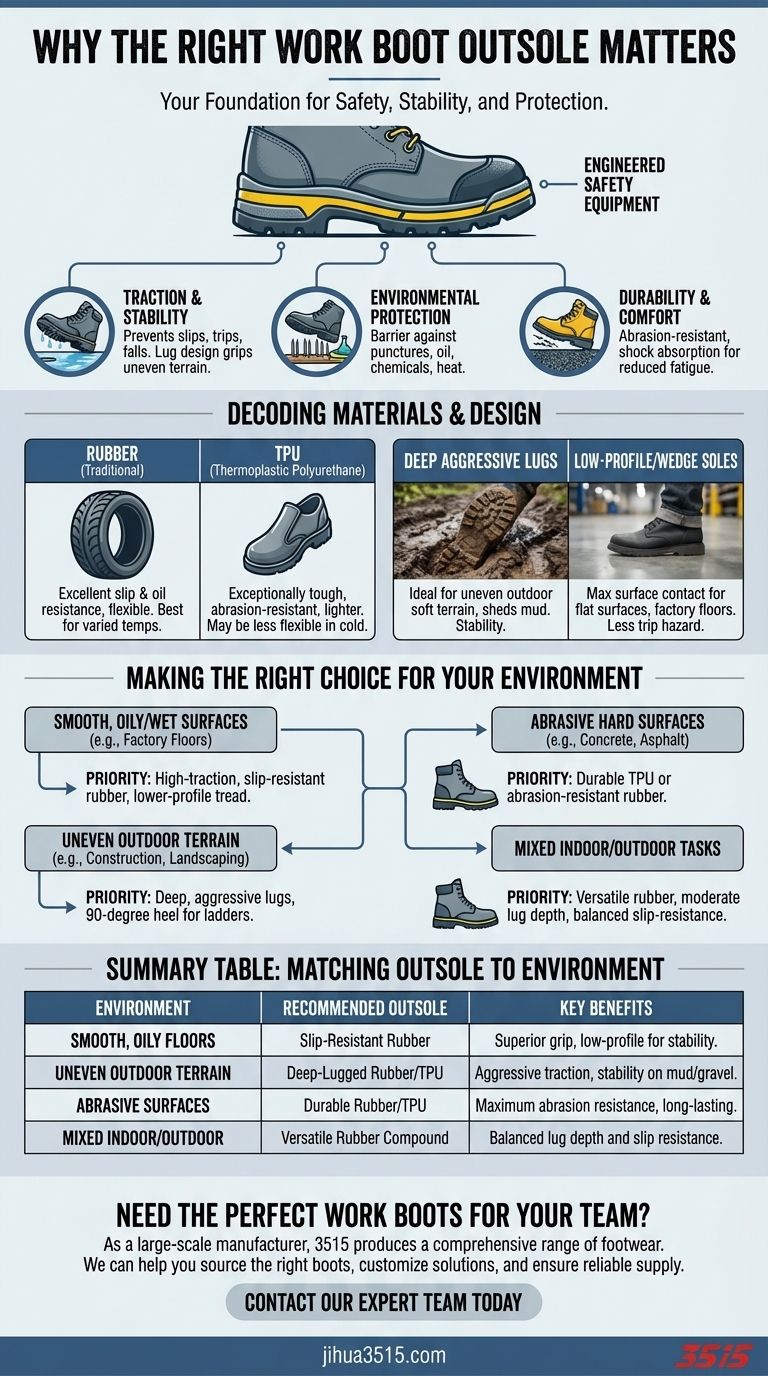
The most obvious function of an outsole is to prevent slips, trips, and falls.
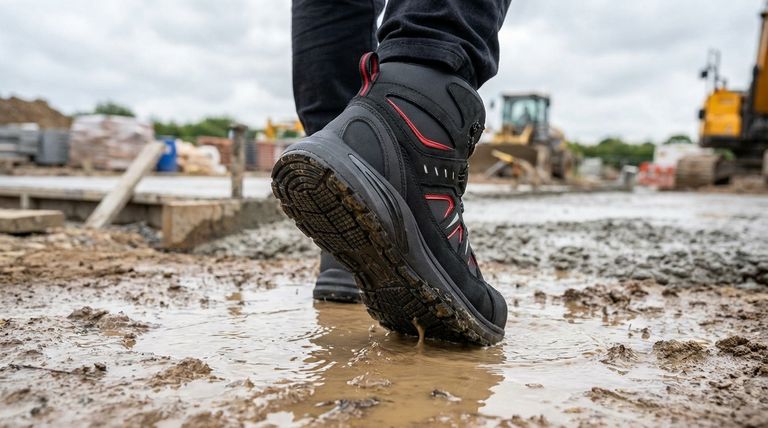
Traction is achieved through a combination of the material compound and the tread design, often called lugs. Deeper, wider-spaced lugs are designed to grip uneven terrain like mud and gravel, while shallower patterns provide more surface contact for stability on flat surfaces like concrete.
Providing Environmental Protection
Your outsole is a barrier between your foot and the ground.
It must protect you from common job site hazards, including punctures from sharp objects. Specific materials are also chosen for their resistance to oil, chemicals, or extreme heat, ensuring the sole doesn't degrade and fail when exposed to these elements.
Supporting Durability and Comfort
A boot is only as good as its weakest part, and the outsole takes the most direct abuse.
The material must be abrasion-resistant to avoid wearing down prematurely on rough surfaces like asphalt or concrete. Furthermore, the outsole's material contributes to shock absorption, reducing fatigue over a long day.
Decoding Outsole Materials and Design
The "right" outsole is determined by its construction. The two most important factors are the material compound and the tread pattern.
Common Materials: Rubber and TPU
Rubber is the traditional and most common choice for a reason. It offers an excellent balance of slip resistance, oil resistance, and flexibility across a wide range of temperatures.
TPU (Thermoplastic Polyurethane) is a more modern compound that is exceptionally tough and resistant to abrasion, splitting, and chemicals. It is often lighter than rubber but can become less flexible in extreme cold.
The Importance of the Lug Pattern
The grooves and channels of your outsole are not random; they are designed for specific environments.
Deep, aggressive lugs are ideal for outdoor work on soft surfaces, providing stability and shedding mud. Low-profile or wedge soles offer maximum surface contact, making them perfect for factory floors and other hard, flat surfaces where slips are the primary concern.
Understanding the Trade-offs
There is no single "best" outsole for every job. Every design choice involves a compromise, and understanding these trade-offs is key to selecting the right boot.
Grip vs. Durability
Softer rubber compounds provide outstanding traction, especially on smooth, wet surfaces. However, this softness means they will wear down more quickly.
Conversely, harder compounds like TPU offer exceptional lifespan and abrasion resistance but may provide less grip on slick flooring.
Specialization vs. Versatility
A boot with a highly specialized outsole, such as one designed for welders or roofers, will provide superior performance in that specific context.
However, these specialized features often make the boot less comfortable or practical for general-purpose use. A versatile, all-around outsole may not excel in any single area but provides reliable performance across varied tasks.
Making the Right Choice for Your Environment
Your daily work environment is the only factor that matters. Analyze the primary surfaces you walk on and the hazards you face to make a definitive choice.
- If you work on smooth, potentially oily or wet surfaces (e.g., auto shops, factory floors): Prioritize a high-traction rubber outsole with a slip-resistant rating and a lower-profile tread for maximum surface contact.
- If you work outdoors on uneven or soft terrain (e.g., construction, landscaping): Look for deep, aggressive lugs for superior stability and a defined 90-degree heel for safely climbing ladders.
- If you work primarily on abrasive hard surfaces (e.g., concrete, asphalt): Consider a durable TPU or a dense, abrasion-resistant rubber compound to maximize the lifespan of the boot.
- If your job involves a mix of indoor and outdoor tasks: A versatile rubber outsole that balances moderate lug depth with a good slip-resistance rating is your most practical choice.
Ultimately, viewing your boot's outsole as a critical piece of personal protective equipment is the first step toward a safer and more effective workday.
Summary Table:
| Work Environment | Recommended Outsole Type | Key Benefits |
|---|---|---|
| Smooth, Oily Floors | Slip-Resistant Rubber | Superior grip on wet surfaces, low-profile for stability. |
| Uneven Outdoor Terrain | Deep-Lugged Rubber/TPU | Aggressive traction, stability on mud/gravel, ladder-ready heel. |
| Abrasive Surfaces (Concrete) | Durable Rubber or TPU | Maximum abrasion resistance, long-lasting performance. |
| Mixed Indoor/Outdoor | Versatile Rubber Compound | Balanced lug depth and slip resistance for varied tasks. |
Need the perfect work boots for your team?
As a large-scale manufacturer, 3515 produces a comprehensive range of footwear for distributors, brand owners, and bulk clients. Our production capabilities encompass all types of safety shoes and boots, engineered with the precise outsoles your workforce needs for maximum safety and durability.
We can help you:
- Source the right boots for any work environment, from factories to construction sites.
- Customize solutions for your specific safety requirements and branding.
- Ensure reliable supply with our high-volume manufacturing capacity.
Contact our expert team today to discuss your work boot needs and get a quote.
Visual Guide
Related Products
- Wholesale Leather Work Boots with Customizable Wedge Sole for Brands
- Durable Moc Toe Wedge Sole Work Boots for Wholesale and Private Label
- Durable Moc-Toe Wedge Work Boots | Wholesale Manufacturing for Brands
- Durable Leather Moc Toe Work Boots for Wholesale & Custom Manufacturing
- Wholesale Leather Ankle Boots with Lug Soles for Custom Brand Manufacturing
People Also Ask
- What is the difference between full-grain and top-grain leather? Premium Material Guide for Boot Manufacturers
- What are the advantages of leather as an upper material for work boots? Unmatched Durability & Custom Comfort
- How can leather work boots be protected from environmental elements? A 3-Step Guide to Lasting Durability
- What is the complete process for deep cleaning leather work boots? A Step-by-Step Guide to Preserve Your Investment
- What are the key qualities of leather for work boots? Superior Durability, Breathability & Custom Fit