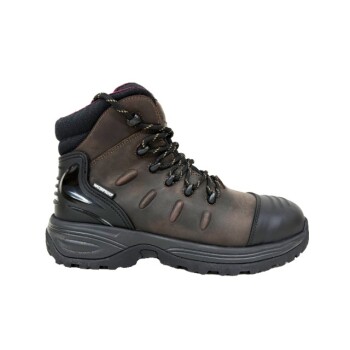
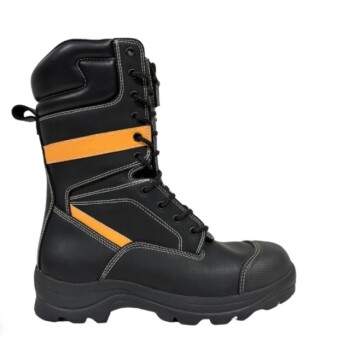
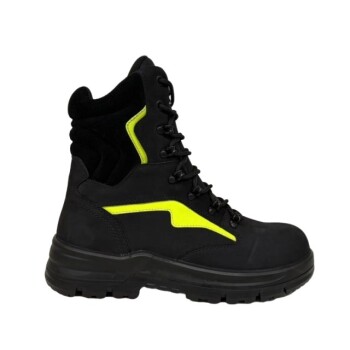
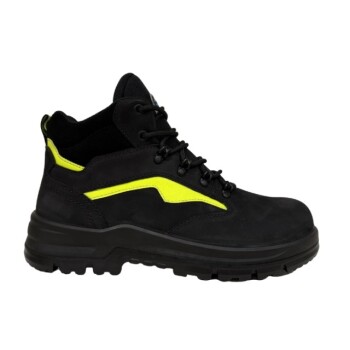
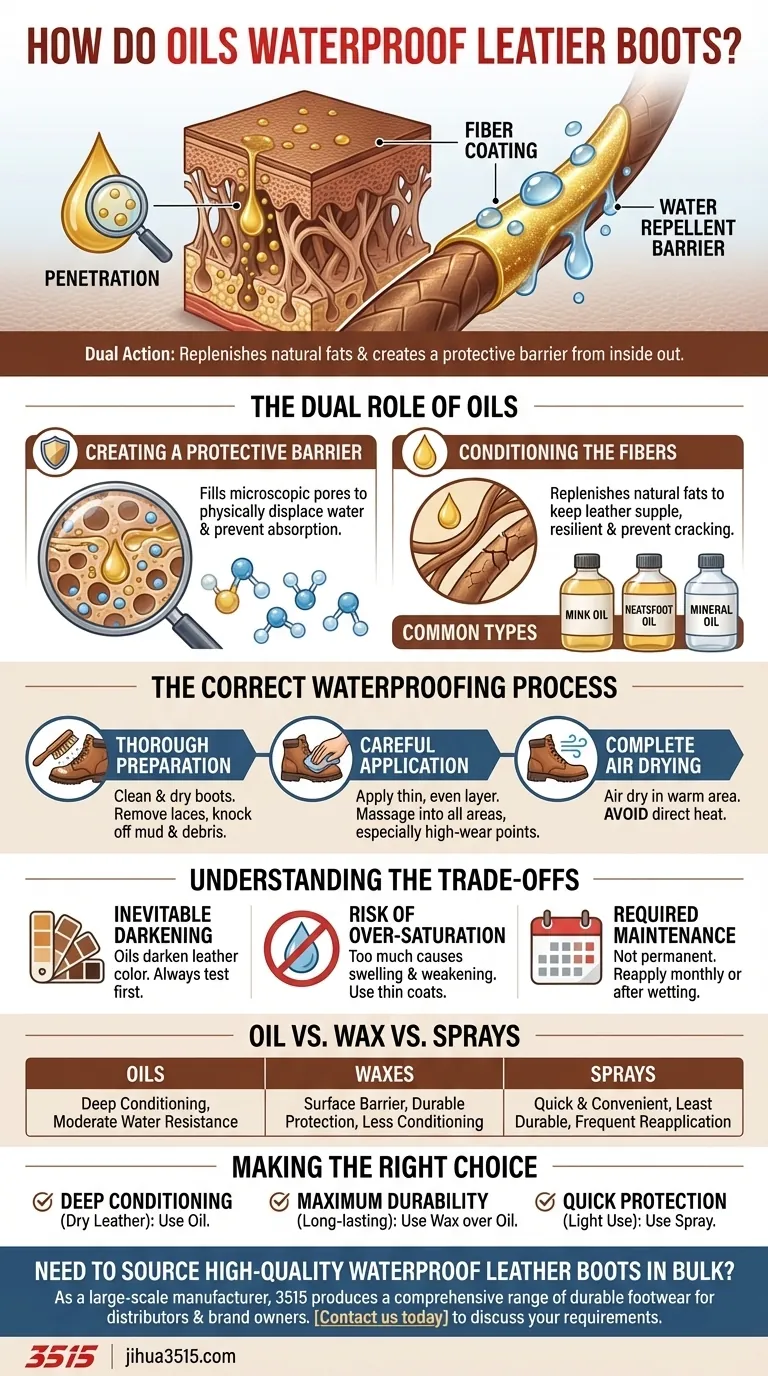
At their core, oils waterproof leather boots by penetrating the material's pores and coating its fibers. This dual action both replenishes the leather's natural fats to keep it supple and creates a protective, water-repellent barrier from the inside out.
While waxes create a topical seal on the surface, conditioning oils work by saturating the leather itself. This makes the material inherently more resistant to moisture absorption, though it often comes with the trade-off of darkening the leather's appearance.
The Dual Role of Oils in Leather Care
Oils perform two critical functions simultaneously: conditioning and protecting. Understanding this duality is key to using them effectively and maintaining the longevity of your boots.
Creating a Protective Barrier
Leather is a porous material. Oils work by filling these microscopic pores, which physically displaces water and prevents it from soaking into the boot. This creates an effective barrier against moisture.
They can be used as a standalone waterproofing treatment or as a conditioning base layer before applying a more robust surface protectant like wax.
Conditioning the Fibers
Leather can dry out, become stiff, and eventually crack over time. Oils replenish the natural fats within the leather's fiber structure, keeping it flexible and resilient.
This conditioning action is crucial for preventing damage, especially in the creases and flex points of the boot that are under constant stress.
Common Types of Conditioning Oils
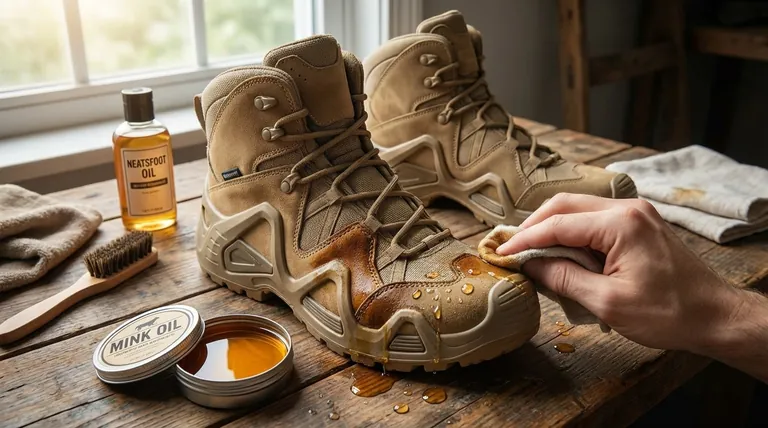
The most frequently used oils for leather care are mink oil, neatsfoot oil, and sometimes mineral oil. Each serves the same fundamental purpose of conditioning and adding a layer of water resistance.
The Correct Waterproofing Process
Proper application is essential for effective waterproofing and avoiding damage to your boots. Rushing the process will yield poor results.
Step 1: Thorough Preparation
Always start with clean, dry boots. Remove the laces and use a brush to knock off any loose mud, dust, or debris. This ensures the oil can penetrate the leather evenly.
Step 2: Careful Application
Using a clean, soft cloth, apply the oil in a thin, even layer. Gently massage it into all exterior surfaces of the boot.
Pay special attention to high-wear areas like the tongue, creases, and seams, as these are often the first points of failure for water entry.
Step 3: Complete Air Drying
Allow the boots to air dry completely in a warm, well-ventilated area. Never use a direct heat source like a radiator or hairdryer, as this can dry the leather too quickly, causing it to crack and warp.
Understanding the Trade-offs
While effective, using oil is not without its considerations. Being aware of the potential downsides allows you to make an informed decision for your specific boots.
Inevitable Darkening of Leather
Oils will almost always darken the color of your leather. The degree of change depends on the type of leather and the oil used. Always perform a small patch test on an inconspicuous area first.
The Risk of Over-saturation
More is not better. Applying too much oil can over-saturate the leather, which can cause its fibers to swell and weaken, potentially leading to splitting over time. A thin, even coat is all that is required.
Required Maintenance Frequency
Oil-based treatments are not permanent. They need to be reapplied to maintain effectiveness, typically every month or anytime after the boots have been significantly wet.
Oil vs. Wax and Sprays
Oils offer deep conditioning and moderate water resistance. Waxes provide a more durable, long-lasting surface barrier but offer less conditioning. Sprays are convenient and quick but offer the least durable protection.
Making the Right Choice for Your Goal
Selecting the best waterproofing method depends entirely on your needs and the type of protection your boots require.
- If your primary focus is deep conditioning for dry, stiff leather: An oil treatment is the ideal choice to restore flexibility and provide water resistance.
- If your primary focus is maximum, long-lasting water repellency: A wax-based product is superior, often applied after a light conditioning coat of oil.
- If your primary focus is quick, convenient protection for light use: A spray-on treatment is the most efficient option, though it requires frequent reapplication.
Ultimately, proper care and regular maintenance are the most important factors in extending the functional lifespan of your leather boots.
Summary Table:
| Aspect | Effect of Oils |
|---|---|
| Primary Action | Penetrates leather pores and coats fibers |
| Key Benefit | Conditions leather & creates a water-repellent barrier |
| Common Types | Mink oil, Neatsfoot oil, Mineral oil |
| Main Trade-off | Darkens leather color |
| Maintenance | Requires reapplication (e.g., monthly or after heavy wetting) |
Need to source high-quality waterproof leather boots in bulk?
As a large-scale manufacturer, 3515 produces a comprehensive range of durable footwear for distributors, brand owners, and bulk clients. Our production capabilities encompass all types of waterproof boots, ensuring your customers get superior protection and comfort.
Contact us today to discuss your specific requirements and leverage our manufacturing expertise for your business.
Visual Guide
Related Products
- Premium Oil Wax Leather Safety Boots for Bulk Purchase
- Premium Flame-Retardant Waterproof Safety Boots and Shoes
- Premium Wholesale Waterproof Safety Boots High Performance Protection for Industrial Markets
- High Performance Fire-Retardant Waterproof Safety Boots
- Premium Waterproof Nubuck Safety Boots for Wholesale
People Also Ask
- What materials are commonly used for outsoles in safety boots? A Guide to Durability, Grip, and Comfort
- How do safety boots reduce cutting hazards? Essential Protection for Your Workforce
- What are the common types of safety boots and their primary uses? A Guide to Industrial Footwear
- Which organizations develop safety standards for work boots? Ensure Compliance & Worker Safety
- What primary protective functions do professional safety boots provide in urban solid waste recovery and waste picking processes? Discover Dual-Layer Protection.