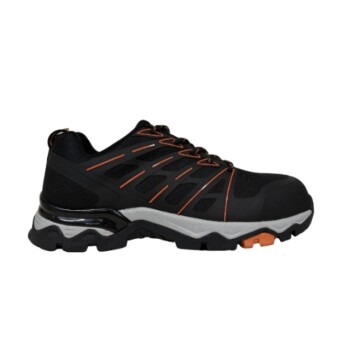
Anthropometric accuracy is the scientific backbone of high-performance footwear manufacturing. It ensures that safety and training shoes align with the ergonomic contours of the human foot, accounting for variations in width, arch height, and volume. This precision prevents pressure points and maintains biomechanical alignment, which is critical for preventing musculoskeletal strain and injury during heavy-duty bulk use.
Precise anthropometric data allows manufacturers to translate diverse human foot morphology into standardized, high-performance shoe lasts. For B2B stakeholders, this scientific rigor ensures consistent quality across massive production volumes, minimizing return rates and maximizing wearer safety.
Engineering Fit for Global Populations
Scientific Foundation for Shoe Last Development
Foot length and width serve as the core mathematical parameters for industrial shoe design. By analyzing large-scale statistical databases, manufacturers can optimize the internal proportions of safety shoes and tactical boots to match the physiological characteristics of specific demographic groups.
Accounting for Gender and Age Dimorphism
Professional measurement tools reveal that male feet are generally wider than female feet, and age significantly influences foot volume. High-precision anthropometry allows manufacturers to quantify these differences, ensuring that mass-produced footwear remains suitable for a diverse and global workforce.
Quantifying Population-Specific Morphology
By determining mean values and coefficients of variation for the Foot Index, designers can create ergonomic shoe lasts that conform to anatomical features. This scientific approach reduces the risk of "fit failure," where footwear is either too tight or too wide for the target user base.
Ensuring Performance under Dynamic Load
The Importance of Half Weight-Bearing (HWB) Data
Foot dimensions undergo significant increases in length, width, and circumference when the wearer is standing or carrying a load. Designing safety shoes based on Half Weight-Bearing data ensures the internal space accommodates these dynamic changes, preventing tissue compression and pain.
Eliminating Tissue Compression and Friction
Proper internal spacing is essential for reducing friction injuries and enhancing stability during intense movement. This is particularly vital for training shoes, where repetitive motion can exacerbate the discomfort caused by even minor anatomical misalignments.
Maintaining Biomechanical Alignment
Footwear that respects anthropometric data supports the foot’s natural structure, preventing long-term musculoskeletal issues. For enterprise-level clients, providing shoes that maintain proper alignment is a key factor in reducing workplace fatigue and improving overall productivity.
Leveraging Industrial Strength and Heritage
Heritage-Driven Data and Stability
Manufacturers with a rich heritage, often dating back to 1951, leverage decades of anthropometric data to refine their production processes. This historical depth, combined with state-of-the-art equipment, ensures supply chain stability and the consistent delivery of large-volume orders.
Advanced PCA and Sizing Systems
By applying Principal Component Analysis (PCA) to large-scale databases, manufacturers can identify the most critical design parameters for size grading. This ensures that even in massive production runs, the grading system remains accurate to the actual population's dimensions.
Global Certifications and OEM/ODM Excellence
Anthropometric precision is often a prerequisite for meeting rigorous international certifications. Premium OEM/ODM capabilities allow brand owners to customize footwear that meets these high standards, ensuring the product is both legally compliant and commercially viable.
Understanding the Trade-offs
Precision vs. Production Lead Times
Integrating high-precision anthropometry into the design phase requires sophisticated data analysis, which may extend initial development timelines. However, this upfront investment significantly reduces the long-term costs associated with high return rates and poor consumer feedback.
Specialized Lasts vs. Cost Efficiency
Using a "universal" shoe last is more cost-effective for the manufacturer but often results in a poor fit for specialized demographics. For B2B resellers, the trade-off for a slightly higher unit cost in anthropometrically accurate shoes is a vastly superior product reputation and lower liability risk.
Strategic Recommendations for Your Enterprise
How to Apply This to Your Project
- If your primary focus is brand reputation and user loyalty: Prioritize manufacturers who utilize comprehensive anthropometric databases and HWB data to ensure maximum wearer comfort.
- If your primary focus is large-scale B2B distribution: Look for partners with a long manufacturing heritage (e.g., since 1951) and robust OEM/ODM capabilities to ensure consistent fit across massive volumes.
- If your primary focus is workplace safety and compliance: Ensure your supplier provides footwear designed with biomechanical alignment in mind to minimize musculoskeletal injuries and meet international standards.
By prioritizing anthropometric accuracy, you transform footwear from a basic commodity into a precision-engineered tool for human performance.
Summary Table:
| Key Element | Scientific Benefit | Business Value for B2B |
|---|---|---|
| Foot Morphology | Matches ergonomic contours & arch heights | Minimizes fit-related returns |
| Dynamic Load (HWB) | Accommodates foot expansion under weight | Enhances wearer comfort & safety |
| PCA Sizing Systems | Ensures accurate grading for global populations | Scalable quality for massive orders |
| Heritage Data | Leverages records dating back to 1951 | Proven reliability & supply stability |
Partner with a Legacy of Precision in Footwear Manufacturing
At 3515, we understand that precision is the foundation of performance. As a large-scale manufacturer serving distributors and brand owners since 1951, we offer comprehensive production capabilities anchored by our flagship Safety Shoes series. Our extensive portfolio—including tactical boots, outdoor shoes, training sneakers, and formal dress shoes—is engineered using advanced anthropometric data to meet diverse bulk requirements.
How 3515 Supports Your Business Growth:
- Premium OEM/ODM Capabilities: Tailor-made footwear solutions designed for your specific target market.
- Massive Production Scale: State-of-the-art equipment ensuring consistent, high-volume delivery and supply chain stability.
- Global Certifications: Rigorous adherence to international standards for guaranteed compliance and safety.
- Superior ROI: High-precision manufacturing reduces return rates and strengthens brand loyalty.
Elevate your inventory with footwear engineered for excellence. Contact our expert team today to start your project!
References
- José Daniel Jiménez‐García, Francisco Álvarez-Salvago. Associations of Balance, Strength, and Gait Speed with Cognitive Function in Older Individuals over 60 Years: A Cross-Sectional Study. DOI: 10.3390/app14041500
This article is also based on technical information from 3515 Knowledge Base .
Related Products
- Premium Suede Sport Safety Shoes for Wholesale & Bulk Orders
- Premium Lightweight Safety Shoes for Wholesale & Bulk Orders
- Wholesale Anti-Smash & Puncture-Proof Safety Shoes Custom Manufacturing for Brands
- Premium KPU Injection Athletic Style Safety Shoes
- Premium Safety Shoes with Rotating Buckle Safety Sneakers
People Also Ask
- What are the primary functions of professional safety shoes? Maximize Safety in Water Supply Confined Spaces
- What industries have specific OSHA footwear requirements? Ensure Compliance & Protect Your Workforce
- What role do specialized safety shoes play in preventing falls? Engineering Stability in Industrial Environments
- How do gait analysis algorithms ensure accuracy in footwear? Master Step Length Precision for Boots & Sneakers
- How do the 3R principles influence green footwear design? Master Sustainable Safety Shoe Manufacturing