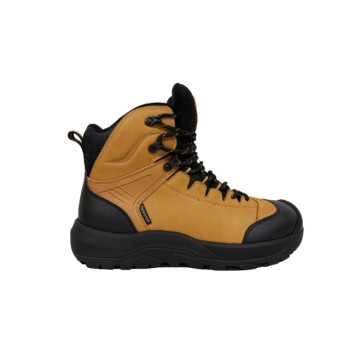
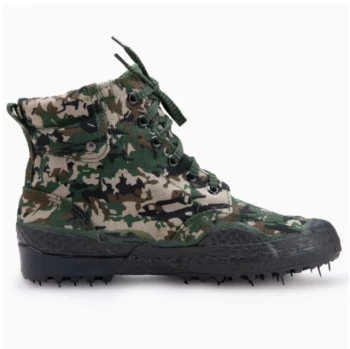
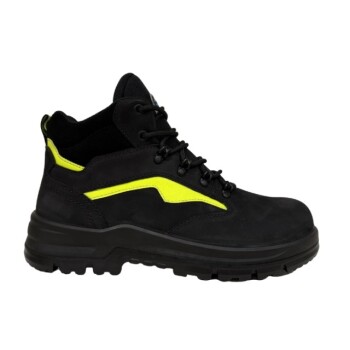
Specific tread geometry acts as the primary mechanical anchor between your footwear and the ground. In snowy environments, standard friction is insufficient; tactical boots require deep, alternating tread patterns to physically lock into the snow while actively expelling buildup to maintain traction.
Core Takeaway Success in snowy conditions relies on "mechanical interlocking," where the shoe becomes a gear that meshes with the ground. Effective geometry bites through unstable top layers to find hard-packed snow underneath, while simultaneously shedding debris to prevent the sole from becoming a smooth, slippery surface.
The Mechanics of Snow Traction
Mechanical Interlocking
The fundamental principle driving winter tread design is mechanical interlocking. Unlike walking on asphalt, where rubber relies on friction to grip the surface, snow requires the boot to physically penetrate and lock into the terrain.
Specific tread geometries are engineered to create this physical bond. The voids between the rubber lugs allow the snow to enter and lock against the tread walls, providing the leverage needed to push off without slipping.
Biting Through the Surface
Fresh or loose snow is inherently unstable. A flat sole will simply float on top of this layer, leading to immediate slippage.
Deep tread patterns allow the footwear to bypass this loose top layer. By pushing through the soft powder, the lugs can bite into the harder, packed surface underneath, securing a stable foothold even in deep drifts.
Managing Snow Accumulation
The Self-Cleaning Function
One of the most critical aspects of tread geometry is its ability to self-clean. The reference notes that effective boots must be able to expel loose snow with every step.
If the tread pattern is too tight or shallow, snow gets trapped in the grooves. As you walk, this trapped snow compacts, eventually filling the void completely.
Preventing the "Slick" Effect
When snow accumulates and packs into the tread, it creates a dangerous situation. The bottom of the boot becomes a smooth, consistent layer of packed snow.
This effectively turns a high-traction boot into a slick surface with zero grip. By using alternating patterns and wide channels, tactical boots ensure that snow falls out of the tread as the sole flexes, preserving the geometry needed for traction.
Understanding the Trade-offs
Performance on Hard Surfaces
While aggressive, deep treads are essential for snow, they present limitations on other surfaces.
The same geometry that bites into snow reduces the total surface area of rubber in contact with the ground. On smooth, hard surfaces like ice or wet tile, this reduced contact patch can actually decrease slip resistance compared to a flatter sole.
Walking Stability
Extremely deep treads lift the foot higher off the ground.
This creates a higher center of gravity. While necessary for snow clearance, it can slightly reduce stability and ground feel when transitioning to cleared pavement or indoor environments.
Making the Right Choice for Your Environment
To select the correct footwear, you must match the tread geometry to your specific operational needs.
- If your primary focus is loose or fresh snow: Prioritize boots with widely spaced, deep lugs to maximize self-cleaning and prevent clogging.
- If your primary focus is packed snow and ice: Look for tread patterns with sharp, alternating edges that can bite into hard surfaces like a cleat.
The right tread geometry transforms your footwear from a passive covering into an active tool for stability and safety.
Summary Table:
| Feature | Function in Snow | Primary Benefit |
|---|---|---|
| Mechanical Interlocking | Lug walls lock against snow | Provides leverage for push-off and stability |
| Deep Lug Profile | Bypasses loose top powder | Reaches hard-packed snow for a secure bite |
| Wide Channels | Facilitates self-cleaning | Expels snow to prevent the sole from becoming a slick surface |
| Alternating Patterns | Multi-directional grip | Prevents slipping during lateral and forward movement |
Partner with 3515 for High-Performance Tactical & Outdoor Footwear
As a large-scale manufacturer serving global distributors and brand owners, 3515 specializes in engineering footwear that conquers the toughest environments. Our flagship Safety Shoes and Tactical Boots utilize advanced tread geometries designed for mechanical interlocking and superior self-cleaning, ensuring your customers stay safe in snowy or rugged terrain.
From work boots and training shoes to sneakers and formal dress shoes, we offer comprehensive production capabilities to meet your bulk requirements. Leverage our manufacturing expertise to elevate your product line—contact us today to discuss your bulk order and custom specifications!
References
- Marjo Hippi, Markku Kangas. Impact of Weather on Pedestrians’ Slip Risk. DOI: 10.3390/ijerph19053007
This article is also based on technical information from 3515 Knowledge Base .
Related Products
- Wholesale Lightweight Tactical Boots Custom Manufacturer for Desert & Combat Use
- Wholesale Waterproof Tactical Boots Custom Suede & High-Traction Soles
- Premium Insulated Safety Boots and Shoes for Wholesale & Bulk Orders
- Durable Mid-Cut Tactical Boots for Wholesale & Private Label
- High-Traction Suede Tactical Boots Wholesale & Custom Manufacturing
People Also Ask
- What are the common types of combat boots? Find the Right Boot for Your Mission
- What specialized protections do tactical boots offer? Maximize Endurance with High-Performance Footwear
- What are the main construction similarities between tactical boots and tactical sneakers? Built for Performance & Durability
- How is the compatibility of polymer materials demonstrated in smart footwear? Enhancing Tactical & Training Performance
- How does additive manufacturing equipment reduce environmental risks? Sustainable Tactics for Modern Footwear Production