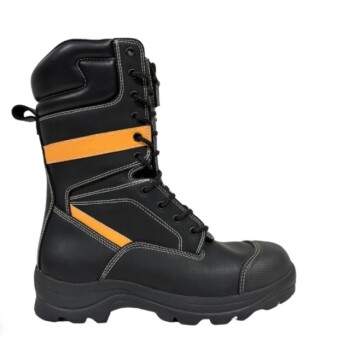
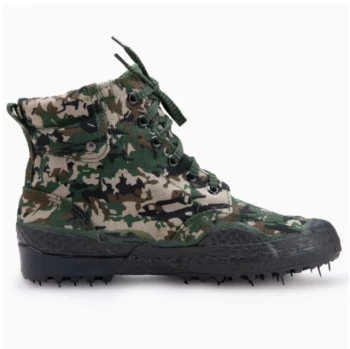
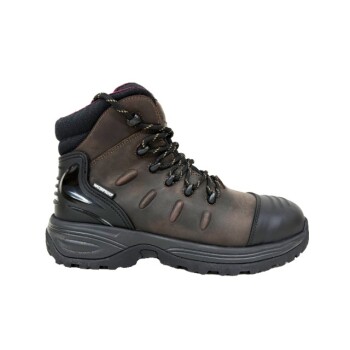
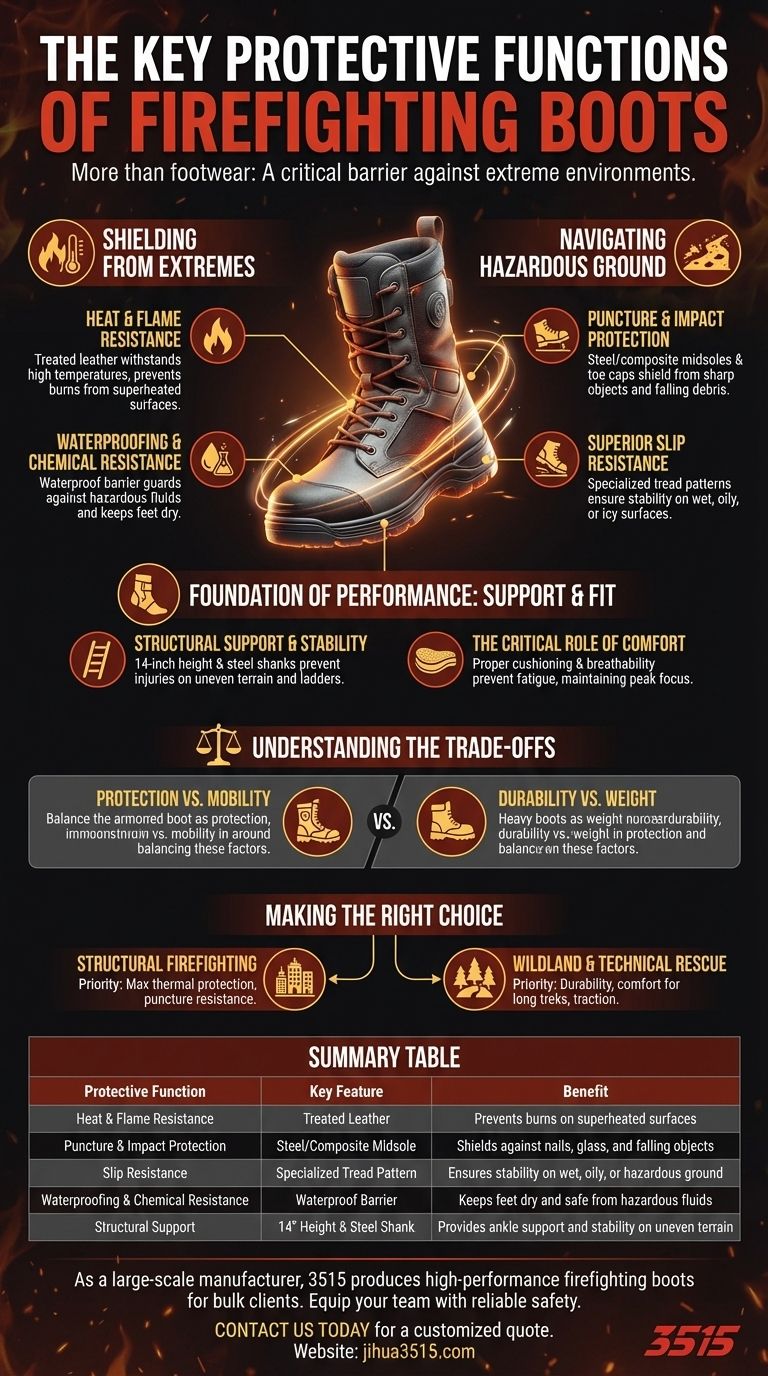
The key protective functions of firefighting boots are to shield against extreme heat and flames, prevent punctures from sharp objects, provide superior traction on hazardous surfaces, keep feet dry, and offer structural support to prevent injuries. These features work in unison to protect against the diverse ground-level dangers inherent to the job.
A firefighter's boot is not just footwear; it is a critical piece of personal protective equipment. Its primary role is to create a protective barrier between the wearer and a hostile environment, ensuring both safety and the ability to perform under extreme pressure.
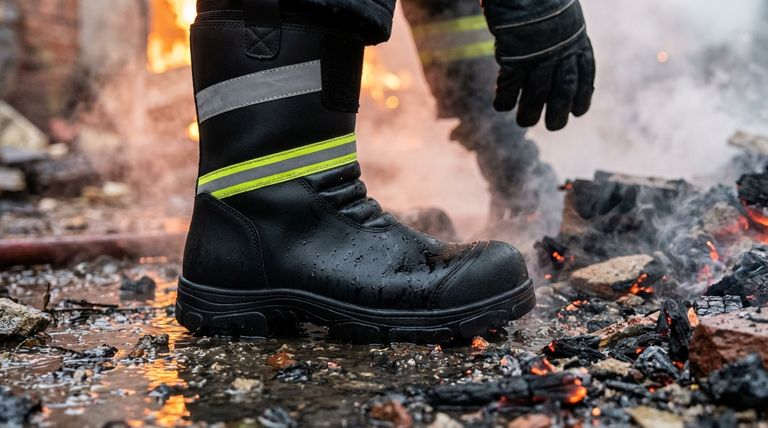
Shielding from Environmental Extremes
A fire scene is an environment of intense thermal and chemical hazards. The boot serves as the first line of defense against these dangers at ground level.
Heat and Flame Resistance
The most obvious function is protection from direct flame and extreme ambient heat. Boots are constructed from materials like high-quality, treated leather that can withstand high temperatures without degrading.
This thermal barrier is essential for preventing severe burns when walking on superheated surfaces or through embers.
Waterproofing and Chemical Resistance
Keeping feet dry is critical for both safety and health. Firefighting boots incorporate a waterproof barrier to protect against water, foam, and other common fluids.
This feature not only prevents blisters and discomfort but also guards against exposure to potentially hazardous chemicals present in runoff at a fire or rescue scene.
Navigating Hazardous Ground
Firefighters operate in unpredictable, debris-strewn environments where every step can be a risk. The boot's design directly addresses the physical dangers underfoot.
Puncture and Impact Protection
To guard against nails, glass, and sharp metal debris, boots are equipped with puncture-resistant midsoles, often made of steel or composite materials.
Additionally, reinforced toe caps protect against impact and compression from falling objects, a common hazard in unstable structures.
Superior Slip Resistance
Maintaining traction is non-negotiable. Boot outsoles are engineered with specialized tread patterns and compounds to grip wet, oily, or frozen surfaces.
This slip resistance is crucial for maintaining balance and stability while carrying heavy equipment or performing a rescue on treacherous ground.
The Foundation of Performance: Support and Fit
Beyond passive protection, a boot must enable the firefighter to perform their job effectively and without injury over long, strenuous hours.
Structural Support and Stability
Fires often occur on uneven or collapsing terrain. Boots provide critical ankle and foot support to prevent sprains and fractures.
Features like a steel shank provide rigidity, which is especially important for maintaining stability while climbing ladders for extended periods. Structural firefighting boots are often 14 inches high to maximize this support.
The Critical Role of Comfort
Comfort is a safety feature. An ill-fitting or unsupportive boot leads to fatigue, blisters, and distraction, which can be fatal in a high-stakes environment.
Proper cushioning, arch support, and breathability allow a firefighter to stay focused and maintain peak physical performance throughout a long incident.
Understanding the Trade-offs
Selecting the right boot involves balancing competing needs. No single boot is perfect for every scenario, and understanding the compromises is key.
Protection vs. Mobility
Heavily reinforced boots with maximum thermal protection can be stiff and heavy. This can reduce a firefighter's agility and increase fatigue.
The challenge is finding the right balance between robust protection and the flexibility needed for running, climbing, and navigating tight spaces.
Durability vs. Weight
Materials that offer the highest durability, like thick bull hide leather and steel components, add significant weight.
While ensuring a long service life, this weight can contribute to exhaustion over multi-hour or multi-day events, a critical consideration in wildland firefighting.
Making the Right Choice for Your Role
The ideal boot is determined by the specific demands of your primary mission.
- If your primary focus is structural firefighting: Your priority is maximum thermal protection, puncture resistance from urban debris, and features like ladder shanks for stability.
- If your primary focus is wildland or technical rescue: Your priority is durability against abrasion, all-day comfort for long treks, and superior traction on uneven, natural terrain.
Ultimately, the right boot is an essential tool that empowers a firefighter to operate with confidence and focus completely on the mission at hand.
Summary Table:
| Protective Function | Key Feature | Benefit |
|---|---|---|
| Heat & Flame Resistance | Treated Leather | Prevents burns on superheated surfaces |
| Puncture & Impact Protection | Steel/Composite Midsole | Shields against nails, glass, and falling objects |
| Slip Resistance | Specialized Tread Pattern | Ensures stability on wet, oily, or hazardous ground |
| Waterproofing & Chemical Resistance | Waterproof Barrier | Keeps feet dry and safe from hazardous fluids |
| Structural Support | 14" Height & Steel Shank | Provides ankle support and stability on uneven terrain |
As a large-scale manufacturer, 3515 produces a comprehensive range of high-performance firefighting boots for distributors, brand owners, and bulk clients. Our production capabilities ensure every pair meets the highest standards of heat resistance, puncture protection, and durability. Let us equip your team with the reliable footwear they need to stay safe and focused.
Contact us today to discuss your specific requirements and receive a customized quote.
Visual Guide
Related Products
- High Performance Fire-Retardant Waterproof Safety Boots
- Premium Flame-Retardant Waterproof Safety Boots and Shoes
- Wholesale Lightweight Tactical Boots Custom Manufacturer for Desert & Combat Use
- Durable Military Combat Boots with Water Drainage for Wholesale & OEM
- High-Traction Suede Tactical Boots Wholesale & Custom Manufacturing
People Also Ask
- Why are waterproof safety boots recommended for certain work environments? Essential Protection for Wet & Hazardous Jobs
- What roles do 3D vision systems and industrial robots play in the manufacturing of fire safety boots? Smart Automation
- What are the primary benefits of incorporating waterproof technology into professional and outdoor boots? Boost Value
- How can you ensure your feet stay dry during winter walks? A Two-Part Defense System for Total Comfort
- What is the advantage of one-piece construction in waterproof boots? Unbeatable Seamless Protection