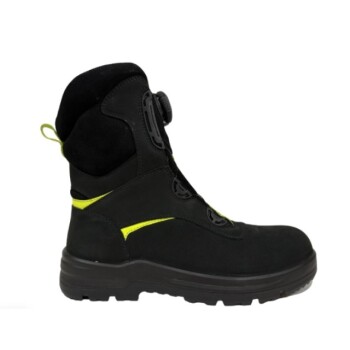
Tactical boots with high-performance cushioning are essential because they neutralize ground impact and stabilize the wearer’s gait. By utilizing high-elasticity midsoles and heel-locking technology, these boots absorb the kinetic energy that would otherwise travel through the joints and spine. This mechanical intervention directly reduces the physical load on the musculoskeletal system during high-intensity operations and weighted marches.
High-performance cushioning systems act as a critical buffer between the operator and the environment, mitigating the repetitive stress of specialized missions. By managing impact forces and maintaining postural stability, these boots prevent both acute injuries and the cumulative degradation of the musculoskeletal system.
The Mechanics of Impact Mitigation
High-Elasticity Midsoles and Force Absorption
The primary function of high-performance cushioning is the absorption of ground impact forces. During high-intensity activities like running or jumping with heavy gear, the force exerted on the feet can be several times an individual's body weight.
High-elasticity midsoles dissipate this energy before it reaches the ankles, knees, and lower back. This reduction in kinetic shock is vital for preventing stress fractures and joint inflammation over time.
Reducing Systemic Musculoskeletal Pressure
Special service personnel often engage in "weighted marches" that place extreme pressure on the entire body. High-performance cushioning reduces the overall musculoskeletal pressure experienced during these strenuous movements.
By lowering the baseline of physical stress, these systems help manage systemic fatigue. This is particularly important because high-intensity physical activities can exacerbate diverse conditions, including De Quervain's Tenosynovitis (DQT), by increasing total body strain.
Structural Stability and Injury Prevention
Heel-Locking Technology and Center of Gravity
A stable center of gravity is the foundation of safe movement on unpredictable terrain. High-performance boots often feature heel-locking technology to ensure the foot remains seated correctly within the chassis.
This stability prevents the foot from sliding or rotating internally, which is a leading cause of ligament strains. By securing the heel, the boot allows for more efficient power transfer and better balance during complex maneuvers.
Support for Multi-Directional Movement
Special service missions require more than just forward movement; they involve crouching, climbing, and sudden lateral shifts. Tactical boots provide the necessary lateral support to protect the ankles during these transitions.
Cushioning systems that maintain their shape under load provide a consistent platform for the foot. This prevents foot fatigue, allowing personnel to maintain peak performance for longer durations without compromising their form.
Understanding the Trade-offs
Cushioning vs. Ground Feedback
While high-performance cushioning provides superior protection, it can sometimes reduce proprioception, or the "feel" of the ground. Operators moving over extremely technical or narrow terrain may find that excessive cushioning masks the subtle shifts in the surface.
Finding the balance between "plushness" and responsiveness is a common challenge in tactical footwear design. Too much softness can lead to a "mushy" feeling that may slightly decrease agility in high-speed sprinting scenarios.
Durability and Environmental Factors
High-elasticity materials like specialized foams may degrade faster than traditional hard rubber soles under extreme heat or chemical exposure. Furthermore, while these boots are often weatherproof, the added layers of cushioning can sometimes affect the breathability of the boot in tropical climates.
Personnel must weigh the benefits of maximum impact protection against the specific environmental demands of their theater of operation.
How to Select the Right System for Your Mission
Applying Technical Features to Operational Needs
Choosing the correct tactical footwear requires aligning the boot's specific cushioning technology with the primary physical demands of the mission.
- If your primary focus is heavy load-bearing or long-distance marches: Prioritize boots with maximal high-elasticity midsoles and reinforced heel-locking systems to manage the constant downward pressure.
- If your primary focus is agility and rapid response in urban environments: Explain the key takeaway for this goal in one sentence. Select a boot with a lower profile cushioning system that balances impact absorption with high ground feedback for faster pivots.
- If your primary focus is stability on steep or uneven terrain: Look for boots that emphasize ankle support and deep-lugged outsoles alongside moderate cushioning to ensure a secure grip and prevent rolls.
By integrating high-performance cushioning into their gear, special service personnel can significantly extend their operational lifespan and protect their long-term physical health.
Summary Table:
| Feature | Mechanical Benefit | Operational Advantage |
|---|---|---|
| High-Elasticity Midsole | Absorbs ground impact forces | Reduces risk of stress fractures and joint fatigue |
| Heel-Locking Tech | Stabilizes center of gravity | Prevents ligament strains and improves gait stability |
| Lateral Support | Controls multi-directional movement | Enhances agility during crouching and climbing |
| Impact Buffering | Dissipates kinetic energy | Protects the spine and lower back during weighted marches |
Maximize Operator Health with 3515 Tactical Footwear
As a premier large-scale manufacturer serving global distributors and brand owners, 3515 delivers advanced footwear solutions engineered for the most demanding environments. Our flagship Safety Shoes and tactical boot series integrate high-performance cushioning and heel-locking technology to eliminate musculoskeletal strain and extend the operational lifespan of your personnel.
From rugged work and tactical boots to high-agility sneakers and professional Dress & Formal shoes, we offer comprehensive production capabilities to meet your bulk requirements. Partner with a manufacturer that prioritizes durability, ergonomics, and precision.
Ready to upgrade your inventory with elite-grade tactical footwear? Contact us today to discuss your bulk manufacturing needs!
References
- Jai Ramchandani, Thahesh Tharmaraja. Time to Reconsider Occupation Induced De Quervain’s Tenosynovitis: An Updated Review of Risk Factors. DOI: 10.52965/001c.36911
This article is also based on technical information from 3515 Knowledge Base .
Related Products
- High-Traction Suede Tactical Boots Wholesale & Custom Manufacturing
- Durable High-Ankle Tactical Boots Wholesale Manufacturer for Custom & Bulk Orders
- Durable High-Ankle Tactical Boots for Wholesale & Custom Manufacturing
- Wholesale Tactical Boots High-Traction & Reflective for Bulk & Brand Orders
- Durable Leather High-Ankle Tactical Boots for Wholesale & Custom Manufacturing
People Also Ask
- Why is sequential analysis utilized to evaluate tactical boots? Master Dynamic Boot Development and Ergonomic Performance
- How does the material of tactical boots affect their performance? Choose the Right Material for Your Mission
- How do tactical boots differ from regular boots? Performance, Durability & Design Explained
- How do military uniforms and tactical boots impact the prediction of thermal risk? Essential Safety Insights
- What are the benefits of integrating FES and sEMG into tactical boots? Safety, Reliability & Field-Ready Performance