
Properly cleaning military boots is a systematic process that preserves their longevity and performance. The essential steps are to first remove laces and insoles, then use a stiff brush to remove all loose dirt and debris. Next, gently scrub the exterior with a damp cloth and a mild, pH-neutral soap solution, followed by air drying away from direct heat. The final, critical step is to apply a material-appropriate conditioner or waterproofing spray to protect the boot.
The goal of cleaning military boots extends beyond appearance; it is a critical maintenance routine designed to preserve the material's integrity, ensure long-term durability, and maintain the boot's protective features against the elements.
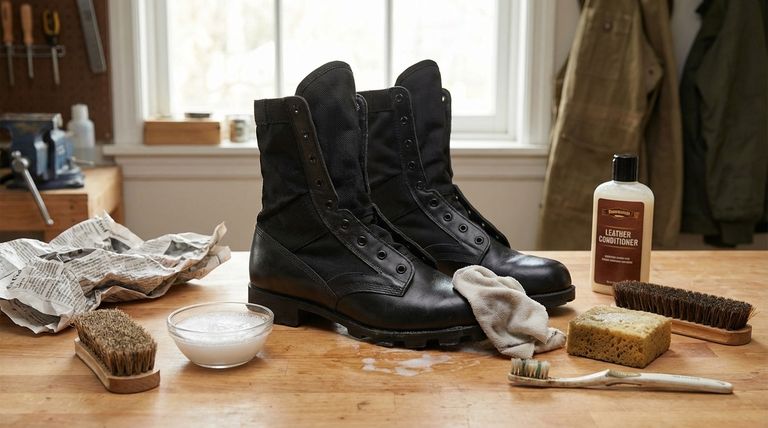
Assembling Your Essential Toolkit
Before beginning, gathering the correct supplies is crucial. Using the wrong tools can cause more harm than good, so ensure you have a dedicated kit for boot maintenance.
The Right Brushes for the Job
You will need at least two types of brushes. A stiff-bristled brush is for removing caked-on mud and debris from the soles and grooves. A soft-bristled brush or cloth is for the boot's upper, preventing scratches on leather or damage to fabrics. An old toothbrush is excellent for cleaning seams and other hard-to-reach areas.
Choosing a Cleaning Agent
The safest and most effective option is a mild soap with a neutral pH mixed with lukewarm water. Avoid harsh detergents or household cleaners, which can strip protective oils from leather and damage synthetic materials. For specific materials like suede, a dedicated boot cleaner is recommended.
Post-Clean Treatments
Cleaning is only half the battle. For leather boots, a leather conditioner is non-negotiable to keep the material supple and prevent cracking. For synthetic or suede boots, a waterproofing spray restores water resistance and protects against future stains.
The Core Cleaning Process, Step-by-Step
A methodical approach ensures every part of the boot is cleaned without causing damage. This process should be followed for any deep clean.
Step 1: Preparation is Key
Always begin by removing the laces and insoles. This allows you to clean them separately and gives you full access to the boot's interior and exterior surfaces. Laces can be hand-washed in soapy water or placed in a mesh bag for a machine wash.
Step 2: The Initial Dry Brush
With the boot dry, use your stiff brush to vigorously remove all loose dirt, dust, and mud. Pay close attention to the outsole treads, seams, and crevices where debris accumulates. This step prevents you from grinding dirt into the material during the wet cleaning phase.
Step 3: The Wet Clean
Mix your mild soap with warm water. Dampen a soft cloth or sponge in the solution, wring it out, and gently scrub the boot's exterior. The goal is to clean the surface without soaking the boot. Use your toothbrush for stubborn spots and seams.
Step 4: The Crucial Drying Phase
After rinsing any soap residue with a clean, damp cloth, the boot must dry completely. Stuff the boots with newspaper to absorb internal moisture and help them hold their shape. Let them air dry naturally in a cool, shaded, and well-ventilated area.
Common Pitfalls That Damage Your Boots
Avoiding common mistakes is as important as following the correct steps. These shortcuts can permanently ruin a quality pair of boots.
The Lure of the Washing Machine
Never put military boots, especially those with leather components, in a washing machine. The combination of full submersion, agitation, and detergent can destroy adhesives, warp materials, and ruin the boot's structure.
The Danger of Direct Heat
Resist the temptation to speed up drying by placing boots near a radiator, fire, or in direct sunlight. Direct heat can crack leather, melt glues, and cause synthetic materials to become brittle. Slow, natural air drying is the only safe method.
Using the Wrong Tools
A wire brush will ruin suede and scratch leather finishes. Harsh chemical cleaners can discolor fabrics and strip essential oils from leather, leading to premature aging and failure. Always stick to mild, purpose-made supplies.
Making the Right Choice for Your Goal
Your cleaning routine should adapt to the boot's condition and your long-term goals for the gear.
- If your primary focus is routine maintenance after light use: A quick dry brushing after each wear is the most effective habit to prevent dirt buildup.
- If your primary focus is restoring heavily soiled boots: Follow the full wet-cleaning process, paying special attention to the slow, newspaper-assisted drying phase.
- If your primary focus is maximizing longevity and weather resistance: Never skip the final conditioning (for leather) or waterproofing (for all types) step, as this is what protects the material from damage.
A consistent and correct cleaning regimen is the single best investment you can make in the performance and lifespan of your boots.
Summary Table:
| Step | Key Action | Purpose |
|---|---|---|
| 1. Preparation | Remove laces & insoles | Access all surfaces for thorough cleaning |
| 2. Dry Brush | Use a stiff brush on dry boot | Remove loose dirt and debris |
| 3. Wet Clean | Gently scrub with mild soap solution | Clean without damaging materials |
| 4. Drying | Air dry naturally, stuffed with newspaper | Preserve shape; avoid heat damage |
| 5. Protection | Apply conditioner/waterproofing spray | Restore durability and weather resistance |
As a large-scale manufacturer, 3515 produces a comprehensive range of durable footwear for distributors, brand owners, and bulk clients. Our production capabilities encompass all types of military, tactical, and work boots designed for extreme conditions.
Ensure your team is equipped with reliable, long-lasting boots built to perform. Contact us today to discuss your specific needs and discover how we can be your trusted manufacturing partner.
Get a Custom Quote for Your Order
Visual Guide

Related Products
- Durable Military Combat Boots with Water Drainage for Wholesale & OEM
- High-Traction Suede Tactical Boots Wholesale & Custom Manufacturing
- Durable High-Ankle Tactical Boots for Wholesale & Custom Manufacturing
- Durable Mid-Cut Tactical Boots for Wholesale & Private Label
- Wholesale Waterproof Tactical Boots Custom Suede & High-Traction Soles
People Also Ask
- Why must gait validation for military applications be conducted in combat boots? Ensure Data Accuracy for Soldiers
- What are the common types of combat boots? Find the Right Boot for Your Mission
- What factors should be considered when choosing military boots for hiking? Durability vs. Weight for Your Terrain
- What are the key considerations when choosing military boots? Prioritize Compliance, Environment & Fit
- How should the midfoot and heel fit in military boots? Achieve a Snug, Secure Fit for Blister Prevention



















