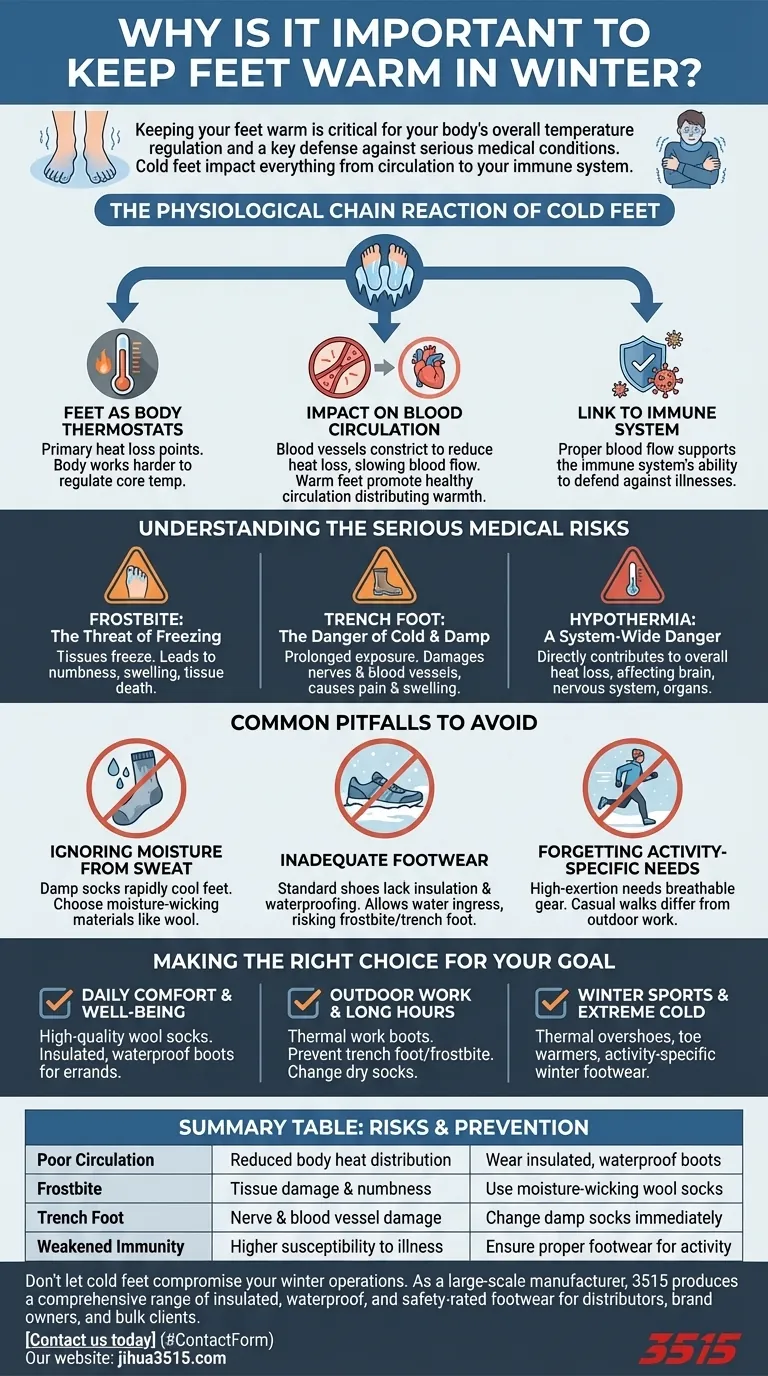
Keeping your feet warm in winter is far more than a matter of comfort; it is a critical component of your body's overall temperature regulation and a key defense against serious medical conditions. When your feet get cold, your body struggles to maintain its core temperature, which can impact everything from your circulation to your immune system and expose you to risks like frostbite and nerve damage.
Dismissing cold feet as a minor winter annoyance is a common mistake. In reality, your feet are crucial for maintaining proper blood circulation, a process that distributes heat throughout your body and is essential for your overall health and energy levels.
The Physiological Chain Reaction of Cold Feet
When your feet are exposed to cold, they trigger a series of responses that affect your entire system. Understanding this process reveals why protecting them is so important.
Your Feet as Body Thermostats
Your body's extremities—the head, hands, and feet—are primary points of heat loss. If any of these key areas become cold, your body must work significantly harder to regulate its core temperature.
The Impact on Blood Circulation
Cold temperatures cause the blood vessels in your feet to constrict. This is a natural defense mechanism to reduce heat loss, but it also slows down blood flow.
Keeping your feet warm allows these blood vessels to remain open, promoting healthy circulation that distributes warmth throughout the rest of your body.
The Link to Your Immune System
Proper blood flow is essential for a well-functioning immune system. By maintaining warmth and good circulation, you support your body's ability to defend against common winter illnesses like colds and the flu.
Understanding the Serious Medical Risks
Neglecting to keep your feet warm can lead to consequences far more severe than temporary discomfort. These conditions can cause lasting damage.
Frostbite: The Threat of Freezing
Frostbite occurs when your skin and the underlying tissues freeze. This can permanently damage skin, muscles, blood vessels, and nerves, leading to numbness, swelling, and in severe cases, tissue death.
Trench Foot: The Danger of Cold and Damp
You don't need freezing temperatures to be at risk. Trench foot is a serious condition caused by prolonged exposure to cold, damp environments. It damages nerves and blood vessels, leading to significant pain and swelling.
Hypothermia: A System-Wide Danger
Cold feet contribute directly to overall body heat loss. This can increase your risk of hypothermia, a dangerous drop in body temperature that affects your brain, nervous system, and other organs.
Common Pitfalls to Avoid
Simply putting on any pair of boots isn't enough. Certain common mistakes can undermine your efforts to stay warm and safe.
Ignoring Moisture from Sweat
Insulation is only half the battle. If your socks become damp from sweat, the moisture will rapidly cool your feet, defeating the purpose of your warm footwear. Choose moisture-wicking materials like wool.
Inadequate Footwear
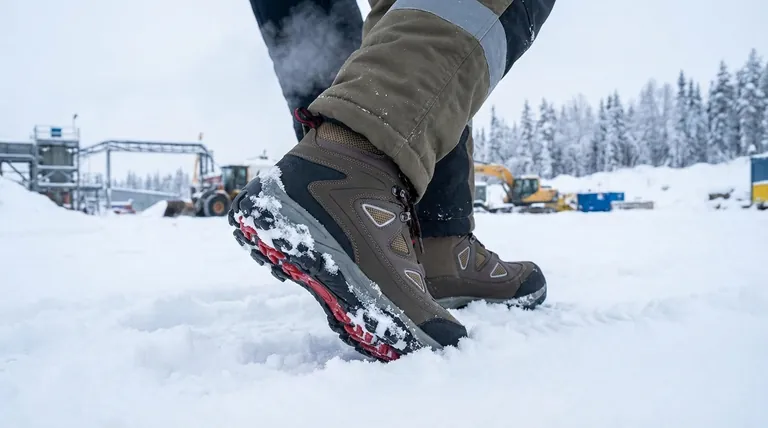
Standard shoes or boots without proper insulation and waterproofing are insufficient for cold, wet conditions. Water from snow or slush can easily seep in, creating a perfect environment for trench foot or frostbite.
Forgetting Activity-Specific Needs
The protection you need for a short walk is different from what you need for outdoor work or winter sports. High-exertion activities require gear that balances warmth with breathability to manage sweat.
Making the Right Choice for Your Goal
Your strategy for keeping your feet warm should match your activity and environment.
- If your primary focus is daily comfort and well-being: Invest in high-quality wool socks and insulated, waterproof boots for everyday errands and walks.
- If you work or spend long hours outdoors: Prioritize preventing trench foot and frostbite with dedicated thermal work boots and by ensuring you have a way to change into dry socks if needed.
- If you participate in winter sports: Use specialized solutions like thermal overshoes (booties), chemical toe warmers, and activity-specific winter footwear to combat extreme cold and wind.
Protecting your feet from the cold is a simple yet fundamental step in safeguarding your health and mobility throughout the winter.
Summary Table:
| Risk of Cold Feet | Key Consequence | Prevention Tip |
|---|---|---|
| Poor Circulation | Reduced body heat distribution | Wear insulated, waterproof boots |
| Frostbite | Tissue damage & numbness | Use moisture-wicking wool socks |
| Trench Foot | Nerve & blood vessel damage | Change damp socks immediately |
| Weakened Immunity | Higher susceptibility to illness | Ensure proper footwear for activity |
Don't let cold feet compromise your winter operations. As a large-scale manufacturer, 3515 produces a comprehensive range of insulated, waterproof, and safety-rated footwear for distributors, brand owners, and bulk clients. Our production capabilities encompass all types of winter boots and work shoes designed to protect your team's health and productivity.
Contact us today to discuss your bulk footwear needs and ensure your customers or workforce are properly equipped for the cold.
Visual Guide