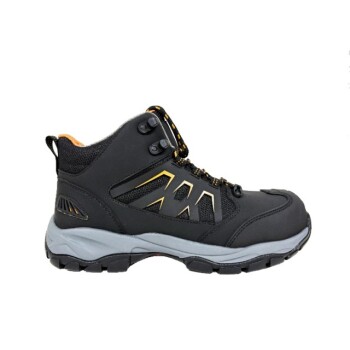
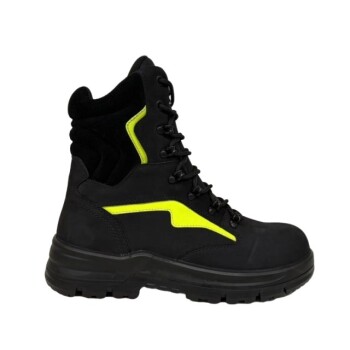
Ultimately, landscapers need steel-toe boots because their work environment is functionally equivalent to a construction or industrial site. They are required to protect feet from the constant and often unpredictable hazards of falling objects, heavy equipment, and sharp tools that define the job.
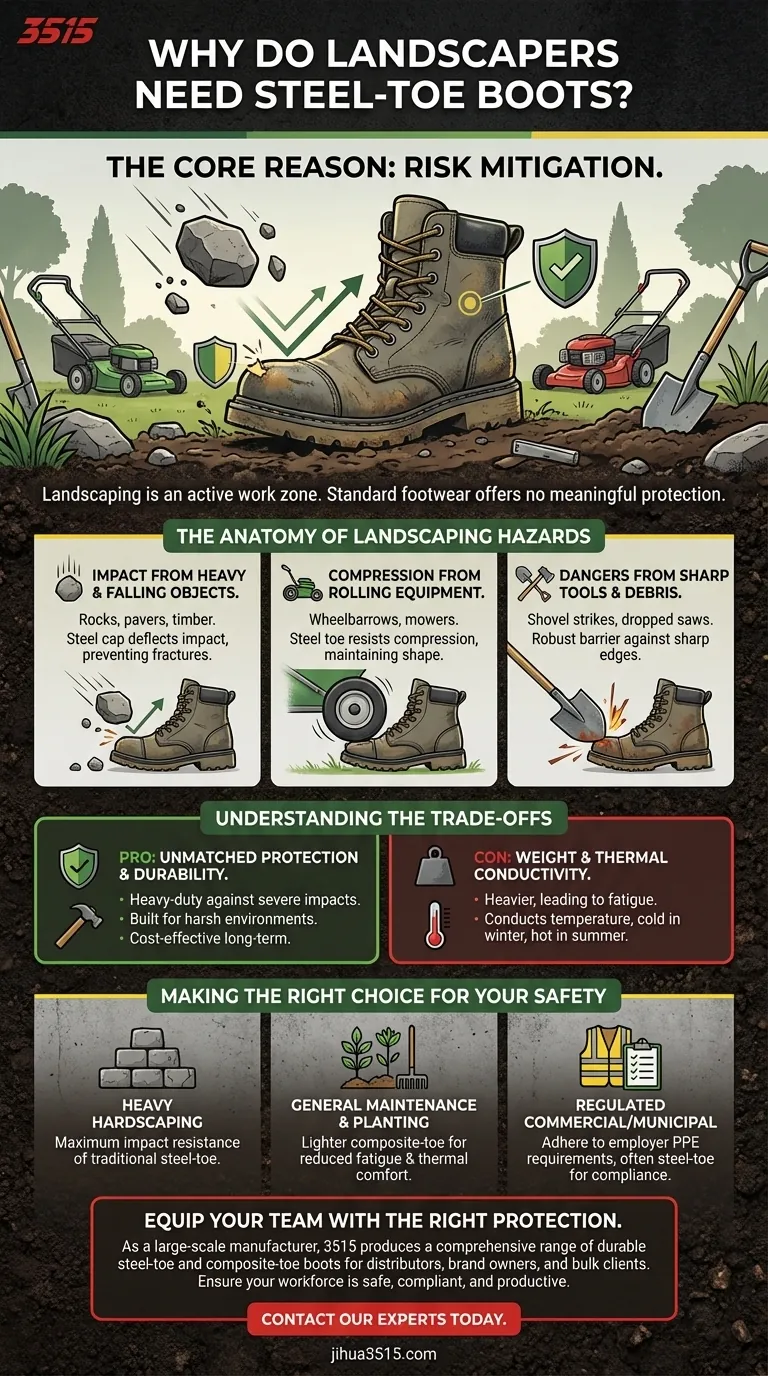
The core reason for steel-toe boots in landscaping is risk mitigation. The ground under a landscaper's feet is an active work zone, and standard footwear offers no meaningful protection against the severe impact and compression injuries common to the trade.
The Anatomy of Landscaping Hazards
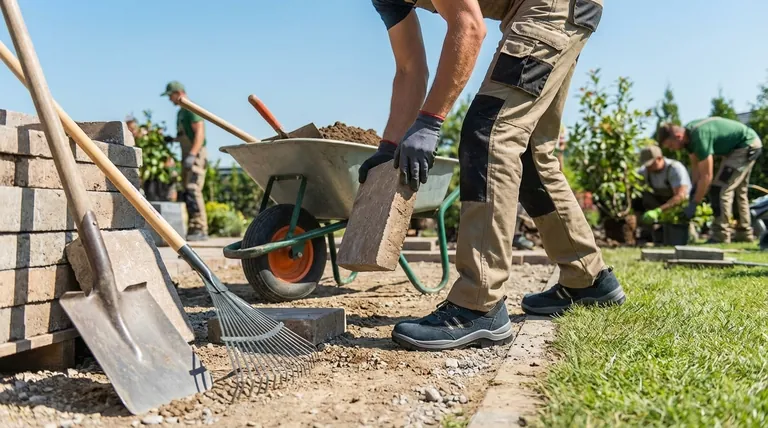
A landscape is not a static environment; it is constantly being deconstructed and reassembled. This process introduces significant risks that are often underestimated but require industrial-grade personal protective equipment (PPE).
Impact from Heavy & Falling Objects
The most direct threat comes from above. Landscapers regularly handle heavy materials like rocks, paving stones, and large pieces of timber.
Dropping one of these items on a foot protected by a standard shoe would result in severe fractures. The reinforced steel cap acts as a rigid shield, deflecting the force of the impact and preventing crushing injuries to the toes.
Compression from Rolling Equipment
Landscaping often involves more than just hand tools. Heavy wheelbarrows, lawnmowers, and other small machinery can easily roll over a foot.
A steel toe is designed to resist compression forces, maintaining its shape and protecting the foot from being crushed under the weight of heavy equipment.
Dangers from Sharp Tools & Debris
The work involves constant digging, cutting, and clearing. A misplaced shovel strike, a dropped saw, or an errant axe swing can cause devastating injury.
While the steel cap primarily protects the top of the foot, its robust construction provides a crucial barrier against the sharp edges of the tools used daily.
Understanding the Trade-offs
While steel-toe boots are an essential safety tool, it's important to understand their specific characteristics. They are one option among several types of safety footwear.
Pro: Unmatched Protection & Durability
Steel is the traditional standard for a reason. It offers heavy-duty protection against the most severe impacts, which is critical when working with stone, concrete, or heavy machinery.
These boots are built for harsh environments, making them highly durable and often a cost-effective choice over the long term.
Con: Weight and Thermal Conductivity
The primary downside to steel is its weight. Steel-toe boots are typically heavier than their composite-toe counterparts, which can lead to fatigue over a long day.
Because steel is a metal, it readily conducts temperature. This means the boots can feel very cold in the winter and hot in the summer, which is a significant consideration for outdoor work.
Making the Right Choice for Your Safety
Your specific tasks should dictate your choice of PPE. While some form of safety toe is non-negotiable for professional landscaping, understanding the nuances helps you select the right tool for the job.
- If your primary focus is heavy hardscaping: You need the maximum impact resistance of traditional steel-toe boots when moving rocks, pavers, or wall blocks.
- If your primary focus is general maintenance and planting: A lighter composite-toe boot might offer sufficient protection while reducing fatigue and improving thermal comfort.
- If you work in regulated commercial or municipal environments: You must adhere to your employer's PPE requirements, which often mandate steel toes as a baseline for insurance and OSHA compliance.
Choosing the right boot is a fundamental decision to ensure you can perform your job safely and effectively, day after day.
Summary Table:
| Hazard | Risk | How Steel-Toe Boots Help |
|---|---|---|
| Heavy/Falling Objects | Severe fractures from rocks, pavers, timber | Reinforced steel cap deflects impact force |
| Rolling Equipment | Crushing injuries from mowers, wheelbarrows | Resists compression to protect foot structure |
| Sharp Tools & Debris | Lacerations from misplaced shovels, saws | Provides a robust barrier against sharp edges |
Equip your team with the right protection. As a large-scale manufacturer, 3515 produces a comprehensive range of durable steel-toe and composite-toe boots for distributors, brand owners, and bulk clients. Our production capabilities encompass all types of safety footwear designed for the rigors of landscaping. Ensure your workforce is safe, compliant, and productive—contact our experts today to discuss your footwear needs.
Visual Guide
Related Products
- Wholesale Durable Breathable Safety Boots Custom OEM Manufacturer
- Puncture-Resistant Velcro Safety Boots for Wholesale & Custom Manufacturing
- Durable Steel Toe Safety Boots Wholesale & Custom Manufacturing
- Wholesale Durable 6-Inch Work Boots | Custom & Private Label Manufacturer
- Premium Sport Style Safety Boots for Bulk Orders
People Also Ask
- Why are industrial safety boots with steel toes necessary for machine operators? Essential Foot Protection for Safety
- Is it true that steel toes can cause toes to get cut off? Debunking the Dangerous Myth
- What are the characteristics of steel toe safety boots? Maximum Protection, Key Trade-offs
- Is there any truth to the myth about steel toe boots causing toe injuries upon impact? Debunking Common Safety Concerns
- Are steel toe boots comfortable for casual wear? Find Your Perfect Balance of Style & Safety