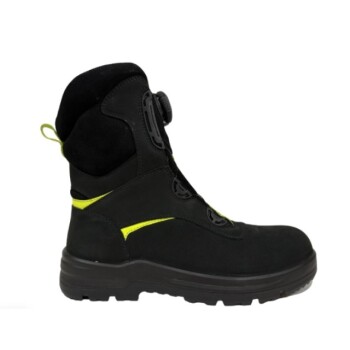
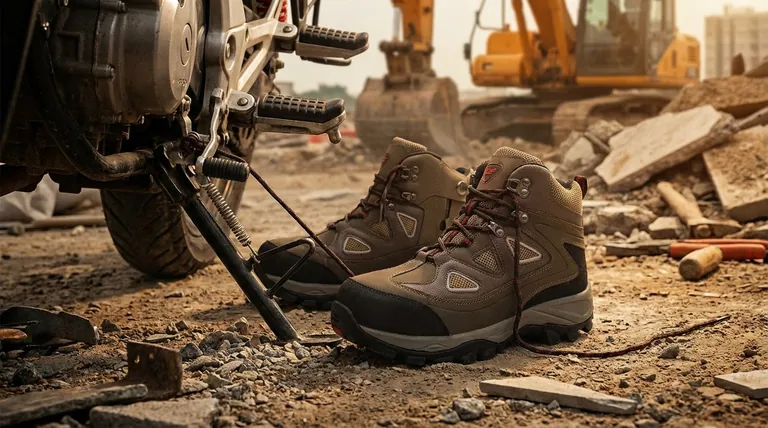
At their core, work boots are not ideal for motorcycle riding because they are engineered for occupational hazards, not the unique dynamics of a crash. While they offer some durability, they lack the specific torsional rigidity, impact armor, and abrasion resistance required to protect your feet and ankles during a slide or collision.
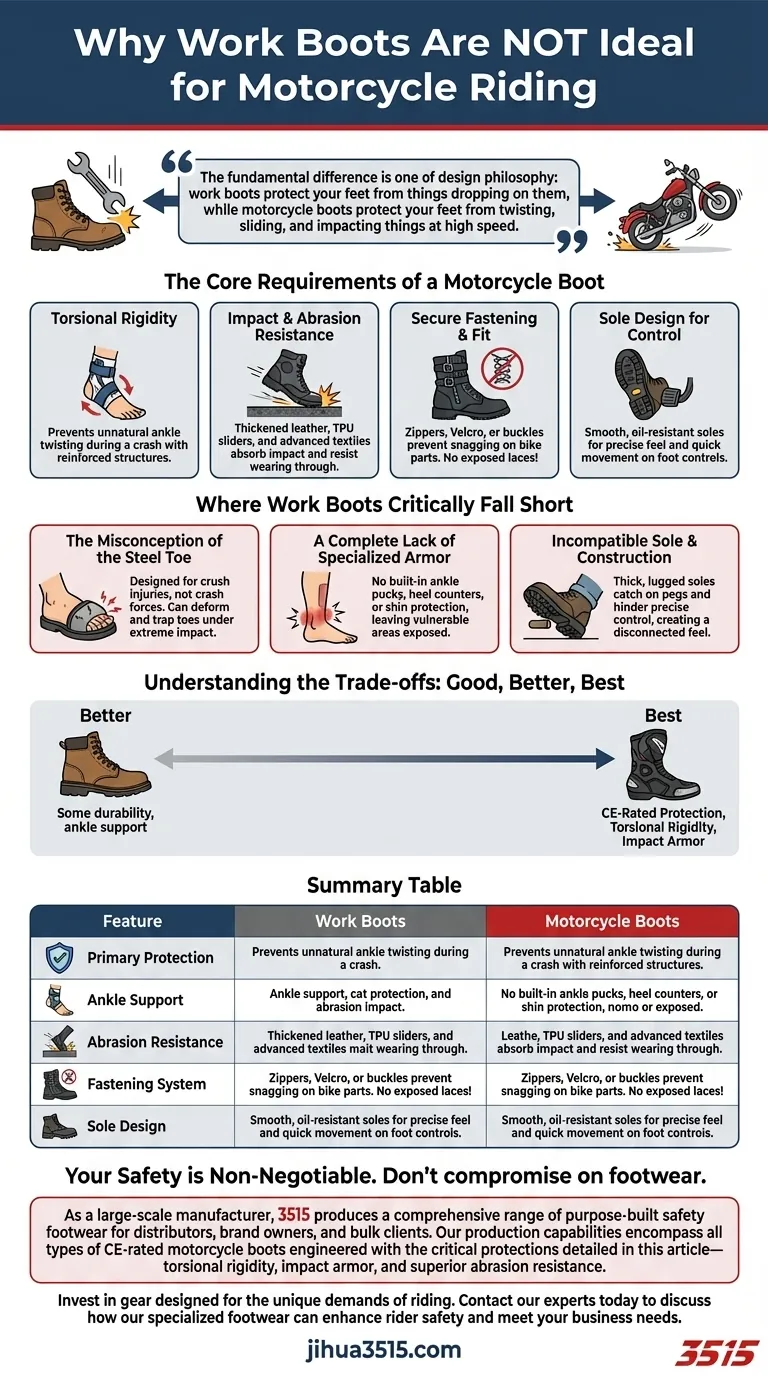
The fundamental difference is one of design philosophy: work boots protect your feet from things dropping on them, while motorcycle boots protect your feet from twisting, sliding, and impacting things at high speed.
The Core Requirements of a Motorcycle Boot
To understand why work boots fall short, we must first define what makes a boot truly effective for riding. Purpose-built motorcycle boots are a highly specialized piece of safety equipment, focusing on four critical areas.
Torsional Rigidity
A primary risk in a motorcycle accident is the violent twisting of the ankle. Motorcycle boots are built with reinforced structures in the ankle and heel to prevent this unnatural movement, significantly reducing the chance of severe sprains or breaks.
Impact and Abrasion Resistance
Sliding on asphalt, even at low speeds, can easily wear through standard leather. Motorcycle boots use thickened leather, advanced textiles, and often feature thermoplastic polyurethane (TPU) or carbon fiber "sliders" on key impact zones like the outer ankle, heel, and toe.
These features are designed to absorb impact and allow the boot to slide on the pavement rather than catching and causing your body to tumble.
Secure Fastening and Fit
Exposed laces are a major liability on a motorcycle. They can easily get caught on a foot peg, shifter, or the bike's chain, leading to a dangerous loss of control.
Proper riding boots use systems like zippers, Velcro flaps, or ratchet buckles that provide a secure fit with no loose ends.
Sole Design for Control
The sole of a motorcycle boot is engineered for a specific job. It is typically oil-resistant to maintain grip on slick surfaces and has a relatively smooth, low profile to allow for precise feel and quick movement on the foot controls.
Where Work Boots Critically Fall Short
When measured against the core requirements of riding safety, the design of a typical work boot reveals significant gaps.
The Misconception of the Steel Toe
A steel toe is designed to protect from vertical compression and crush injuries, like a heavy object falling on your foot. In a motorcycle crash, the forces are typically from the side or are designed to bend the foot in ways the steel toe cannot prevent.
Worse, a steel toe can deform under extreme impact, potentially trapping your toes or even causing a traumatic amputation. Motorcycle boots use reinforced composite toe boxes that are crush-resistant but designed not to deform in this catastrophic way.
A Complete Lack of Specialized Armor
Work boots have no armor. They lack the built-in ankle pucks, reinforced heel counters, and shin protection that are standard on even basic riding boots. This leaves the most vulnerable parts of your lower leg exposed to direct impact.
Incompatible Sole and Construction
The thick, heavily-lugged soles common on work boots are a significant drawback. They can easily catch on foot pegs, preventing you from adjusting your position quickly or getting your foot down cleanly at a stop. This vague, disconnected feel hinders your ability to control the motorcycle precisely.
Understanding the Trade-offs
Some riders do use work boots, citing their durability and convenience. It's essential to frame this choice within a spectrum of protection.
Good, Better, Best
Wearing a sturdy, over-the-ankle leather work boot is undeniably better than riding in sneakers or casual shoes. They provide some ankle support and are more durable than street footwear.
However, they are not a substitute for proper motorcycle boots, which represent the best option. Choosing a work boot is a conscious acceptance of a lower level of safety.
The Case of Combat and Engineer Boots
Combat and engineer boots are often seen as a middle ground. They provide the necessary height and ankle coverage, and engineer boots have the benefit of no laces.
While they are a step up from many work boots, they still lack the critical torsional support and impact armor found in purpose-built motorcycle gear.
Making the Right Choice for Your Safety
Your choice of footwear should align directly with your tolerance for risk and the type of riding you do.
- If your primary focus is maximum safety: A CE-rated motorcycle boot is the only choice, as it is tested and certified to provide specific levels of protection.
- If your primary focus is convenience for casual, low-risk riding: A heavy-duty leather boot without exposed laces is a major improvement over standard shoes, but you must acknowledge the significant safety compromise you are making.
Ultimately, your feet and ankles are irreplaceable and essential for controlling a motorcycle; investing in gear specifically designed to protect them is a direct investment in your long-term ability to ride.
Summary Table:
| Feature | Work Boots | Motorcycle Boots |
|---|---|---|
| Primary Protection | Crush injuries (e.g., falling objects) | High-speed impacts, slides, and twists |
| Ankle Support | Limited, not designed for crash forces | Reinforced with armor for torsional rigidity |
| Abrasion Resistance | Standard leather | Thickened leather/TPU sliders for pavement slides |
| Fastening System | Often exposed laces (a hazard) | Zippers, buckles, or Velcro (no loose ends) |
| Sole Design | Thick, lugged soles for traction | Smooth, oil-resistant for precise bike control |
Your safety is non-negotiable. Don't compromise on footwear.
As a large-scale manufacturer, 3515 produces a comprehensive range of purpose-built safety footwear for distributors, brand owners, and bulk clients. Our production capabilities encompass all types of CE-rated motorcycle boots engineered with the critical protections detailed in this article—torsional rigidity, impact armor, and superior abrasion resistance.
Invest in gear designed for the unique demands of riding. Contact our experts today to discuss how our specialized footwear can enhance rider safety and meet your business needs.
Visual Guide
Related Products
- Premium High-Cut Waterproof Safety Boots Manufacturing & Wholesale Solutions
- Heavy-Duty Waterproof Nubuck Safety Boots Safety Shoes for Bulk Supply
- Durable Goodyear Welt Leather Work Boots for Wholesale & Private Label
- Premium Wholesale Tactical Style Safety Shoes Boots with Quick Lacing
- Wholesale Tactical Boots High-Traction & Reflective for Bulk & Brand Orders
People Also Ask
- Which industries commonly use safety boots and why? Protect Your Workforce from Top Hazards
- What are the common hazards present in work environments that safety boots protect against? Find Your Perfect Match
- What future trends are emerging in safety boot technology? Discover Lighter, Smarter, and More Sustainable Footwear
- What are the slip resistance requirements for safety boots? Professional Grip Standards for Poultry Facility Cleaning
- Why is a high-precision 3D motion capture system necessary for measuring joint range of motion? Optimize Safety & Mobility