
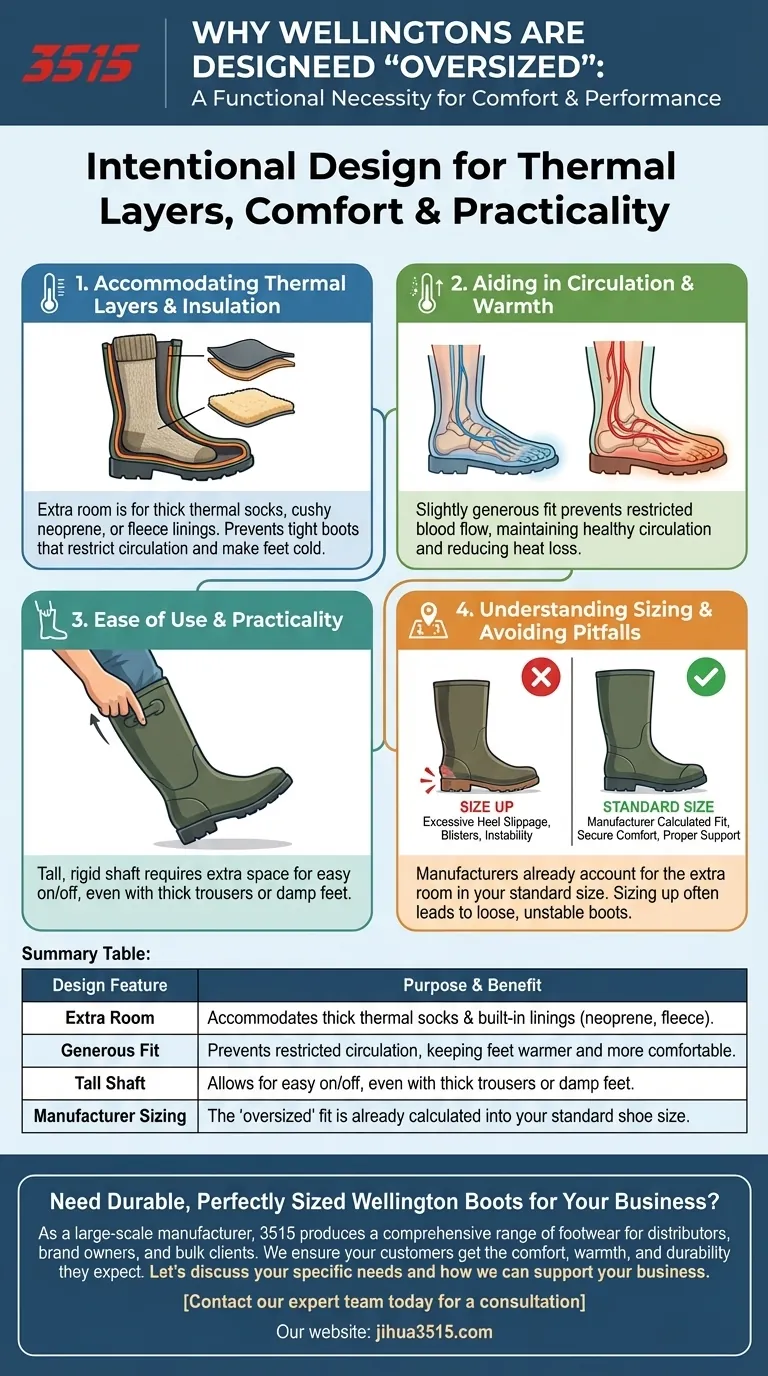
Wellington boots are intentionally designed to be slightly oversized to create a functional space for thermal layers and comfort-enhancing features. This design accounts for the need to wear thick socks, add supportive insoles, or accommodate built-in insulating linings like neoprene, ensuring the boots remain practical and comfortable in various outdoor conditions.
The extra room in a Wellington boot is a deliberate feature, not a sizing error. Manufacturers account for this space, meaning you should almost always start by selecting your standard shoe size.

The Functional Purpose of the "Extra Room"
The slightly generous fit of a Wellington boot is central to its utility. Each aspect of the design serves a specific purpose related to comfort, warmth, and practicality for extended wear.
Accommodating Thermal Layers
The primary use for Wellingtons is in wet and often cold environments. The design anticipates that you will wear thick wool or thermal socks for insulation. A boot sized like a dress shoe would become painfully tight and restrict circulation, making your feet colder.
Space for Insulation and Comfort
Many high-quality Wellingtons come with built-in linings, such as cushy neoprene or fleece, to provide warmth and padding. This internal layer takes up volume, which is factored into the overall sizing by the manufacturer. The extra space also allows you to insert or replace insoles for customized arch support or added cushioning.
Aiding in Circulation
A boot that is too snug, especially one made of inflexible rubber, can restrict blood flow to your feet. This not only causes discomfort but also accelerates heat loss. The slightly larger fit ensures your foot can move naturally and maintains healthy circulation, which is critical for staying warm.
Ease of Use
The tall, rigid shaft of a Wellington boot makes it different from a standard shoe. A bit of extra room around the foot and ankle is necessary to slide the boot on and off easily, especially when wearing thick trousers or when your feet are damp.
Understanding Sizing and Common Pitfalls
While the extra room is a benefit, it can also lead to confusion when selecting a size. Understanding the manufacturer's intent is key to avoiding common mistakes.
The Risk of Sizing Up
A frequent error is to buy a size larger than your normal shoe size, assuming you need to make room for socks yourself. This often results in a boot that is far too loose. An improperly sized boot leads to excessive heel slippage, which causes friction, blisters, and instability on uneven ground.
How Manufacturers Account for Fit
Boot manufacturers have already done the calculation for you. When they label a boot as a size 9, it is designed to fit a person with size 9 feet while wearing appropriate socks. The "extra room" is already part of the design for that specific size.
Linings Do Not Change Sizing
Whether a boot is lined with thin jersey, insulating neoprene, or premium leather does not change the recommended sizing. The manufacturer adjusts the boot's internal volume to accommodate the specific lining used in that model. Always defer to the brand's official sizing chart for the style you are considering.
How to Select the Right Size
Your goal is a secure fit where your heel has minimal lift, but your toes are not cramped. Use your intended purpose to guide your final decision.
- If your primary focus is general use with standard socks: Select your normal, everyday shoe size. The boots are engineered to provide the correct fit out of the box for this purpose.
- If your primary focus is use in extreme cold with very thick socks: Start with your standard size. It is almost always the correct choice, but trying them on with your thickest socks is the best way to ensure a perfect fit.
- If you need to add custom orthotic insoles: Check if the boot's factory insole is removable. If it is, you can often replace it with your orthotic in your standard size without issue.
Understanding this design principle allows you to choose your size with confidence, ensuring your boots deliver the comfort and performance they were built for.
Summary Table:
| Design Feature | Purpose & Benefit |
|---|---|
| Extra Room | Accommodates thick thermal socks and built-in linings (neoprene, fleece). |
| Generous Fit | Prevents restricted circulation, keeping feet warmer and more comfortable. |
| Tall Shaft | Allows for easy on/off, even with thick trousers or damp feet. |
| Manufacturer Sizing | The 'oversized' fit is already calculated into your standard shoe size. |
Need Durable, Perfectly Sized Wellington Boots for Your Business?
As a large-scale manufacturer, 3515 produces a comprehensive range of footwear for distributors, brand owners, and bulk clients. Our production capabilities encompass all types of boots, including Wellingtons engineered with the precise fit and functional features discussed in this article.
We ensure your customers get the comfort, warmth, and durability they expect. Let's discuss your specific needs and how we can support your business.
Contact our expert team today for a consultation
Visual Guide
Related Products
- Durable Waterproof Rain Boots | Custom Manufacturer for Wholesale & Brands
- Durable Goodyear Welt Leather Work Boots for Wholesale & Private Label
- Wholesale Durable Leather Work Boots | 8-Inch Goodyear Welt Manufacturer
- High-Traction Suede Tactical Boots Wholesale & Custom Manufacturing
- Premium Wholesale Tactical Style Safety Shoes Boots with Quick Lacing
People Also Ask
- What are the main materials for waterproof rain boots? Choose the Right Material for Durability & Comfort
- What is the overall recommendation for choosing rain boot materials? A Guide to Rubber vs. PVC
- How does boot height affect waterproofing? Choose the Right Height for Ultimate Protection
- Why are rain boots more flexible and comfortable than snow boots? The Key Differences Explained
- What are the best types of shoes for different gardening conditions? Find Your Perfect Match.



















