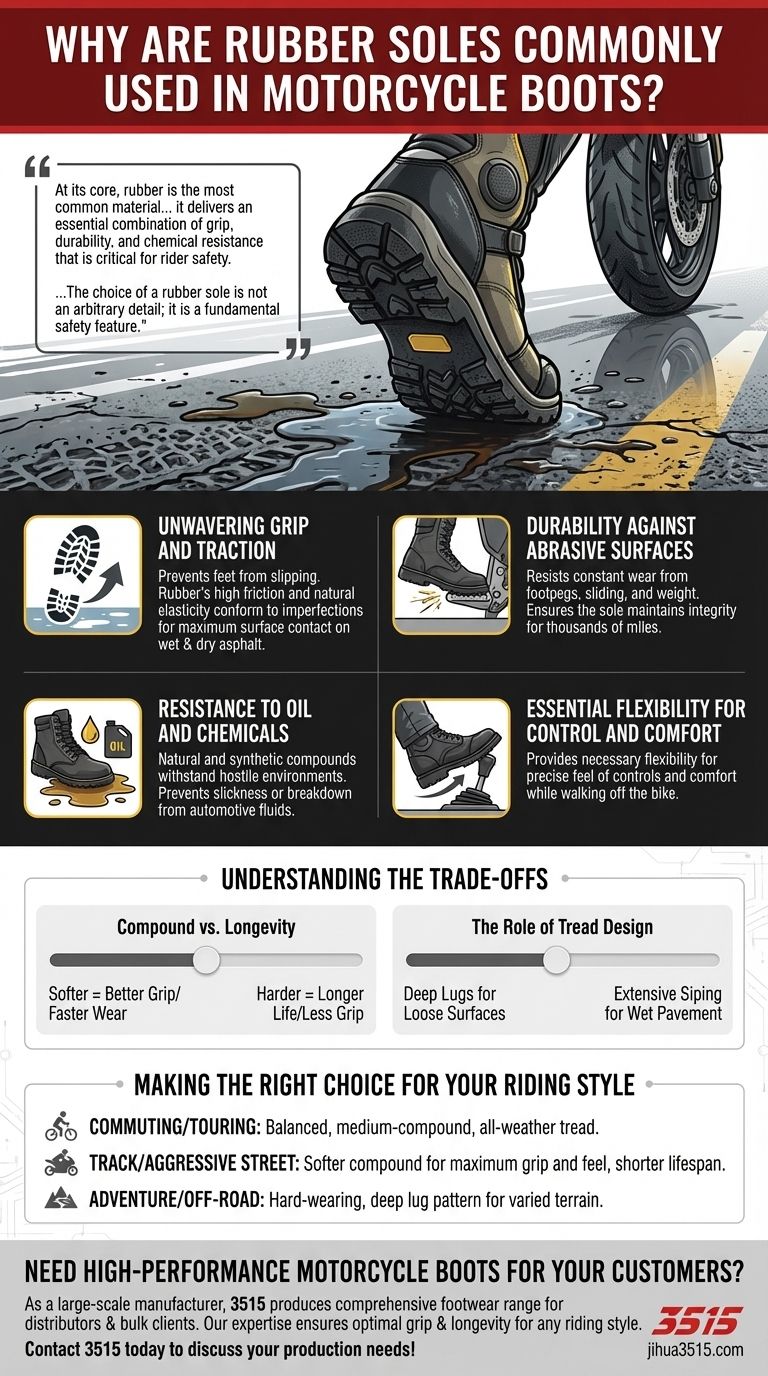
At its core, rubber is the most common material for motorcycle boot soles because it delivers an essential combination of grip, durability, and chemical resistance that is critical for rider safety. This unique blend of properties ensures stable footing on unpredictable surfaces, withstands the abuse of the road, and provides the necessary flexibility for both riding and walking.
The choice of a rubber sole is not an arbitrary detail; it is a fundamental safety feature. It acts as the critical interface between you, your several-hundred-pound machine, and the ground, providing the stability required to manage the bike safely in all conditions.
The Functional Demands of a Motorcycle Boot Sole
A motorcycle boot sole must perform under a unique and demanding set of circumstances. It has to protect the rider, interface with the machine, and interact with potentially hazardous ground conditions.
Unwavering Grip and Traction
The most critical function of the sole is to prevent your feet from slipping. Riders constantly put their feet down on surfaces that can be wet, oily, or uneven.
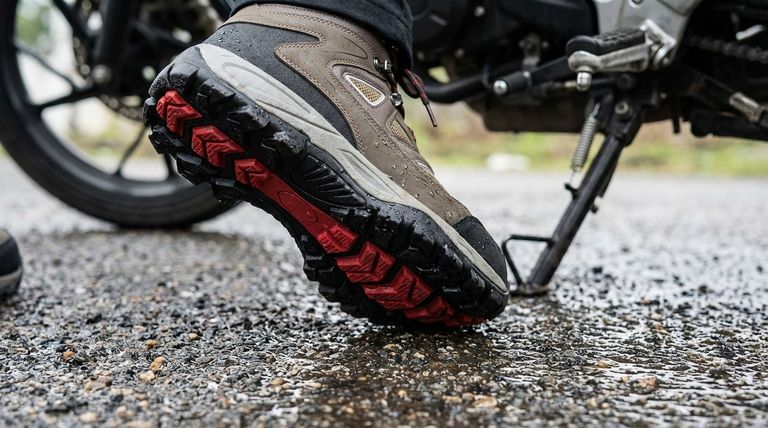
Rubber's high coefficient of friction provides excellent grip on both wet and dry asphalt. Its natural elasticity allows it to conform to microscopic imperfections in the pavement, maximizing surface contact and traction.
Durability Against Abrasive Surfaces
Motorcycle boot soles are subjected to constant wear. They scrape against abrasive footpegs, slide on rough pavement when stopping, and support the rider's weight.
Rubber is highly resistant to abrasion and wear, ensuring the sole maintains its integrity and protective qualities over thousands of miles. This durability is essential for the boot's overall lifespan.
Resistance to Oil and Chemicals
Roads and garages are inherently hostile environments for footwear. Spilled gasoline, oil drips, and other chemicals can degrade lesser materials, compromising both grip and structure.
Both natural and synthetic rubber compounds offer good resistance to oil and chemicals. This prevents the sole from becoming dangerously slick or breaking down prematurely when exposed to common automotive fluids.
Essential Flexibility for Control and Comfort
A boot sole cannot be completely rigid. A rider needs to be able to feel and operate the rear brake and gear shifter with precision.
Rubber provides the necessary flexibility for this fine control while still being tough enough to offer protection. This same flexibility also makes the boots far more comfortable to walk in once you're off the bike.
Understanding the Trade-offs
While rubber is the industry standard, not all rubber soles are created equal, and there are inherent trade-offs in their design.
Compound vs. Longevity
The specific formulation of the rubber—its "compound"—matters immensely. A softer compound will offer superior grip but will wear out much faster.
Conversely, a harder rubber compound will last significantly longer but may sacrifice some of the tackiness needed for maximum traction, especially in wet conditions.
The Role of Tread Design
The material itself is only half the equation. The tread pattern is just as critical for performance.
Deep, aggressive lugs are designed to grip loose surfaces like dirt and gravel, while patterns with extensive siping are designed to channel water away and prevent hydroplaning on wet pavement. The best rubber in the world will fail with a poor tread design.
Making the Right Choice for Your Riding Style
Your choice in boot should be guided by how and where you ride.
- If your primary focus is daily commuting or touring: Seek a balanced, medium-compound rubber sole with a tread designed for all-weather road performance.
- If your primary focus is track racing or aggressive street riding: Prioritize a softer compound sole for maximum grip and feel on the pegs, accepting that it will have a shorter lifespan.
- If your primary focus is adventure or off-road riding: You need a hard-wearing rubber sole with a deep, aggressive lug pattern for reliable traction on varied and loose terrain.
Ultimately, choosing a boot with the right rubber sole is about creating a stable foundation for every ride.
Summary Table:
| Key Property | Benefit for Riders |
|---|---|
| Grip & Traction | Prevents slipping on wet, oily, or uneven surfaces for stable footing. |
| Durability | Resists abrasion from footpegs and pavement, ensuring long boot life. |
| Chemical Resistance | Withstands oil, gas, and other fluids without degrading grip or structure. |
| Flexibility | Allows precise control of bike controls while remaining comfortable to walk in. |
Need High-Performance Motorcycle Boots for Your Customers?
As a large-scale manufacturer, 3515 produces a comprehensive range of durable, safety-focused footwear for distributors, brand owners, and bulk clients. Our expertise in rubber compounds and tread design ensures optimal grip and longevity for any riding style—from daily commuting to off-road adventures.
Let us help you equip riders with reliable boots that enhance safety and performance. Contact 3515 today to discuss your production needs!
Visual Guide
Related Products
- Durable Spiked Camouflage Boots Wholesale & Factory Production
- Durable Rubber Sole Outdoor Shoes Wholesale & Custom Manufacturing
- Durable Canvas Work Shoes with Rubber Lug Sole | Wholesale Manufacturer
- Wholesale Durable Camouflage Canvas Shoes with High-Traction Cleated Rubber Sole
- Wholesale Waterproof Tactical Boots Custom Suede & High-Traction Soles
People Also Ask
- How does boot height affect waterproofing? Choose the Right Height for Ultimate Protection
- What are the best types of shoes for different gardening conditions? Find Your Perfect Match.
- What role does camouflage play in hunting boots? It's More Than Just a Pattern
- What should you look for to ensure boots are fully waterproof? The Essential 2-Part System
- How does boot construction affect waterproofing? The Science Behind Truly Dry Feet