
In a military context, slip-resistance is not a feature; it is a fundamental requirement for survival and mission success. Slip-resistant military boots are critically important because they are the primary defense against slips, trips, and falls. In unpredictable, high-stress environments, such an event can lead to severe injury, compromise a tactical position, or prove fatal. They provide the foundational stability and support needed to operate effectively across any terrain, under any conditions.
The true value of a slip-resistant boot is not just preventing a fall. It's about conserving a soldier's energy, maintaining their stealth, and allowing their full concentration to remain on the mission, not on their footing.
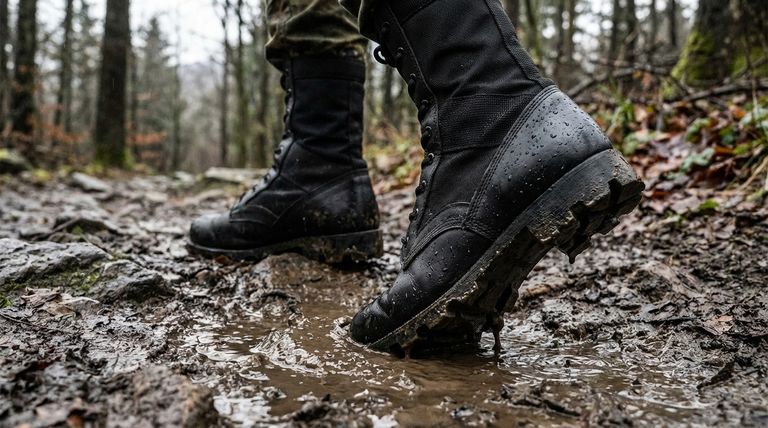
The Foundation: From Personal Safety to Tactical Advantage
A soldier's connection to the ground is their most fundamental tactical asset. If that connection is unreliable, every subsequent action is compromised.
What "Slip-Resistant" Means
The term slip-resistant refers to the outsole's engineered ability to maintain a high coefficient of friction against a surface.
This is achieved through a combination of outsole material (specialized rubber compounds) and tread design (the pattern of lugs and channels). These elements work together to channel away water, mud, and debris while maximizing surface contact.
Preventing Mission-Ending Injuries
In a civilian setting, a slip might be an inconvenience. In the field, it can be a mission-ending event.
A simple fall can cause a debilitating sprain or fracture, effectively removing a soldier from their unit. Excellent traction and grip are the first line of defense against these preventable injuries.
Enhancing Stability and Reducing Fatigue
Constantly adjusting for unstable footing is physically exhausting. A secure, slip-resistant boot provides a stable platform that conserves a soldier's energy during long patrols or shifts.
This stability is also crucial for maintaining a steady firing stance or navigating difficult obstacles while carrying heavy gear, directly impacting operational effectiveness.
Understanding the Trade-offs
No single boot is perfect for every possible scenario. The engineering behind slip resistance always involves balancing competing demands.
Aggressive Treads vs. Smooth Surfaces
Boots with deep, widely-spaced lugs are excellent for digging into soft terrain like mud or sand.
However, those same aggressive treads can reduce the amount of surface area in contact with the ground on flat, hard surfaces like concrete or a ship's deck, sometimes decreasing grip.
Durability vs. Specialized Grip
Outsoles made from extremely hard, durable rubber compounds are designed to withstand significant wear and tear on rock and gravel.
This durability can come at the cost of grip, as softer rubber compounds often provide better adhesion, especially on wet or smooth surfaces. The choice depends on the most likely operational environment.
All-Terrain vs. Specialized Designs
Most general-issue combat boots are designed as all-terrain solutions, meant to perform adequately across a wide range of conditions.
While versatile, they will rarely outperform a boot specifically engineered for a single purpose, such as a jungle boot designed for constant wetness or a desert boot designed for heat and sand.
Making the Right Choice for Your Goal
The selection of a boot must be aligned with the specific demands of the mission and environment.
- If your primary focus is varied, unpredictable terrain: Prioritize a versatile, all-terrain outsole with a balance of deep lugs for soft ground and good surface contact for hard ground.
- If your primary focus is urban or maritime operations: Seek out boots with softer rubber compounds and micro-siped treads designed for maximum grip on wet, flat surfaces.
- If your primary focus is load-bearing and endurance: Look for a boot that combines exceptional traction with superior ankle support to minimize fatigue and prevent injury over long distances.
Ultimately, a soldier's effectiveness begins from the ground up, and a reliable, slip-resistant boot is the non-negotiable foundation of their performance.
Summary Table:
| Feature | Importance |
|---|---|
| Prevents Injuries | Reduces risk of debilitating slips, trips, and falls in high-stress environments. |
| Enhances Stability | Conserves energy, reduces fatigue, and provides a stable platform for carrying gear. |
| Tactical Advantage | Maintains stealth and allows full concentration on the mission, not on footing. |
| Terrain-Specific Design | Balances aggressive treads for soft ground with grip on hard, wet surfaces. |
Equip your forces with the foundation for success. As a large-scale manufacturer, 3515 produces a comprehensive range of high-performance, slip-resistant military boots for distributors, brand owners, and bulk clients. Our production capabilities encompass all types of tactical footwear, engineered for durability, safety, and mission-critical performance. Contact our experts today to discuss your specific requirements and secure reliable footwear for your personnel.
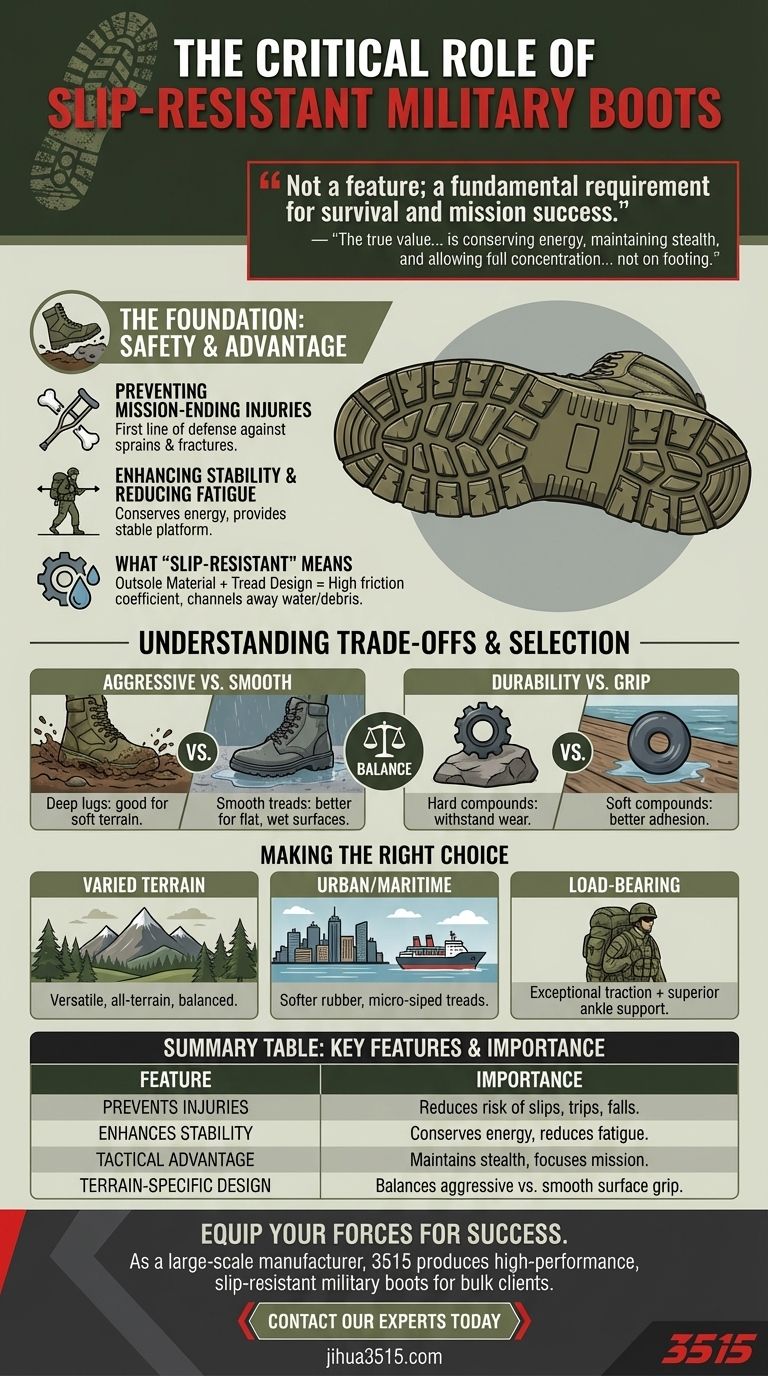
Visual Guide
Related Products
- Heavy-Duty Waterproof Nubuck Safety Boots Safety Shoes for Bulk Supply
- Durable Goodyear Welt Leather Work Boots for Wholesale & Private Label
- Durable Leather Moc Toe Work Boots for Wholesale & Custom Manufacturing
- Wholesale Durable 6-Inch Work Boots | Custom & Private Label Manufacturer
- Wholesale Waterproof Tactical Boots Custom Suede & High-Traction Soles
People Also Ask
- What primary protective functions do professional safety boots provide in urban solid waste recovery and waste picking processes? Discover Dual-Layer Protection.
- How do safety boots reduce cutting hazards? Essential Protection for Your Workforce
- Which organizations develop safety standards for work boots? Ensure Compliance & Worker Safety
- What are the common types of safety boots and their primary uses? A Guide to Industrial Footwear
- Why is ankle and arch support important in safety footwear? Prevent Injury & Fatigue

















