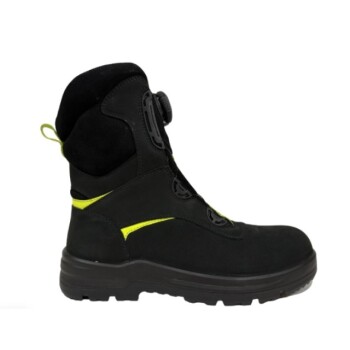
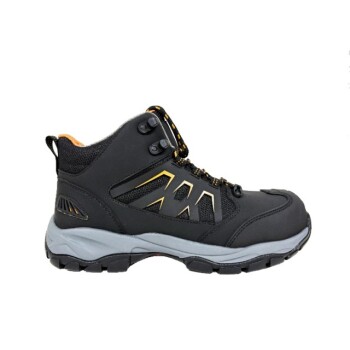
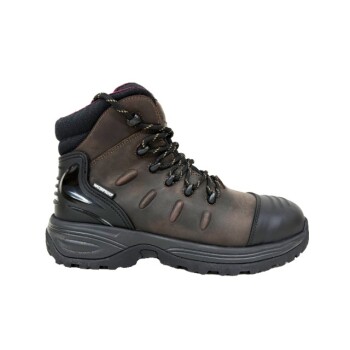
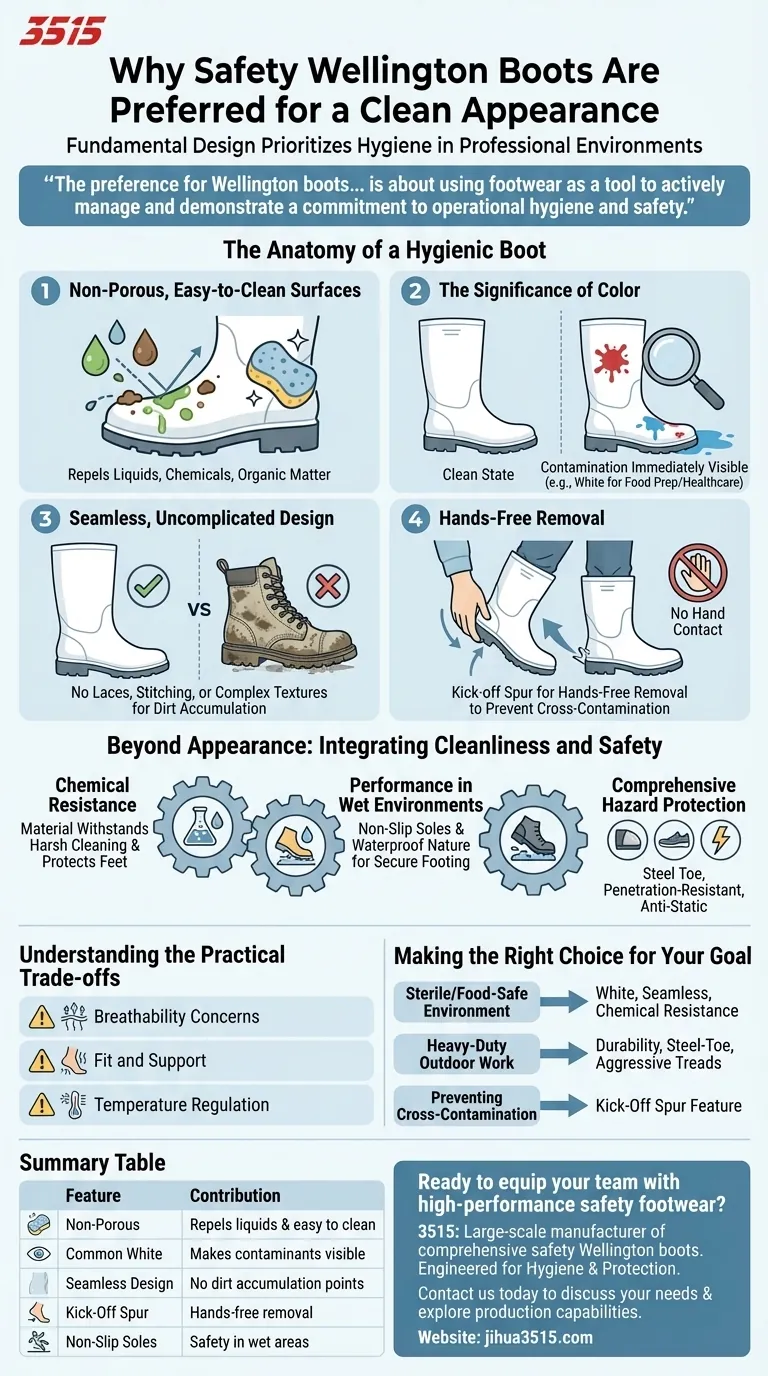
At their core, safety Wellington boots are preferred for maintaining a clean appearance because their fundamental design prioritizes hygiene. Their smooth, non-porous surfaces made of materials like rubber are inherently easy to clean, and their common availability in colors like white makes any contamination immediately visible, reinforcing professional standards in sensitive environments.
The preference for Wellington boots in clean environments isn't just about looking tidy; it's about using footwear as a tool to actively manage and demonstrate a commitment to operational hygiene and safety.
The Anatomy of a Hygienic Boot
The features that contribute to a Wellington boot's clean appearance are not accidental. They are the direct result of a design philosophy centered on protection and practicality in demanding, often messy, environments.
Non-Porous, Easy-to-Clean Surfaces
The primary material, usually rubber or PVC, is non-absorbent. Unlike leather or fabric, it repels liquids, chemicals, and organic matter, preventing them from soaking in and staining.
This means contaminants can be wiped or rinsed off completely, leaving no residue behind.
The Significance of Color
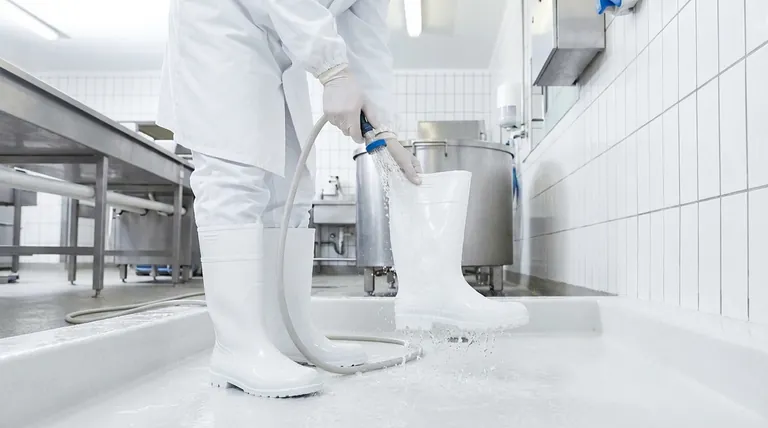
In industries like food preparation and healthcare, white Wellingtons are a deliberate choice. Spills, dirt, and other contaminants stand out in stark contrast against a white background.
This high visibility serves as a constant, instant check on cleanliness, prompting immediate action and reinforcing a culture of hygiene.
Seamless, Uncomplicated Design
A key advantage of Wellingtons is the absence of laces, stitching, or complex textures. These are all areas where dirt, grime, and bacteria can accumulate on traditional work boots, making them difficult to sanitize thoroughly.
The smooth, continuous surface of a Wellington boot offers no place for contaminants to hide.
Hands-Free Removal
Many safety Wellingtons include a small protrusion on the heel known as a kick-off spur. This simple feature allows a worker to remove the boots using only their other foot.
In environments where hands must remain sterile or clean, this prevents the cross-contamination that would occur from touching a dirty boot.
Beyond Appearance: Integrating Cleanliness and Safety
A Wellington boot's clean look is a direct consequence of its core protective functions. The materials and design that make it easy to clean are the same ones that keep the worker safe.
Resistance to Chemicals and Contaminants
The rubber that withstands harsh cleaning chemicals is the same material that protects the wearer's feet from those chemicals in the first place. This dual purpose is central to its utility in industrial settings.
Performance in Wet Environments
Workplaces requiring constant cleaning are, by nature, often wet and slippery. Safety Wellingtons are equipped with non-slip soles designed to provide secure footing on these exact surfaces.
Their waterproof nature ensures the wearer stays dry and comfortable, while the sole ensures they stay safe.
Comprehensive Hazard Protection
While cleanliness is a key benefit, these boots are first and foremost safety equipment. Features like steel toe caps, penetration-resistant midsoles, and anti-static properties are integrated into the design.
The boot functions as a complete system where hygiene and physical protection work in tandem.
Understanding the Practical Trade-offs
While highly effective, the design of Wellington boots presents certain compromises that are important to acknowledge for professional use.
Breathability Concerns
The same waterproof quality that repels contaminants also traps sweat and heat. Over long shifts, this can lead to discomfort if not managed with moisture-wicking socks.
Fit and Support
The simple, pull-on design of a Wellington offers less ankle support and a less customizable fit compared to a traditional laced work boot. This can be a factor in jobs that require extensive walking or navigating uneven terrain.
Temperature Regulation
Basic Wellington models offer little insulation. While specialized versions exist for cold environments, a standard boot can be uncomfortably cold in winter and hot in summer.
Making the Right Choice for Your Goal
Selecting the right boot depends entirely on the specific demands of your work environment.
- If your primary focus is a sterile or food-safe environment: Prioritize white, seamless boots with proven chemical resistance to ensure maximum hygiene and contaminant visibility.
- If your primary focus is heavy-duty outdoor work: Focus on durability, steel-toe protection, and aggressive non-slip treads, where protection from physical hazards is the main concern.
- If your primary focus is preventing cross-contamination: Specifically look for models that include a kick-off spur for hands-free removal.
Ultimately, the right safety Wellington is a critical tool that reflects and upholds the professional standards of your workplace.
Summary Table:
| Key Feature | Contribution to Clean Appearance |
|---|---|
| Non-Porous Surfaces | Repels liquids & chemicals; easy to wipe or rinse clean. |
| Common White Color | Makes contaminants highly visible for immediate action. |
| Seamless Design | No laces or stitching for dirt to accumulate in. |
| Kick-Off Spur | Enables hands-free removal to prevent cross-contamination. |
| Non-Slip Soles | Provides safety in wet, constantly cleaned areas. |
Ready to equip your team with high-performance safety footwear?
As a large-scale manufacturer, 3515 produces a comprehensive range of safety Wellington boots for distributors, brand owners, and bulk clients. Our boots are engineered to meet the highest standards of hygiene and protection, featuring non-porous materials, seamless designs, and essential safety components like steel toes.
We can help you maintain a professional, safe, and clean work environment. Contact us today to discuss your specific needs and explore our production capabilities for all types of shoes and boots.
Visual Guide
Related Products
- Durable Waterproof Rain Boots | Custom Manufacturer for Wholesale & Brands
- Puncture-Resistant Velcro Safety Boots for Wholesale & Custom Manufacturing
- Wholesale Durable Safety Boots | Custom Steel Toe & Puncture-Resistant Manufacturing
- Premium Wholesale Tactical Style Safety Shoes Boots with Quick Lacing
- Premium High-Cut Waterproof Safety Boots Manufacturing & Wholesale Solutions
People Also Ask
- What are the main materials for waterproof rain boots? Choose the Right Material for Durability & Comfort
- What is the overall recommendation for choosing rain boot materials? A Guide to Rubber vs. PVC
- How does boot height affect waterproofing? Choose the Right Height for Ultimate Protection
- Why are rain boots more flexible and comfortable than snow boots? The Key Differences Explained
- What are the best types of shoes for different gardening conditions? Find Your Perfect Match.