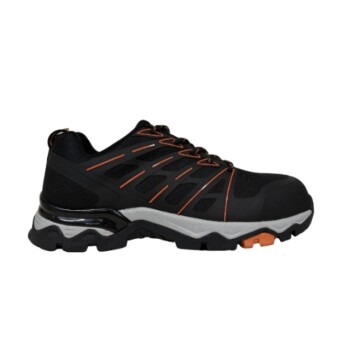
Safety shoes are designated as a core identification target because they serve as the primary defense against foot injuries resulting from physical impacts, punctures, and slips. In the context of industrial labor protection, treating them as a specific detection category allows computer vision systems to automatically verify compliance, directly reducing accident rates associated with improper gear.
By establishing safety shoes as a distinct detection category within AI monitoring systems, organizations can transition from passive safety rules to active, real-time verification. This shift is essential for minimizing industrial accidents caused by non-compliant work behavior.
The Protective Function of Safety Footwear
Mitigating Physical Trauma
Safety shoes are specifically engineered to withstand physical impact from heavy, falling objects or compression hazards. They also feature reinforced soles designed to prevent punctures from sharp debris, such as nails or scrap metal, which are common on industrial floors.
Preventing Environmental Hazards
Beyond trauma protection, standard-compliant safety boots are critical for preventing slips and falls. They provide the necessary traction and stability required to navigate unpredictable construction environments safely.
The Role of Computer Vision in Compliance
Automating Safety Checks
To enforce safety standards efficiently, AI systems treat safety shoes as a distinct detection category. This classification allows computer vision algorithms to isolate and analyze footwear specifically, ensuring that the gear worn meets established safety standards.
Real-Time Risk Reduction
Automated monitoring enables the real-time verification of compliant footwear across a workforce. By instantly identifying workers who are not wearing standard-compliant safety shoes, the system helps significantly reduce the rate of accidents caused by negligence or non-compliant work behavior.
Understanding the Limitations
Visual Obstruction and Occlusion
While effective, optical detection of footwear faces challenges when workers wear long trousers or coveralls. If the distinct features of the safety shoe are occluded by clothing, the algorithm may fail to verify compliance, leading to a "false negative" alert.
Distinguishing Similar Footwear
Modern safety shoes often resemble heavy-duty hiking boots or casual streetwear. Without high-resolution imaging and sophisticated training data, a system may struggle to differentiate between compliant safety boots and non-protective lookalikes, potentially allowing unsafe footwear to pass undetected.
Optimizing Safety Monitoring Systems
To effectively implement safety shoe detection in your industrial environment, consider the following strategies:
- If your primary focus is immediate risk mitigation: Configure your system to provide real-time alerts at entry points, preventing workers without verified footwear from entering hazardous zones.
- If your primary focus is system accuracy: Ensure your algorithm is trained on datasets that account for high levels of occlusion and varying lighting conditions to minimize false detection errors.
Automating the detection of safety footwear transforms a manual checklist item into a continuous, active shield against industrial injury.
Summary Table:
| Feature | Importance in Monitoring | AI Detection Role |
|---|---|---|
| Trauma Protection | Guards against physical impacts and punctures | Verifies presence of reinforced structures |
| Slip Resistance | Prevents falls in unpredictable environments | Identifies specialized traction outsoles |
| Compliance Verification | Transitions from passive rules to active safety | Automates gear checks via computer vision |
| Risk Mitigation | Reduces accidents caused by non-compliance | Provides real-time alerts at site entry points |
Partner with 3515 for Certified Industrial Footwear Excellence
As a large-scale manufacturer serving global distributors and brand owners, 3515 offers comprehensive production capabilities to meet the strictest industrial safety standards. Our flagship Safety Shoes series is engineered for high-performance protection, ensuring your workforce stays compliant and safe. From heavy-duty work and tactical boots to outdoor and training sneakers, we provide the bulk supply and quality assurance needed to support modern AI monitoring systems.
Ready to elevate your product line with reliable, compliant footwear?
Contact us today to discuss your bulk requirements!
References
- Pungky Irlan Hidayat, Budi Rahmadya. RANCANG BANGUN SISTEM PENGAWASAN PEMAKAIAN ALAT PELINDUNG DIRI BERBASIS SINGLE BOARD COMPUTER. DOI: 10.25077/chipset.5.01.65-75.2024
This article is also based on technical information from 3515 Knowledge Base .
Related Products
- Premium Suede Sport Safety Shoes for Wholesale & Bulk Orders
- Premium Lightweight Safety Shoes for Wholesale & Bulk Orders
- Wholesale Anti-Smash & Puncture-Proof Safety Shoes Custom Manufacturing for Brands
- Premium KPU Injection Athletic Style Safety Shoes
- Premium Safety Shoes with Rotating Buckle Safety Sneakers
People Also Ask
- What are the primary functions of professional safety shoes? Maximize Safety in Water Supply Confined Spaces
- What industries have specific OSHA footwear requirements? Ensure Compliance & Protect Your Workforce
- What role do specialized safety shoes play in preventing falls? Engineering Stability in Industrial Environments
- Why wear protective masks, gloves, and safety shoes in 5S Shine? Elevate Safety and Discipline
- Why must safety training be synchronized with the provision of physical safety shoes? Achieve Optimal Workplace Protection