
Running shoes are often considered the best for walking because they are engineered with superior cushioning, support, and lightweight materials designed to handle the high-impact forces of running. These features provide exceptional comfort and shock absorption that directly benefit walkers by reducing stress on their joints and feet.
While running shoes offer excellent cushioning that benefits most walkers, they are not universally superior. The best choice depends on understanding the key differences in shoe design, which are driven by the distinct biomechanics of running versus walking.
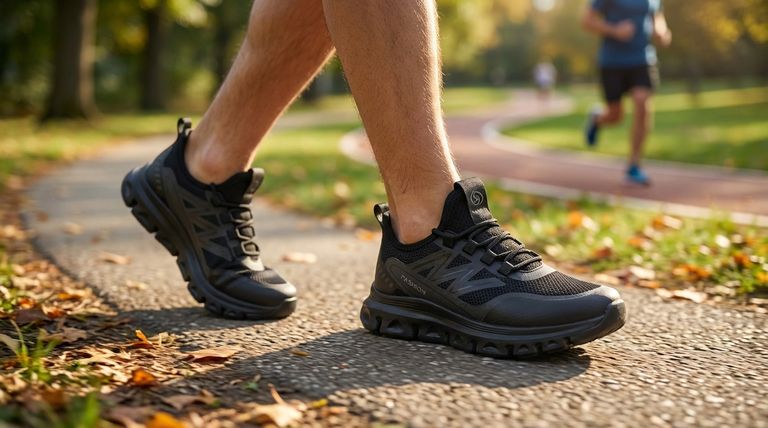
The Core Engineering of a Running Shoe
Running shoes are built to solve a specific problem: managing the high-impact forces generated with every stride. This engineering focus results in features that are highly beneficial for walkers.
Advanced Cushioning Systems
Running generates an impact force of two to three times your body weight. Running shoes use advanced foam compounds in their midsoles to absorb this shock, protecting your joints.
For walkers, this level of cushioning provides a significant comfort boost and reduces cumulative stress on the knees, hips, and back over long distances.
Lightweight and Breathable Construction
To maximize performance, running shoes are made from lightweight and breathable mesh materials. This reduces fatigue and helps manage heat and moisture.
These characteristics offer the same benefits to walkers, ensuring feet stay comfortable and dry, which is critical for preventing blisters during extended walks.
Built-in Support and Stability
Many running shoes include features to guide the foot and prevent excessive side-to-side motion, like overpronation.
This built-in stability can be just as valuable for walkers who need extra support, helping to maintain proper alignment and reduce the risk of strain.
Why Walking is Biomechanically Different
The common wisdom of using running shoes for walking breaks down when you consider the fundamental differences between the two movements.
The Low-Impact "Rocker" Motion
Walking is a smoother, lower-impact movement where one foot is always on the ground. The foot rolls from heel to toe in a "rocker" motion.
In contrast, running involves a "flight phase" where both feet are off the ground, followed by a high-force impact.
The Need for Forefoot Flexibility
Because walkers push off from their forefoot with every step, they require significant flexibility in the front of the shoe to allow for a natural toe-off.
Running shoes are often designed to be more rigid to provide a stable platform for propulsion, which can sometimes interfere with a walker's gait.
Understanding the Trade-offs
Choosing a running shoe for walking isn't without potential downsides. It's crucial to be aware of the trade-offs that come from using a tool for a purpose it wasn't exclusively designed for.
The Risk of "Over-Cushioning"
The same plush cushioning that runners love can sometimes feel unstable or unresponsive to a walker. Excessive cushioning might mask the feeling of the ground, which some people find uncomfortable.
The Problem of Stiffness
Some running shoes, particularly stability models, are built with a degree of rigidity to control foot motion. This stiffness can feel restrictive to a walker who needs more flex in the forefoot for a comfortable, rolling stride.
Differences in Heel Design
Running shoes often feature a thicker, more built-up heel to absorb landing impact. For a walker, this extra bulk can sometimes feel clunky and unnecessary for their smoother gait.
Making the Right Choice for Your Goal
Ultimately, the "best" shoe is the one that aligns with your specific activity and personal comfort.
- If your primary focus is long-distance or fitness walking: A neutral, cushioned running shoe is likely your best option for its superior impact absorption and support.
- If your primary focus is casual, everyday walking: A dedicated walking shoe may offer better forefoot flexibility and a more natural feel for shorter distances.
- If you plan to both run and walk in the same shoe: A running shoe is the clear choice, as a walking shoe cannot provide the necessary support for running.
By understanding the design intent behind each type of shoe, you can confidently select the footwear that truly supports your activity.
Summary Table:
| Feature | Benefit for Walkers | Potential Drawback |
|---|---|---|
| Advanced Cushioning | Reduces joint stress, enhances comfort over long distances | May feel overly soft or unresponsive for some |
| Lightweight & Breathable | Reduces fatigue, keeps feet cool and dry | Less durable than some dedicated walking shoes |
| Built-in Support/Stability | Helps maintain proper alignment, reduces strain | Can be too rigid, limiting natural forefoot flex |
| Heel Design | Absorbs impact | May feel bulky or unnecessary for a smooth walking gait |
Need high-performance footwear for your customers? As a large-scale manufacturer, 3515 produces a comprehensive range of running and walking shoes for distributors, brand owners, and bulk clients. Our advanced production capabilities ensure superior cushioning, durable materials, and designs that meet the specific needs of both runners and walkers. Let us help you supply the perfect footwear to keep your customers comfortable and supported. Contact our team today to discuss your manufacturing needs!
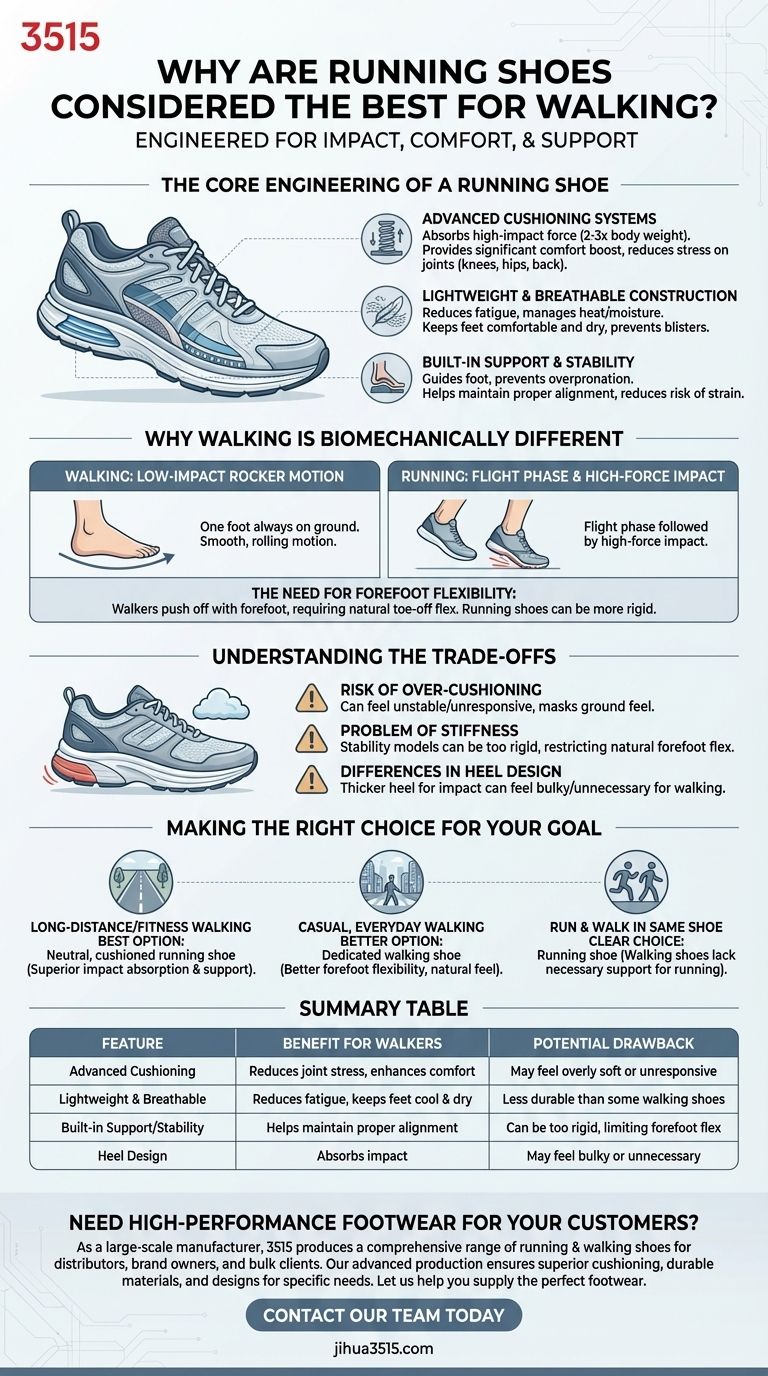
Visual Guide
Related Products
- Wholesale Durable & Breathable Training Shoes for Custom Brands
- Custom OEM Training Shoes Wholesale Manufacturer Durable & Breathable
- Wholesale Breathable Training Shoes Custom Athletic Footwear Manufacturer
- Lightweight Breathable Training Shoes for Wholesale & Custom OEM Manufacturing
- Wholesale Breathable Athletic Sneakers - Custom Lightweight Cushioned Footwear Manufacturer
People Also Ask
- Why is structural stability in footwear required during dual-task walking tests? Ensure Sensor Precision & Data Integrity
- Why is the integration of advanced cushioning in training shoes necessary for athletes? Boost Recovery and Performance
- Why is the use of flat-soled or professional training shoes essential for WBV? Maximize Vibration Energy Transfer
- Why is it necessary for participants to wear professional training shoes? Ensuring Data Accuracy & Patient Safety
- How does the Ground Reaction Force (GRF) constancy hypothesis influence professional training shoes and sneakers?



















