Okay, so I'm putting myself in the user's shoes. They need a definitive guide, a checklist almost, for work-specific walking sneakers. They're on their feet all day, probably tired and achy, and want a shoe that feels great but also keeps them safe and professional. This isn't just about a shoe; it's about comfort and protection.
I've got a plan. First, I break down the problem. The what is a walking sneaker for work, but the why is all-day comfort and safety. I need to synthesize the research I've gathered. The comfort part comes from things like cushioned midsoles and breathable uppers. The work-specific features are the safety elements - things like toe protection, slip-resistant soles, and electrical hazard protection. I also need to think about that professional look – leather and neutral colors will be important for many. And I won't ignore sustainability, even if it's not the top priority.
Now, it's time to build the guide. I'll start by making the need very obvious – this is a shoe that does both comfort and protection well. A core takeaway box will emphasize that this is an investment in their health and performance.
The main part will be the shoe's anatomy – upper, midsole, and outsole. I'll explain how each part contributes to comfort and safety. Then I’ll go beyond the basics, with a section on key work-specific features, like protective toe caps and slip resistance. I need to be honest about the trade-offs – safety features might mean heavier shoes or less breathability. That honesty builds trust.
Finally, I'll give actionable advice tailored to different work situations. Retail workers need different things than construction workers. The goal is to empower them to make the right choice based on their specific needs. I'll finish with a strong statement, reminding them that the right footwear is a smart investment.
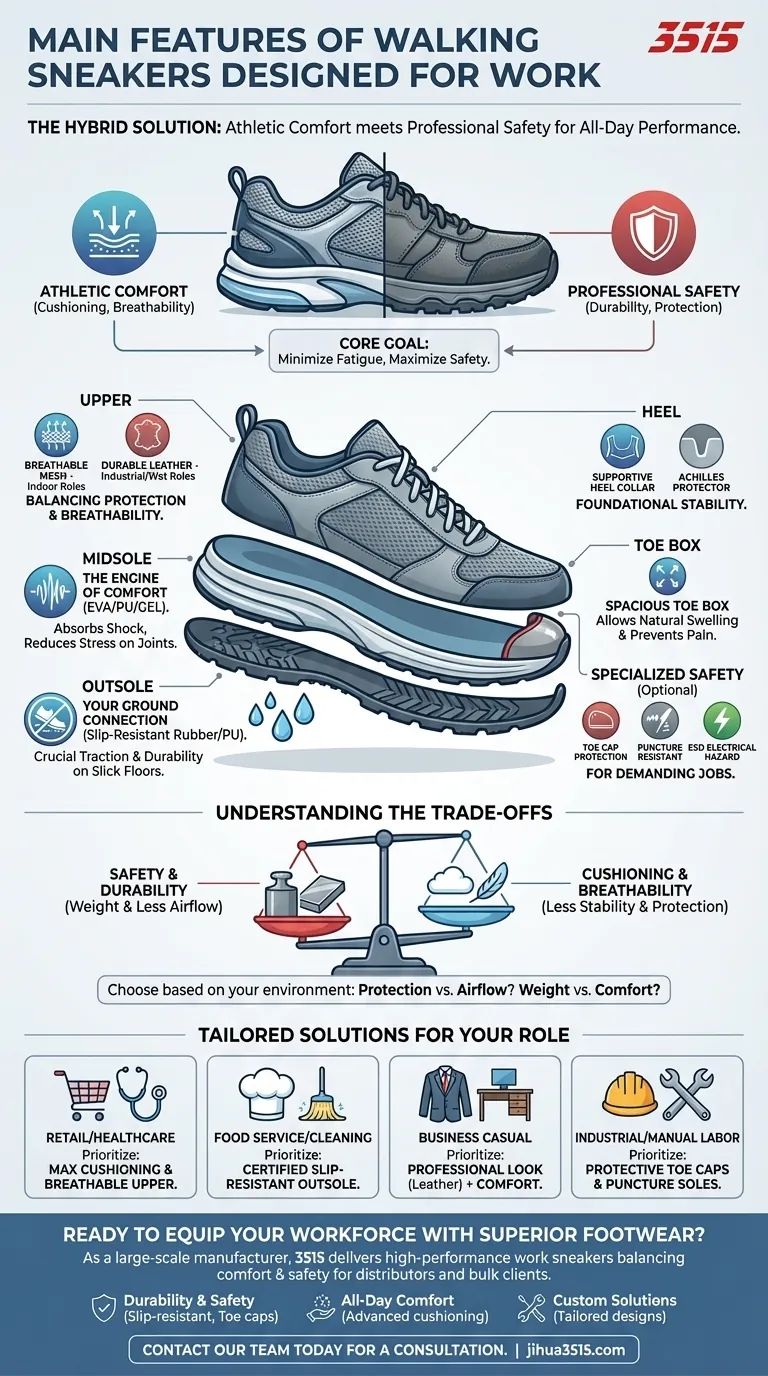
I'll review the whole thing to make sure it's clear, scannable, and addresses the user's deep need. No lists – synthesis! The goal is a seamless, comprehensive guide that a real expert would find valuable. At their core, walking sneakers designed for work are a hybrid, blending the advanced comfort and support of athletic footwear with the durability and safety features required by a professional environment. They are engineered to minimize fatigue and joint stress from prolonged standing and walking, primarily through superior cushioning, robust support structures, lightweight construction, and slip-resistant outsoles.
The challenge isn't just finding a comfortable sneaker or a durable work boot; it's finding a single shoe that delivers the essential benefits of both. The ideal choice successfully merges ergonomic design for all-day comfort with protective features tailored to your specific work environment.
The Anatomy of a High-Performance Work Sneaker
To understand what makes these shoes effective, we need to break them down into their three critical sections. Each component serves a distinct purpose in providing comfort, support, and safety.
The Upper: Balancing Protection and Breathability
The upper is the part of the shoe that wraps around your foot. In a work context, the material choice is critical.
Durable materials like leather or reinforced synthetics offer protection against scuffs and minor impacts. For less hazardous environments, uppers featuring mesh panels provide essential breathability to keep feet cool and dry over a long shift.
The Midsole: The Engine of All-Day Comfort
The midsole is the cushioning layer between your foot and the outsole, and it is the single most important feature for reducing fatigue.
Look for materials like EVA (ethylene vinyl acetate) foam, polyurethane (PU), or gel inserts. These are designed to absorb shock with every step, significantly reducing the stress placed on your feet, ankles, and knees.
The Outsole: Your Connection to the Ground
The outsole is the bottom layer that makes direct contact with the ground. For work, its primary feature is traction.
A high-quality rubber or PU outsole with a well-designed tread pattern provides slip resistance, a crucial safety feature in environments with wet or slick floors. It must also be durable enough to withstand daily wear on hard surfaces.
Key Features for Support and Safety
Beyond the basic construction, specific features elevate a standard sneaker to a true workhorse. These elements are designed to prevent injury and provide targeted support where it's needed most.
Foundational Stability
Proper foot alignment is key to preventing strain. A good work sneaker includes a supportive heel collar that cushions the ankle and locks the foot in place.
Many also feature an Achilles tendon protector, a small notch at the back of the heel that reduces stress on this critical tendon during long periods of walking.
Adequate Toe Box Room
Your feet naturally swell over the course of a long workday. A shoe with a spacious toe box allows your toes to spread naturally, preventing pain, blisters, and restricted circulation.
Specialized Hazard Protection
For more demanding jobs, sneakers may incorporate certified safety features. These can include steel or composite toe caps for impact protection, puncture-resistant soles, and even protection against electrical hazards (marked with ESD).
Understanding the Trade-offs
Choosing the perfect shoe involves balancing competing priorities. Being aware of these trade-offs will help you make a more informed decision.
Safety vs. Weight
Features like steel toes and puncture-proof plates offer maximum protection but add significant weight. This can counteract the goal of a lightweight shoe and may increase fatigue if not truly necessary for your role.
Durability vs. Breathability
The most durable and water-resistant uppers, like thick leather, are inherently less breathable than mesh. You must choose based on your environment: is protection from spills and elements more important than airflow?
Cushioning vs. Stability
Extremely soft, plush cushioning can feel comfortable initially but may offer less stability on uneven surfaces. A slightly firmer midsole often provides a better balance of shock absorption and support for dynamic movement.
Making the Right Choice for Your Role
The best shoe is the one that directly addresses the demands of your job. Use your primary daily challenge as your guide.
- If your primary focus is all-day standing in a low-hazard setting (retail, healthcare): Prioritize maximum midsole cushioning (EVA or gel) and a breathable upper to manage heat.
- If your primary focus is navigating potentially slick surfaces (food service, cleaning): A certified, slip-resistant outsole is your most critical, non-negotiable feature.
- If your primary focus is a professional, business-casual environment: Seek models with leather or suede uppers in neutral colors that still integrate a supportive, cushioned midsole.
- If your primary focus is safety in an industrial or manual labor role: Protective features like composite toe caps and puncture-resistant soles must take precedence over all other considerations.
Ultimately, selecting the right work footwear is a direct investment in your daily health, safety, and professional endurance.
Summary Table:
| Feature Category | Key Components | Benefit for the Worker |
|---|---|---|
| Comfort & Support | Cushioned Midsole (EVA, Gel), Supportive Heel Collar, Spacious Toe Box | Reduces fatigue, supports joints, and prevents foot pain during long shifts. |
| Safety & Durability | Slip-Resistant Outsole, Protective Toe Cap (Steel/Composite), Durable Upper (Leather) | Prevents slips/falls, protects from impacts, and withstands daily wear. |
| Workplace Suitability | Breathable Mesh (for indoor roles), Water-Resistant Leather (for industrial roles) | Tailored for specific environments like retail, healthcare, or construction. |
Ready to equip your workforce with superior footwear?
As a large-scale manufacturer, 3515 produces a comprehensive range of high-performance walking sneakers tailored for demanding work environments. We deliver the perfect balance of all-day comfort and essential safety features that your distributors, brand owners, and bulk clients need.
Our production capabilities ensure:
- Durability & Safety: Built with slip-resistant soles and optional protective toe caps.
- All-Day Comfort: Engineered with advanced cushioning and ergonomic support.
- Custom Solutions: We can tailor designs to meet the specific needs of your target market.
Let's discuss how we can become your trusted manufacturing partner. Contact our team today for a consultation and see how we can enhance your product line.
Visual Guide
Related Products
- Durable Canvas Work Shoes with Rubber Lug Sole | Wholesale Manufacturer
- Durable High-Traction Canvas Sneakers Wholesale & Custom Manufacturing
- Wholesale Durable & Breathable Training Shoes for Custom Brands
- Durable Goodyear Welt Leather Work Boots for Wholesale & Private Label
- Durable Leather Moc Toe Work Boots for Wholesale & Custom Manufacturing
People Also Ask
- What are the properties of canvas as a shoe material? A Guide to Lightweight Comfort & Style
- Why is the selection of high-strength fabric materials necessary in the production of canvas shoes and training shoes?
- What types of jobs are canvas work boots suitable for? Ideal for Light-Duty, High-Mobility Roles
- Can canvas shoes be worn in rainy conditions? The Truth About Water Resistance
- What are the functional advantages of choosing rubber soles over leather soles for work boots? Superior Safety & Durability