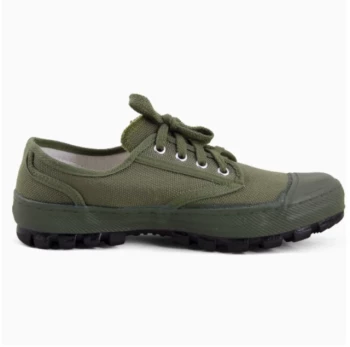
Activated carbon functions as a microscopic texture modifier within the rubber matrix to enhance traction. By serving as a porous functional filler, it creates tiny depressions and exposed sections on the outsole's surface. These micro-structures trap air during movement, generating negative pressure that pulls water away from the contact patch, allowing the rubber to grip the solid ground rather than sliding on a liquid film.
The key mechanism is the generation of negative Laplace pressure through microscopic air bubbles. This force actively displaces water, ensuring direct rubber-to-ground contact and significantly boosting the friction coefficient on wet surfaces.
The Role of Surface Micro-Structure
Creating Surface Irregularities
Activated carbon is not merely a chemical additive; it acts physically as a porous functional filler.
When integrated into the rubber compound, it introduces microscopic depressions and exposed, porous sections across the surface of the outsole.
Trapping Air Pockets
These tiny cavities are essential when the shoe strikes a wet surface.
As friction occurs, these depressions trap minute pockets of air, creating micro-bubbles within the interface between the shoe and the wet ground.
The Physics of Wet Traction
Generating Negative Laplace Pressure
The defining scientific principle behind this grip improvement is negative Laplace pressure.
The curvature of the air bubbles trapped within the carbon's porous structure creates a specific pressure differential relative to the surrounding fluid.
Attracting Water to Clear the Interface
This negative pressure effect actively attracts water.
By pulling water into these micro-structures and away from the flat contact points, the system promotes direct contact between the rubber and the substrate, effectively breaking the thin film of water that usually causes slipping.
Measuring the Performance Gain
Increasing the Friction Coefficient
The primary enemy of wet traction is the lubricating layer of water that separates the sole from the ground.
By utilizing negative pressure to bridge this gap, activated carbon significantly increases the friction coefficient, restoring the grip levels closer to those found in dry conditions.
Reducing Slip Risk
This mechanism provides a proactive defense against hydroplaning on a micro-scale.
It ensures that the outsole engages with the terrain rather than floating over it, drastically reducing the risk of slipping on wet or slick surfaces.
Understanding the Trade-offs
Durability Considerations
While increasing porosity improves grip, introducing particulate fillers can alter the structural integrity of the rubber.
High concentrations of porous fillers may impact the long-term abrasion resistance of the outsole, potentially causing the tread to wear down faster than a solid, non-porous compound.
Consistency of Dispersion
The effectiveness of this mechanism relies on the even distribution of activated carbon throughout the rubber.
If the filler is not mixed uniformly, the outsole may exhibit inconsistent grip zones, leading to unpredictable performance across different areas of the shoe.
Making the Right Choice for Your Goal
To select the best materials for your specific application, consider the following:
- If your primary focus is maximum safety on wet terrain: Prioritize outsoles that explicitly utilize porous functional fillers like activated carbon to leverage negative pressure for superior contact.
- If your primary focus is long-term durability: Look for compounds that balance the ratio of carbon filler to rubber, ensuring the material retains enough density to resist abrasion over time.
Understanding this micro-mechanical interaction allows you to select footwear that leverages physics for superior stability in adverse conditions.
Summary Table:
| Feature | Mechanism | Benefit |
|---|---|---|
| Porous Filler | Creates microscopic surface depressions | Traps air to form micro-bubbles |
| Laplace Pressure | Generates negative pressure | Actively pulls water away from contact patch |
| Surface Contact | Breaks the liquid film | Promotes direct rubber-to-ground engagement |
| Friction Level | Increases friction coefficient | Significantly reduces slip and hydroplaning risk |
Partner with 3515 for High-Performance Outsole Innovation
As a large-scale manufacturer serving distributors and brand owners, 3515 offers comprehensive production capabilities for all footwear types, anchored by our flagship Safety Shoes series. Our extensive portfolio covers work and tactical boots, outdoor shoes, training shoes, and sneakers, as well as Dress & Formal shoes to meet diverse bulk requirements.
By integrating advanced materials like activated carbon, we help our partners deliver superior safety and performance to their end-users. Whether you need to enhance wet-weather traction for tactical gear or durability for industrial work boots, our team provides the manufacturing expertise to bring your specifications to life.
Ready to elevate your footwear line with advanced grip technology? Contact us today to discuss your bulk production needs!
References
- Toshiaki Nishi, Kazuo Hokkirigawa. Development of high slip-resistant footwear outsole using rubber surface filled with activated carbon/sodium chloride. DOI: 10.1038/s41598-021-04102-0
This article is also based on technical information from 3515 Knowledge Base .
Related Products
- Durable Rubber Sole Outdoor Shoes Wholesale & Custom Manufacturing
- Durable Rubber-Soled Utility Shoes for Wholesale & Custom Brand Manufacturing
- Durable Canvas Work Shoes with Rubber Lug Sole | Wholesale Manufacturer
- Wholesale Durable Camouflage Canvas Shoes with High-Traction Cleated Rubber Sole
- Wholesale Durable Camo Canvas Shoes with High-Traction Rubber Soles
People Also Ask
- What is the function of the sole in outdoor shoes? Find the Perfect Grip and Support
- What role do outdoor shoes and sneakers play in navigating external terrains? Engineered Stability for Every Surface
- How is AI utilized in the design of outdoor and safety footwear? Harnessing Big Data for Market-Driven Shoe Innovation
- Why is durability important when selecting outdoor shoes? A Guide to Safety & Long-Term Value
- What are the key components of outdoor shoes that affect comfort and sturdiness? A Guide to Durable, High-Performance Footwear