First, I need to understand the user's needs. The immediate question is, "Why not sneakers?" But the real need is to understand the specific dangers in a kitchen and what makes a good kitchen shoe. It's about safety principles, not just a simple "don't do it" answer.
The references provided are pretty basic. They cover the obvious hazards like slips and spills, but I need to expand on why a regular sneaker fails to protect against these specific risks.
Here's how I'll structure my response:
I'll start with a strong opening that directly addresses the user's question, followed by a core takeaway box that makes the key point concise.
Then, I'll dive into the details. I'll break down the hazards:
- Slips and Falls: Explain the physics of why sneaker soles aren't designed to handle wet, greasy floors. Focus on tread patterns and materials.
- Spills and Punctures: Cover the lack of protection from hot liquids and sharp objects with sneakers, contrasting it with the robust materials of kitchen shoes.
- Fatigue and Support: Explain how regular sneakers lack the structural support for long shifts, leading to potential health problems.
I'll then delve into the specifics of "non-slip" soles. It's about more than just the material. I'll explain the tread design and material properties that create grip on wet surfaces, and directly contrast this with the typical running shoe sole.
The final section will address the trade-offs:
- Acknowledge that initial comfort can be misleading. Frame this as short-term comfort at the expense of long-term safety.
- Discuss breathability versus protection as a deliberate design choice.
- Position the higher cost of kitchen shoes as an investment.
I'll end with actionable advice, offering a bulleted list to guide the user in choosing the right shoes based on their specific needs within the kitchen. The goal is to empower them with knowledge. Finally, a strong, encouraging sentence to finish on a positive note.
I'll be sure to use short paragraphs, bolding, clear headings, and a logical flow from the surface issue to the deeper, technical reasons. The synthesis is really the key here: taking basic information and expanding it into a complete, safety-focused, and empowering explanation. I want the user to understand the "why" so they can make an informed decision and stay safe. Choosing the right footwear for a kitchen is a critical safety decision, not a stylistic one. Regular sneakers are fundamentally unsuitable for professional kitchen environments because their design cannot handle the unique hazards present. Their soles are not engineered to grip on greasy or wet floors, and their soft, often mesh, materials offer no protection from hot liquids or sharp objects, creating a significant risk of injury.
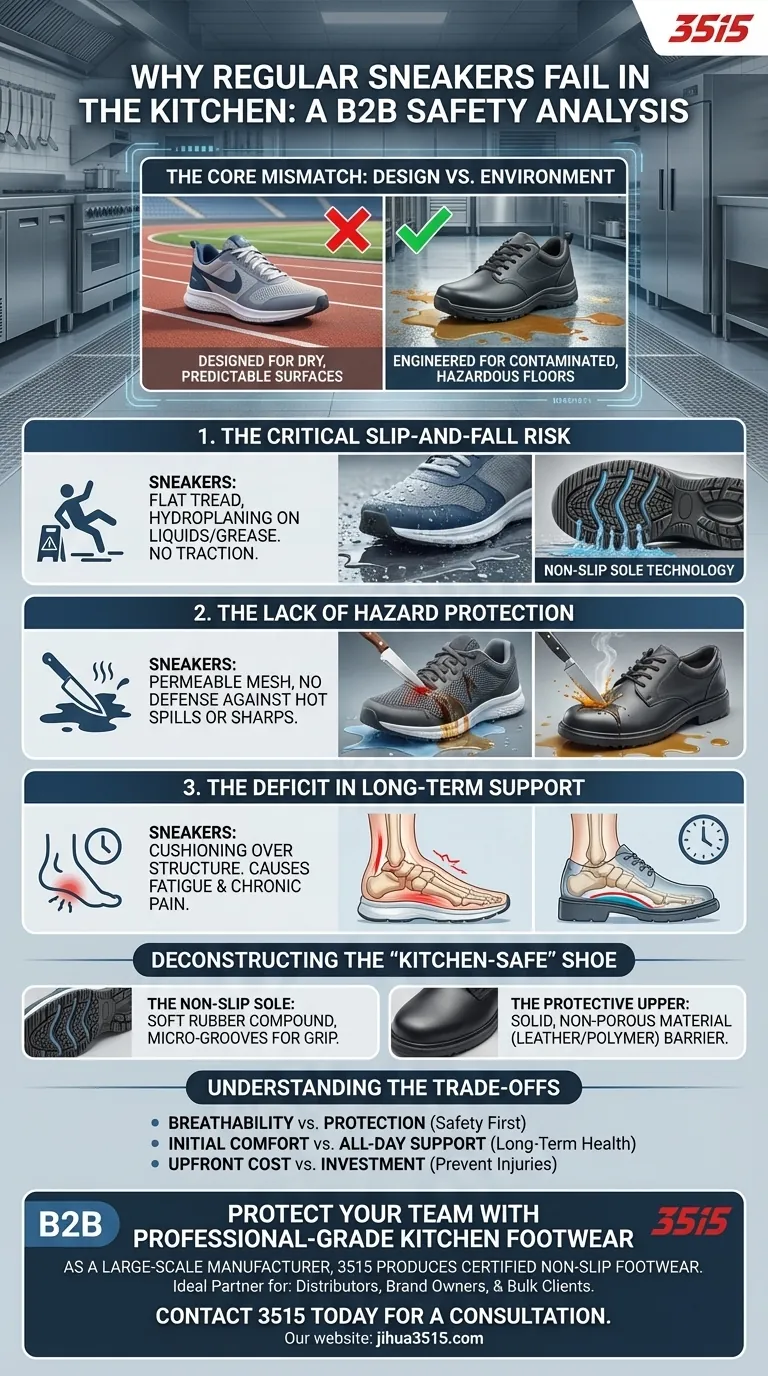
The core issue is a mismatch of design and environment. Regular sneakers are built for cushioning and grip on dry, predictable surfaces, while professional kitchen shoes are engineered specifically for slip-resistance on contaminated floors, protection from spills, and durable support for long hours of standing.
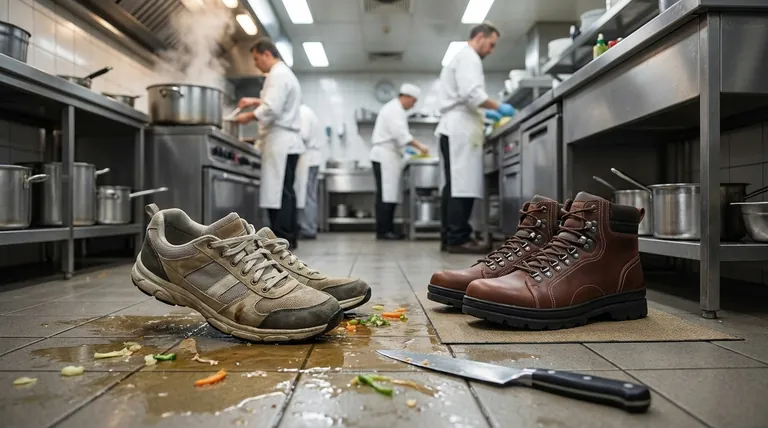
Why Sneaker Design Fails in the Kitchen
A professional kitchen is an obstacle course of liquids, heat, and sharp objects. Footwear that is not designed for this specific environment becomes a liability. The failure of regular sneakers can be broken down into three primary risk categories.
The Critical Slip-and-Fall Risk
The single greatest danger in a kitchen is a slip on a contaminated floor. Surfaces are frequently wet or slick with grease, food debris, or cleaning solutions.
A standard sneaker's sole is designed for grip on asphalt or a gym floor. Its tread pattern is not made to channel away liquids like water or oil, which can lead to hydroplaning and a complete loss of traction.
The Lack of Hazard Protection
Kitchens are full of objects that can cause serious harm to your feet. Dropped knives, broken glass, and heavy cans are common occurrences.
The mesh fabric and soft materials common in athletic shoes offer zero protection against punctures or impact. More importantly, they are highly permeable, meaning a splash of hot cooking oil or boiling water will soak through instantly, causing severe burns.
The Deficit in Long-Term Support
Standing for 8-12 hours on hard tile floors puts immense strain on your feet, back, and joints. While sneakers feel cushioned, they often lack the rigid, structured support needed for this kind of work.
This lack of proper arch and heel support can contribute to chronic conditions like plantar fasciitis, joint pain, and significant fatigue over the course of a shift and a career.
Deconstructing the "Kitchen-Safe" Shoe
Certified non-slip shoes are not just regular shoes with a different label. They are purpose-built tools designed with specific materials and engineering principles to mitigate kitchen risks.
The Non-Slip Sole
The most critical feature is the sole. It is made from a softer rubber compound that maintains its grip even on slick surfaces.
The tread patterns are also completely different. They feature intricate, multi-directional channels and micro-grooves designed to actively push liquids out from under the foot, maximizing the surface area in contact with the floor.
The Protective Upper
The "upper" is the part of the shoe that covers the foot. In kitchen-safe footwear, this is almost always a solid, non-porous material like treated leather or a synthetic polymer.
This solid construction serves two purposes: it prevents hot liquids from reaching the skin, and it provides a barrier against cuts and punctures from dropped utensils.
Understanding the Trade-offs
Choosing proper kitchen footwear involves accepting a few key trade-offs. Understanding them clarifies why these shoes are designed the way they are.
Breathability vs. Protection
Regular sneakers are highly breathable because of their mesh construction. Kitchen shoes are intentionally not breathable. This is a deliberate safety choice where preventing a severe burn from hot oil is prioritized over air circulation.
Initial Comfort vs. All-Day Support
A sneaker might feel more comfortable and flexible when you first put it on. However, a well-made kitchen shoe provides a more rigid, structured support system that prevents pain and fatigue over a long and demanding shift. The goal is long-term health, not initial feel.
Upfront Cost vs. Long-Term Investment
Properly certified kitchen shoes can be more expensive than a basic pair of sneakers. This cost should be viewed as an investment in personal protective equipment. It prevents injuries, lost wages from time off, and the chronic pain that can shorten a culinary career.
Making the Right Choice for Your Role
Your specific role and kitchen environment should guide your footwear selection.
- If your primary focus is maximum safety in a high-spill area (e.g., a dish pit or fryer station): Prioritize a shoe with the highest slip-resistance rating, a durable waterproof upper, and ideally a safety toe.
- If your primary focus is all-day endurance during long shifts (e.g., a prep or line cook): Seek a certified non-slip shoe with exceptional arch support and cushioning to combat fatigue.
- If you are a manager or front-of-house staff who only occasionally enters the kitchen: A certified non-slip sole is the absolute minimum requirement to ensure your safety.
Investing in proper footwear is the foundation for a safe and sustainable career in the culinary world.
Summary Table:
| Feature | Regular Sneakers | Kitchen-Safe Shoes |
|---|---|---|
| Sole Traction | Designed for dry surfaces; poor on wet/greasy floors | Specially engineered for maximum slip resistance |
| Spill Protection | Permeable materials (e.g., mesh); no protection from hot liquids | Waterproof, non-porous uppers to prevent burns |
| Puncture Resistance | Soft, flexible materials offer no protection | Durable construction to protect from sharp objects |
| Long-Term Support | Cushioned for athletic use, not prolonged standing | Structured support for all-day comfort and injury prevention |
Protect Your Team with Professional-Grade Kitchen Footwear
As a large-scale manufacturer, 3515 produces a comprehensive range of certified non-slip footwear specifically engineered for the demanding environment of professional kitchens. Our shoes are designed to provide superior slip resistance, protect against hot liquid spills and sharp objects, and offer the all-day support your staff needs.
We are the ideal partner for:
- Distributors & Brand Owners: Looking for reliable, high-volume production of branded or private-label safety footwear.
- Bulk Clients & Large Kitchens: Needing to outfit entire teams with durable, cost-effective, and compliant footwear.
Our value to you: Consistent quality, scalable production, and expertise in safety standards. Let us help you create a safer, more productive kitchen environment.
Contact 3515 today for a consultation and discover how our manufacturing capabilities can meet your specific needs.
Visual Guide
Related Products
- Wholesale Smart Casual Sneakers with Dial Closure | Factory Direct Manufacturing
- Durable High-Traction Canvas Sneakers Wholesale & Custom Manufacturing
- Durable Canvas Work Shoes with Rubber Lug Sole | Wholesale Manufacturer
- Wholesale Durable Camouflage Canvas Shoes with High-Traction Cleated Rubber Sole
People Also Ask
- What should be considered regarding the materials used in casual sneakers? Choose for Comfort, Durability & Style
- What are the key factors to consider when choosing casual sneakers? Find Your Perfect Fit & Style
- What steps can be taken to ensure the best selection of casual sneakers? A Guide to Comfort, Style & Durability
- How does style and versatility factor into choosing casual sneakers? Build a Timeless Wardrobe Foundation
- How should price and value for money be evaluated for casual sneakers? Maximize Your Investment with Cost-Per-Wear