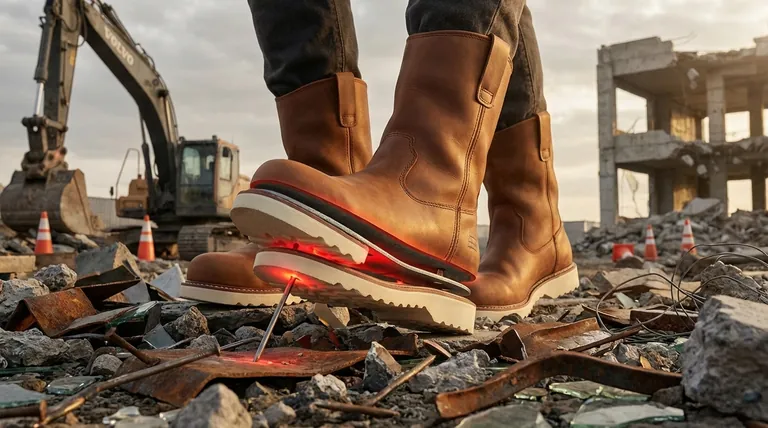
In hazardous work environments, the ground you walk on is often the biggest unknown. Puncture-resistant Wellington boots are critically important because they integrate a protective plate within the sole. This plate is specifically designed to stop sharp objects like nails, screws, or glass shards from penetrating the boot and causing severe, debilitating foot injuries.
The core importance of puncture-resistant Wellington boots lies in providing a non-negotiable last line of defense against unseen, underfoot hazards. This single feature transforms a simple waterproof boot into an essential piece of personal protective equipment (PPE).
The Anatomy of Protection: How They Work
The Protective Midsole Plate
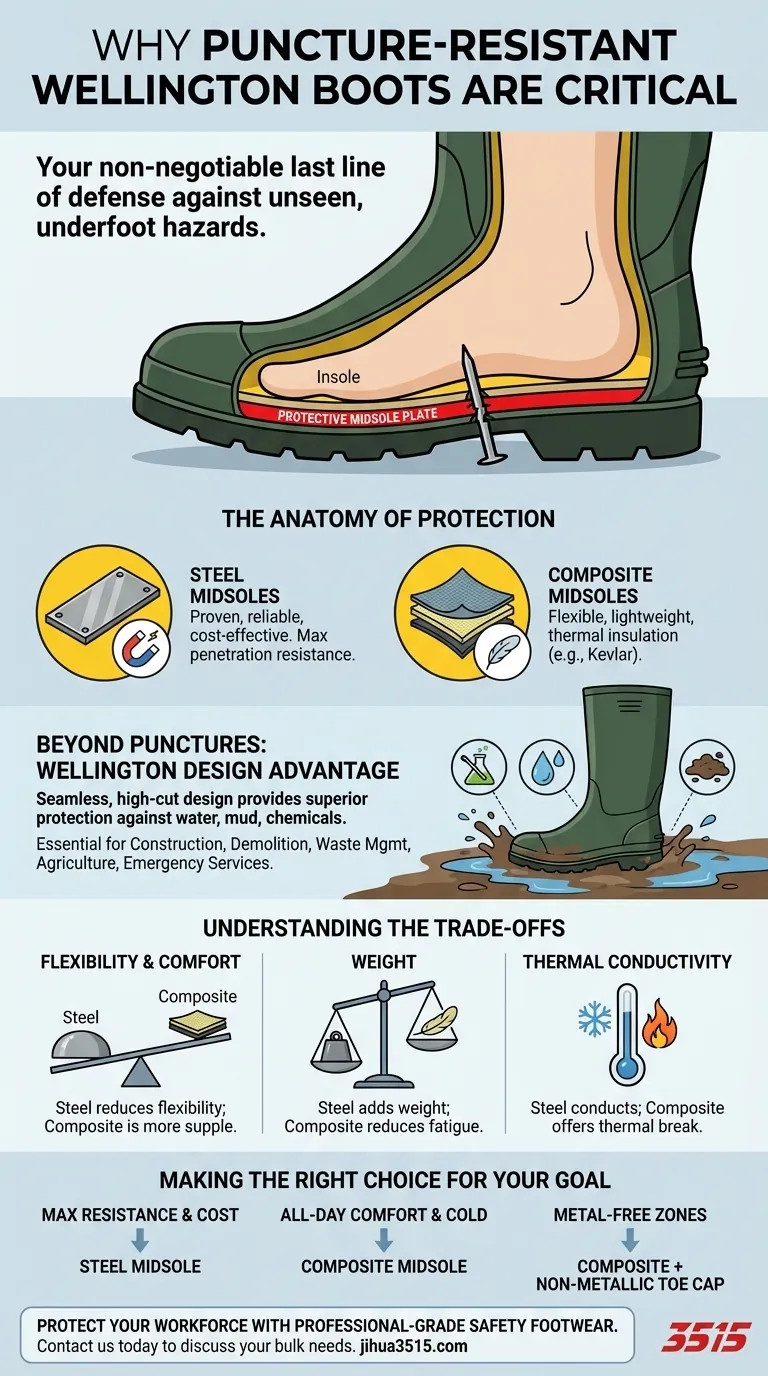
The key to this protection is a puncture-resistant midsole plate. This component is sandwiched between the boot's insole (what your foot rests on) and the outsole (what contacts the ground).
Its sole purpose is to act as a shield, stopping sharp objects before they can reach your foot.
Steel Midsoles
The traditional and most common material for these plates is steel. A thin sheet of steel provides exceptional resistance to penetration from small, sharp objects like nails or needles.
Steel is a proven, reliable, and cost-effective solution for puncture protection.
Composite Midsoles
A more modern alternative uses composite materials, such as woven aramid fibers (like Kevlar). These midsoles are made from multiple layers of high-strength fabric bonded together.
Composite plates offer greater flexibility, are lighter than steel, and do not conduct heat or cold, making them more comfortable in extreme temperatures.
Beyond Punctures: The Role of the Wellington Design
Comprehensive Hazard Coverage
The "Wellington" style itself is crucial. Its seamless, high-cut design provides superior protection against water, mud, chemicals, and other contaminants, keeping the foot dry and safe from splashes.
This makes the puncture-resistant Wellington a multi-function tool for site safety, combining underfoot protection with environmental protection.
Where This Combination is Essential
This dual protection is vital in industries where hazards are both underfoot and environmental.
Key sectors include construction, demolition, waste management, agriculture, and emergency services, where the risk of stepping on unseen debris is constant.
Understanding the Trade-offs
Flexibility and Comfort
The addition of a protective plate, particularly a steel one, can reduce the overall flexibility of the boot's sole.
While composite midsoles are more flexible, neither will feel as supple as a standard, non-safety boot. This is a direct trade-off for a significant increase in safety.
Weight Considerations
A steel midsole adds noticeable weight to the footwear. Over a long day, this can contribute to fatigue.
Composite midsoles offer a lightweight alternative, reducing strain and improving overall comfort for the wearer.
Thermal Conductivity
Steel is a conductor. In cold environments, a steel plate can draw heat away from the foot, leading to discomfort.
Composite materials are excellent insulators, providing a thermal break that makes them far more suitable for work in cold weather conditions.
Making the Right Choice for Your Goal
Your final decision should be dictated by the specific hazards and demands of your work environment.
- If your primary focus is maximum penetration resistance and cost-effectiveness: Choose boots with a steel midsole, which offers proven protection at an accessible price point.
- If your primary focus is all-day comfort, flexibility, and working in cold conditions: Opt for boots with a composite midsole for better insulation and reduced fatigue.
- If your primary focus is working around metal detectors or in electrically sensitive areas: A fully non-metallic boot with a composite midsole and toe cap is the only safe choice.
Ultimately, selecting the correct puncture-resistant footwear is a direct investment in personal safety and operational continuity.
Summary Table:
| Feature | Steel Midsole | Composite Midsole |
|---|---|---|
| Primary Benefit | Maximum penetration resistance, cost-effective | Lightweight, flexible, thermal insulation |
| Ideal For | General construction, demolition, maximum protection | Cold environments, long shifts, metal-free zones |
| Consideration | Heavier, conducts temperature | Higher cost, different penetration profile |
Protect Your Workforce with Professional-Grade Safety Footwear
As a large-scale manufacturer, 3515 produces a comprehensive range of puncture-resistant Wellington boots for distributors, brand owners, and bulk clients. Our production capabilities encompass all types of safety footwear, ensuring you get the right protection—whether you need cost-effective steel midsoles or advanced composite plates for superior comfort.
Ready to equip your team with reliable, high-quality safety boots? Contact us today to discuss your specific needs and get a customized solution!
Visual Guide
Related Products
- Wholesale Durable Safety Boots | Custom Steel Toe & Puncture-Resistant Manufacturing
- Wholesale Durable Breathable Safety Boots Custom OEM Manufacturer
- Premium High-Cut Waterproof Safety Boots Manufacturing & Wholesale Solutions
- Wholesale Customizable Suede Safety Boots - Puncture-Proof with Velcro Closure
- Durable Waterproof Rain Boots | Custom Manufacturer for Wholesale & Brands
People Also Ask
- How should safety boots be cleaned to avoid damage? A Gentle Guide to Preserve Your Boots
- What makes durable safety boots? The Ultimate Guide to Long-Lasting Work Footwear
- Why is proper storage important for safety boots? Preserve Protection and Extend Lifespan
- What are the risks of using ordinary rubber boots in forest clearing? Why professional safety boots are essential
- What are the key features of safety boots? Essential Protection for Hazardous Workplaces