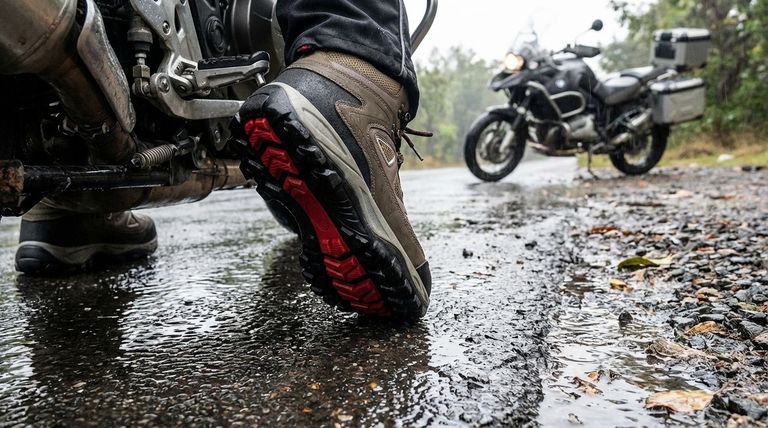
At its core, a non-slip sole on a motorcycle boot is a critical safety feature designed to maintain control of your motorcycle in all conditions. This specialized sole provides a firm, reliable grip on both the ground and your footpegs, preventing the slips that can lead to a dropped bike or a loss of control while in motion.
The connection between your feet and the surface—whether pavement or peg—is a fundamental point of control. A non-slip sole ensures this connection is never compromised, turning a potential point of failure into a source of stability and confidence.
The Two Critical Scenarios for Grip
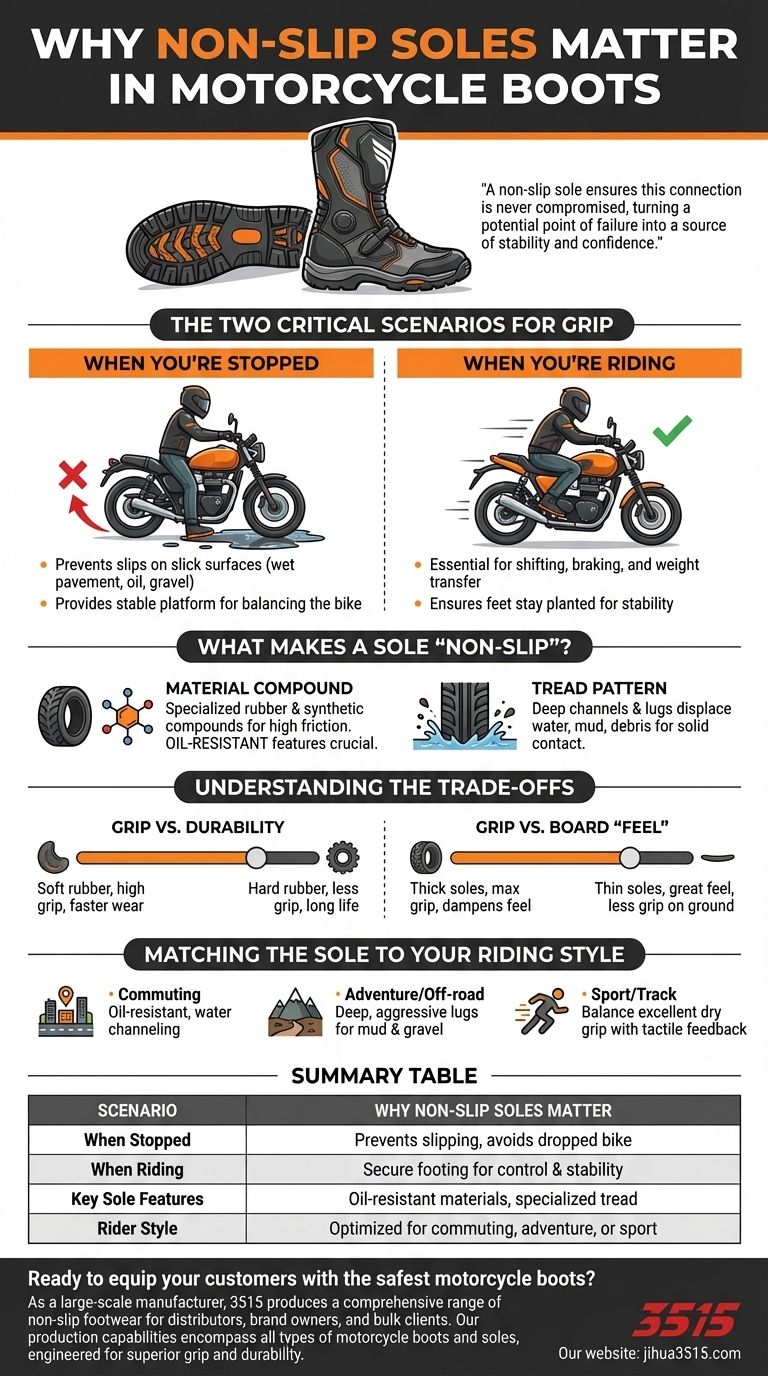
The importance of a non-slip sole becomes clear when you analyze the two primary ways your feet interact with the world while motorcycling: when you are stopped and when you are actively riding.
When You're Stopped
This is the most common scenario where a lack of grip can cause a serious problem. When you come to a stop, you plant one or both feet on the ground to balance the weight of the motorcycle.
A standard shoe can easily slide out on slick surfaces like wet pavement, an unseen oil patch, loose gravel, or even a painted road line. A non-slip motorcycle boot sole is engineered to bite into these surfaces, providing the stable platform you need to hold the bike upright confidently.
When You're Riding
While in motion, your feet are your connection to the bike's controls and a key part of your body positioning.
A secure footing on the pegs is essential for shifting gears, applying the rear brake, and adjusting your weight through turns. If your boot slips off a peg, especially during a critical maneuver, it can instantly destabilize you and the motorcycle. Non-slip soles ensure your feet stay planted exactly where you need them.
What Makes a Sole "Non-Slip"?
The "non-slip" designation isn't just a marketing term; it's the result of specific design choices in the boot's construction. Two factors are key.
The Role of Material Compound
Motorcycle boot soles are made from specialized rubber and synthetic compounds. These materials are chosen for their high coefficient of friction, which dictates their ability to grip a surface.
Many high-quality soles are also oil-resistant. This is a crucial feature, as fuel and oil are common on road surfaces and can turn a regular sole into a frictionless slide.
The Importance of Tread Pattern
Much like the tires on your motorcycle, the tread pattern on your boot's sole is designed to maximize grip in adverse conditions.
Deep channels and aggressive lugs work to displace water, mud, and debris. This clears a path for the sole to make solid contact with the surface, preventing hydroplaning and maintaining traction where a flat sole would fail.
Understanding the Trade-offs
Choosing the right boot involves balancing competing factors. The sole is no exception.
Grip vs. Durability
Generally, a softer rubber compound will offer superior grip, especially in cold or wet weather. However, this same softness means the sole will wear out more quickly with extensive walking.
Conversely, a harder, more durable sole may last for many years but might provide less traction than its softer counterparts.
Grip vs. Board "Feel"
For some riders, especially in performance or sport riding, feeling the vibrations and feedback from the footpegs is important.
A very thick, heavily-lugged adventure boot provides maximum grip on the ground but can slightly dampen the tactile feedback from the bike's controls. A sport boot often has a thinner, flatter sole to maximize this "feel" while still providing excellent grip on the pegs.
Matching the Sole to Your Riding Style
Ultimately, the best non-slip sole is the one designed for your specific needs.
- If your primary focus is daily commuting: Prioritize an oil-resistant sole with a tread designed to channel water effectively for unpredictable urban surfaces.
- If your primary focus is adventure or off-road riding: Look for a sole with deep, aggressive lugs that can provide positive grip on mud, gravel, and uneven terrain.
- If your primary focus is sport or track riding: You need a sole that balances excellent dry grip with the tactile feedback necessary for precise control inputs.
Choosing the right boot sole isn't a minor detail; it is a foundational choice for your safety and confidence on every ride.
Summary Table:
| Scenario | Why Non-Slip Soles Matter |
|---|---|
| When Stopped | Prevents slipping on wet pavement, oil, or gravel, avoiding a dropped bike. |
| When Riding | Keeps feet securely on footpegs for stable gear shifting, braking, and cornering. |
| Key Sole Features | Oil-resistant materials and specialized tread patterns for maximum grip. |
| Rider Style | Different soles are optimized for commuting, adventure, or sport riding. |
Ready to equip your customers with the safest motorcycle boots?
As a large-scale manufacturer, 3515 produces a comprehensive range of non-slip footwear for distributors, brand owners, and bulk clients. Our production capabilities encompass all types of motorcycle boots and soles, engineered for superior grip and durability.
Contact us today to discuss your specific needs and secure a reliable supply of high-performance motorcycle boots.
Visual Guide
Related Products
- Durable Leather Moc Toe Work Boots for Wholesale & Custom Manufacturing
- Durable Spiked Camouflage Boots Wholesale & Factory Production
- Wholesale Waterproof Tactical Boots Custom Suede & High-Traction Soles
- Heavy-Duty Waterproof Nubuck Safety Boots Safety Shoes for Bulk Supply
- Durable Rubber Sole Outdoor Shoes Wholesale & Custom Manufacturing
People Also Ask
- What are moc toe work boots designed for? Superior Comfort and Mobility for Tradespeople
- What are the key features to look for when purchasing moc toe boots? A Guide to Durability & Fit
- How did moc toe boots originate? A Legacy of Workwear Durability and Style
- What clothing items complement the Outdoorsman/Heritage Look with moc toe boots? Build a Timeless, Rugged Wardrobe
- What types of outfits can moc toe boots be worn with? Versatile Style Guide