
To be direct, motorcycle boots are essential because they are a highly specialized piece of equipment designed to mitigate the unique and severe risks associated with riding. Unlike regular shoes, they provide a critical combination of impact protection, abrasion resistance, ankle support, and operational control that is non-negotiable for rider safety.
The fundamental purpose of a motorcycle boot is not merely to cover your foot. It is to create a rigid, protective system that resists the crushing, twisting, and grinding forces of an accident while simultaneously enhancing your ability to control the motorcycle.
The Four Pillars of Rider Protection
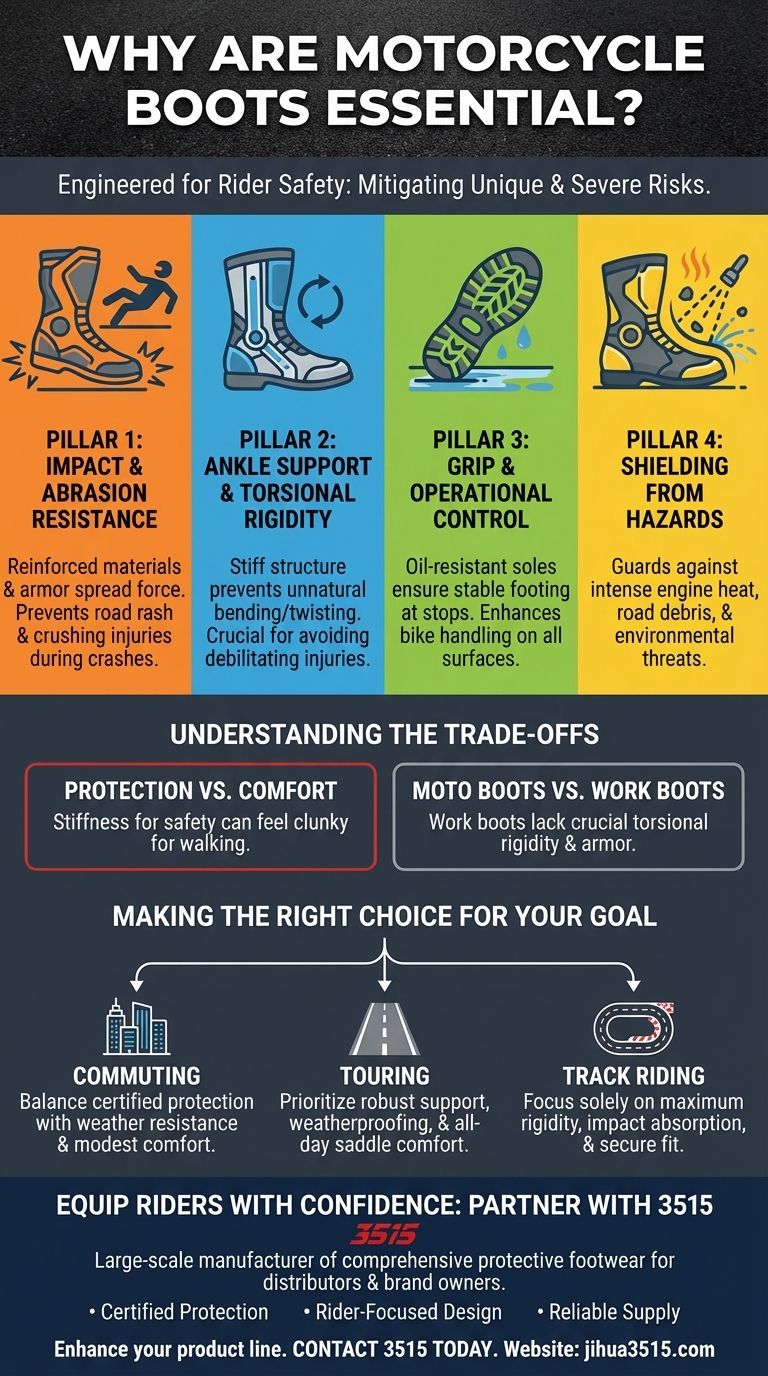
Motorcycle boots are engineered around four distinct functions that work together to keep you safe and in control. Neglecting any one of these areas exposes a rider to significant, avoidable risk.
Pillar 1: Impact and Abrasion Resistance
In a crash, your feet are highly vulnerable to both direct impact and sliding on pavement.
Motorcycle boots are built with reinforced materials like heavy leather and incorporate armor or energy-absorbing padding in critical areas like the ankle, heel, and toe box. This structure is designed to spread the force of an impact and resist being worn away by the road surface, preventing severe road rash.
Pillar 2: Ankle Support and Torsional Rigidity
One of the most common motorcycle injuries involves the foot being twisted or trapped under the bike.
A proper riding boot is intentionally stiff to prevent your ankle from bending or rotating in unnatural directions. This torsional rigidity is a key feature that separates it from a hiking boot or sneaker, which are designed for flexibility.
Pillar 3: Grip and Operational Control
Your feet are an active part of controlling the motorcycle.
The specialized, oil-resistant soles of riding boots provide a secure grip on the pavement when you stop. This stability is crucial for managing the weight of the bike, especially on uneven or slippery surfaces, and can be the difference between a close call and a fall.
Pillar 4: Shielding from Hazards
Riding exposes your feet to constant environmental threats beyond a potential crash.
Boots shield you from the intense heat radiating from the engine and exhaust pipes, which are often just inches away. They also protect your feet from kicked-up road debris and spray from other vehicles.
Understanding the Trade-offs
Choosing the right gear always involves balancing competing needs. It is crucial to understand that the features that make a boot safe for riding often make it less ideal for other activities.
Protection vs. Off-Bike Comfort
The stiffness and armor that protect your ankle in a crash are the very same features that can make a boot feel clunky and uncomfortable for walking long distances.
Motorcycle Boots vs. "Sturdy" Alternatives
Many riders mistakenly believe that a heavy work boot or hiking boot offers sufficient protection.
While these may seem tough, they lack critical safety features. They are designed to be flexible for walking, which becomes a liability in a crash, offering little to no resistance against the twisting forces that can shatter an ankle.
Making the Right Choice for Your Goal
Selecting the right boot depends entirely on how and where you ride. Always prioritize protection over all other factors.
- If your primary focus is daily commuting: Seek a boot that balances certified protection with weather resistance and a modest amount of off-bike comfort.
- If your primary focus is long-distance touring: Prioritize robust support, proven weatherproofing, and features designed for all-day comfort in the saddle.
- If your primary focus is high-performance or track riding: Your only consideration should be maximum rigidity, impact absorption, and a secure fit, as protection is paramount.
Ultimately, wearing proper motorcycle boots is a foundational element of managing risk and riding with confidence.
Summary Table:
| Key Pillar of Protection | Primary Function | Why It's Essential |
|---|---|---|
| Impact & Abrasion Resistance | Protects feet from crash impacts and road surface grinding. | Prevents severe injuries like road rash and crushing injuries. |
| Ankle Support & Torsional Rigidity | Prevents unnatural twisting or bending of the ankle. | Mitigates one of the most common and debilitating motorcycle injuries. |
| Grip & Operational Control | Provides a secure, oil-resistant grip on footpegs and pavement. | Enhances bike control and stability, especially during stops. |
| Shielding from Hazards | Protects from engine heat, road debris, and water spray. | Guards against constant environmental threats encountered while riding. |
Equip Riders with Confidence: Partner with 3515 for Superior Motorcycle Boots
As a large-scale manufacturer, 3515 produces a comprehensive range of protective footwear for distributors, brand owners, and bulk clients. Our production capabilities encompass all types of motorcycle boots, engineered with the essential safety pillars in mind.
Partner with us to provide your customers with:
- Certified Protection: Boots built with reinforced materials and strategic armor.
- Rider-Focused Design: Features that enhance control, comfort, and safety.
- Reliable Supply: Consistent quality and volume for your business needs.
Ready to enhance your product line with essential riding gear? Contact 3515 today to discuss your manufacturing requirements.
Visual Guide
Related Products
- Wholesale Tactical Boots High-Traction & Reflective for Bulk & Brand Orders
- High Performance Fire-Retardant Waterproof Safety Boots
- Durable Goodyear Welt Leather Work Boots for Wholesale & Private Label
- Wholesale High-Traction Camo Boots - Custom Manufacturer for Brands
- Heavy-Duty Waterproof Nubuck Safety Boots Safety Shoes for Bulk Supply
People Also Ask
- How do tactical boots protect against injuries? Discover the Integrated Safety System
- What role do heavy-duty footwear play in identity expression? Subvert Aesthetic Norms with Tactical & Industrial Style
- What materials are used in tactical boot uppers? A Guide to Durability & Performance
- Who commonly uses tactical boots? From Military to Outdoor Enthusiasts
- What are the different types of tactical boots available? Find the Right Boot for Your Mission



















