
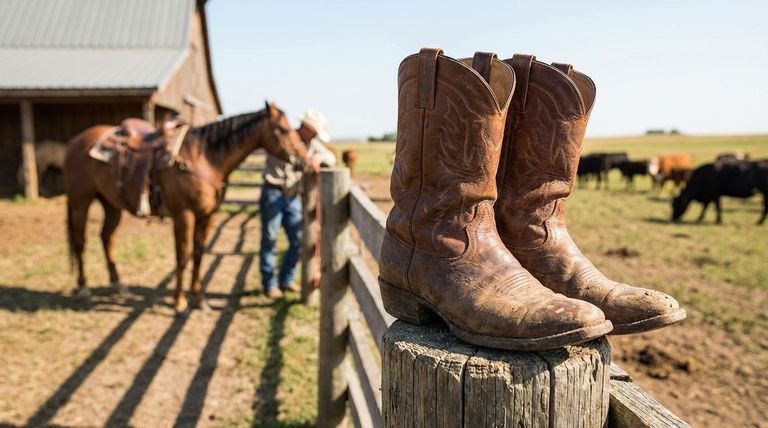
To put it simply, cowboy boots are ideal for ranching and farming because every element of their design is a direct solution to the hazards and demands of the work. From the high shaft protecting the leg to the specific shape of the heel and toe for horseback riding, the boot is a highly specialized piece of equipment engineered for safety and efficiency.
While often seen as a style icon, the traditional cowboy boot is fundamentally a tool. Its design prioritizes the safety of a rider and the durability needed for harsh working conditions above all else.
A Tool Built for the Task: Deconstructing the Cowboy Boot
To understand why these boots have endured, we must look at them not as footwear, but as purpose-built equipment. Each component serves a distinct and critical function.
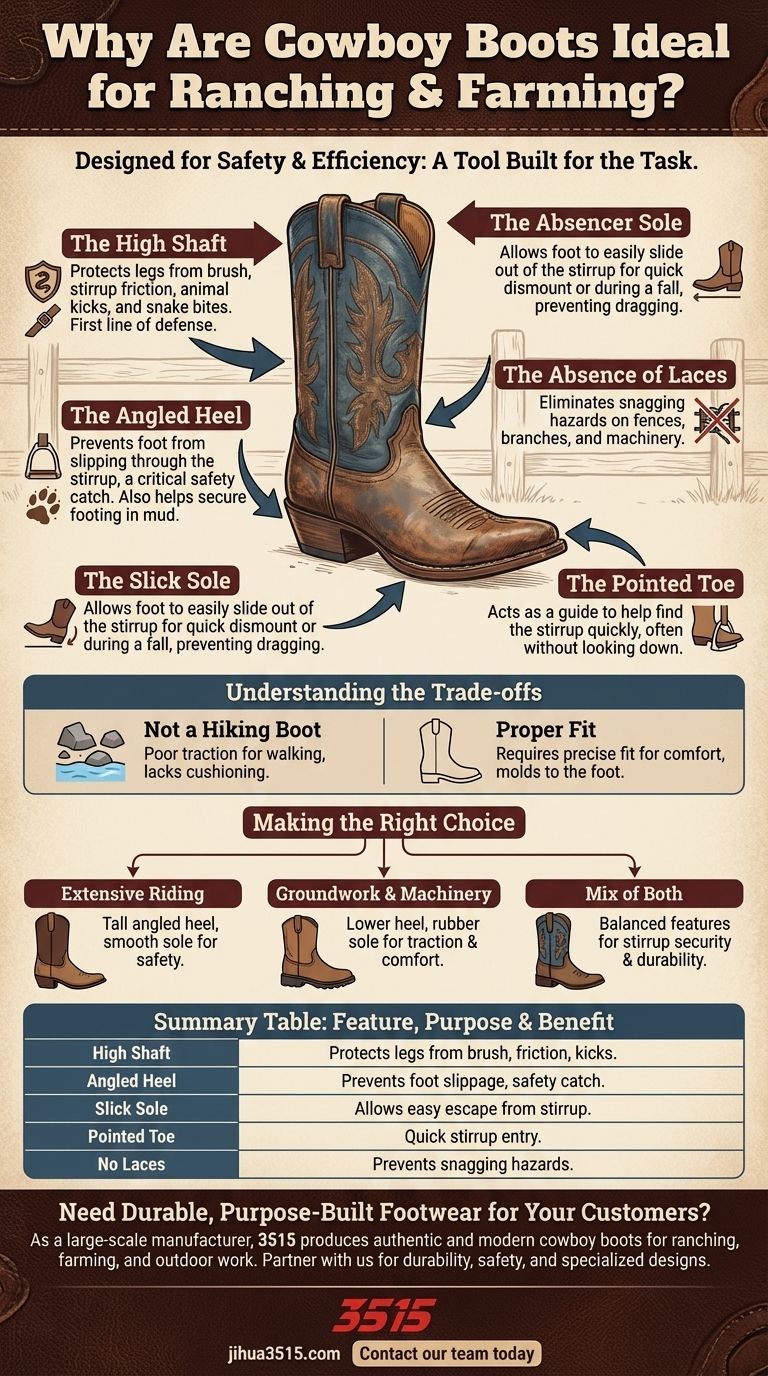
The High Shaft: Your First Line of Defense
The tall leather shaft is arguably the boot's most recognizable feature, and it provides multifaceted protection. It guards the rider's leg from the friction and pinching of stirrup leathers.
On the ground, it shields the shins and ankles from thorny brush, snake bites, mud, and water. It also offers a degree of protection from the stray kick of a hoof or a dropped tool.
The Angled Heel: A Rider's Safety Catch
The high, angled "riding heel" is a critical safety feature for anyone on horseback. Its primary job is to prevent the rider's foot from accidentally slipping all the way through the stirrup.
This is crucial because if a rider falls while their foot is caught, they can be dragged, leading to severe injury. The heel acts as a catch, ensuring the foot stays in the correct position. When on the ground, it also helps secure a footing in mud or on uneven terrain.
The Slick Sole: An Intentional Lack of Grip
Unlike a hiking or work boot, a traditional cowboy boot has a smooth, often leather, sole. This is not a design flaw; it is a feature.
This slickness allows the foot to easily slide out of the stirrup when a rider needs to dismount quickly or during a fall. A boot with a heavy rubber tread could catch on the stirrup, creating the dangerous dragging scenario the heel is designed to prevent.
The Pointed Toe: Finding the Stirrup Blind
The tapered, and often pointed, toe of a riding boot is designed to help a rider find the stirrup easily and quickly, often without looking down. It acts as a guide, making it simpler to slip the foot into place.
The Absence of Laces: Preventing Snags
The pull-on design is another deliberate safety choice. Laces can become snagged on branches, fences, or machinery, creating a dangerous tripping or entanglement hazard. A boot with no laces presents a smooth, uninterruptible surface.
Understanding the Trade-offs
No tool is perfect for every job. The very features that make cowboy boots exceptional for ranching create disadvantages in other contexts.
Not a Hiking Boot
The same slick sole that provides safety in the stirrup offers poor traction for extensive walking, especially on rocky or wet surfaces. The traditional design also lacks the cushioning and arch support of modern work or hiking boots, which can lead to fatigue.
The Importance of a Proper Fit
Due to their laceless design and stiff leather construction, cowboy boots demand a precise fit. An improper fit can be exceptionally uncomfortable and lead to blisters, while a well-fitted boot will mold to the owner's foot over time.
Traditional vs. Modern Hybrids
Many modern boots labeled "cowboy boots" are actually hybrids. They may incorporate rubber soles with more tread or a squared-off "roper" heel, which is lower and wider. These designs trade some traditional riding safety features for increased walking comfort and traction, making them better suited for groundwork.
Making the Right Choice for Your Work
Your ideal boot depends entirely on the specific balance of your daily tasks.
- If your primary focus is extensive horseback riding: A traditional design with a tall, angled heel and a smooth leather sole offers the highest level of equestrian safety.
- If your primary focus is groundwork, walking, and operating machinery: Consider a modern roper-style boot with a lower heel and a durable rubber sole for better traction and all-day comfort.
- If your work is a true mix of riding and ground chores: Look for a versatile boot that balances a defined heel for stirrup security with durable construction for general farm tasks.
Understanding the functional purpose behind each feature allows you to select a boot that is not just an aesthetic choice, but a critical tool for your safety and efficiency.
Summary Table:
| Feature | Purpose & Benefit |
|---|---|
| High Shaft | Protects legs from brush, stirrup friction, and animal kicks. |
| Angled Heel | Prevents foot from slipping through stirrup, a key safety feature. |
| Slick Sole | Allows foot to slide out of stirrup easily to prevent dangerous dragging. |
| Pointed Toe | Makes finding the stirrup quick and easy, often without looking. |
| No Laces | Eliminates snagging hazards on fences, branches, and machinery. |
Need Durable, Purpose-Built Footwear for Your Customers?
As a large-scale manufacturer, 3515 produces a comprehensive range of authentic and modern cowboy boots designed for the demands of ranching, farming, and outdoor work. We offer the durability, safety features, and specialized designs that distributors, brand owners, and bulk clients require.
Partner with us to provide your customers with footwear that combines tradition with performance.
Contact our team today to discuss your production needs and receive a quote.
Visual Guide
Related Products
- Wholesale High-Traction Camo Boots - Custom Manufacturer for Brands
- High-Traction Suede Tactical Boots Wholesale & Custom Manufacturing
- Wholesale Lightweight Tactical Boots Custom Manufacturer for Desert & Combat Use
- Durable Leather Tactical Boots Wholesale & Custom Manufacturing for Brands
- Wholesale Durable Mid-Cut Tactical Boots for Custom & Private Label Brands
People Also Ask
- What are the key features of the new line of camo boots? Built for Extreme Cold & Rugged Terrain
- Are camo boots necessary for hunting success? Prioritize Performance Over Pattern
- What is the technical logic behind using closed-eye testing for tactical boots? Unlocking Peak Footwear Stability
- How does the Rank Score Test identify the primary causes of premature failure in tactical and work boots? Key Insights
- What shoes to wear for a security job? Durable, Protective Footwear for Long Shifts


















