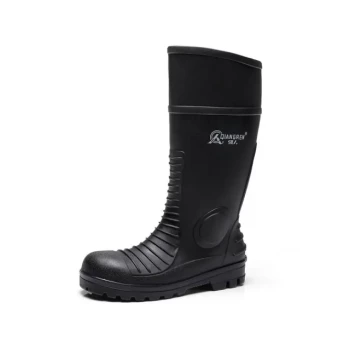
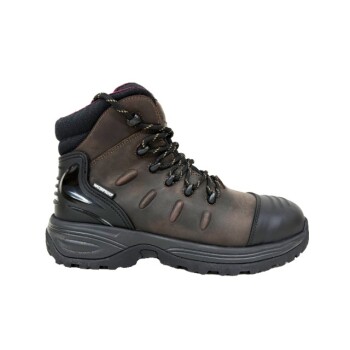
In high-risk environments, heavy-duty work boots are not just footwear; they are an essential piece of personal protective equipment (PPE). Their primary importance lies in serving as a critical line of defense, specifically engineered to protect your feet from severe workplace hazards like impact, compression, punctures, and electrical shock. Investing in the correct, high-quality boot is a direct investment in your personal safety and on-the-job effectiveness.
The real function of a heavy-duty boot is not just general durability, but providing specific, certified protection matched to the unique risks of your environment. Understanding these specific features is the key to ensuring your safety.
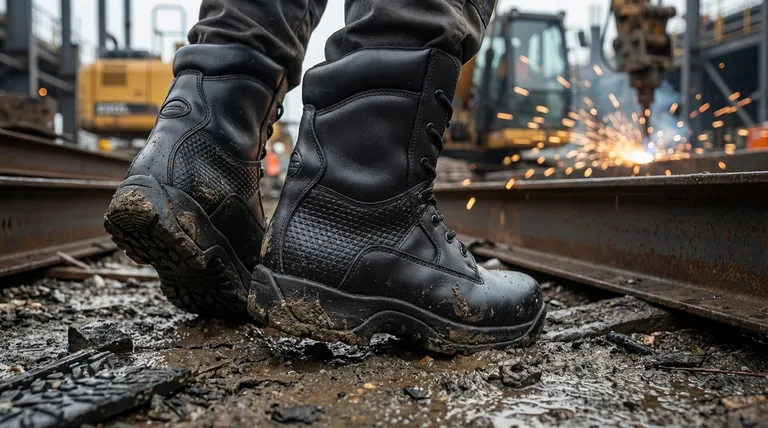
The Core Functions of a Protective Work Boot
A high-risk environment presents multiple, distinct dangers. A proper work boot is designed with layers of technology to counter these threats directly.
Protection from Impact and Compression
Heavy objects, rolling machinery, and falling tools pose a constant threat. Safety-toe boots are designed to shield the front of the foot from these forces.
The most common form of this protection is a steel toe, though lighter composite or alloy options also exist. These components must meet specific safety standards for impact and compression resistance.
Guarding Against Punctures
Construction sites, demolition zones, and industrial settings often have sharp debris like nails, screws, and metal shards on the ground.
A puncture-resistant plate, often made of steel or a flexible composite material, is embedded in the midsole to prevent these objects from penetrating the sole and injuring your foot.
Defense Against Electrical Hazards
For electricians or anyone working near live circuits, an accidental step can be fatal.
Electrical Hazard (EH) rated boots are constructed with non-conductive soles and heels. This design feature provides a secondary source of protection by insulating the wearer from the ground.
Beyond Shielding: Impact on Performance
True safety footwear goes beyond just preventing injury; it enhances your ability to work safely and efficiently.
Ensuring Stability and Traction
Slips, trips, and falls are among the most common workplace accidents. High-risk environments often include wet, oily, or uneven surfaces.
Heavy-duty boots feature specialized slip-resistant outsoles with tread patterns designed to channel away liquids and grip surfaces securely, providing critical stability.
Supporting Long-Term Well-being
Standing for hours on hard surfaces can cause significant fatigue and long-term health issues in the feet, knees, and back.
Quality boots provide essential arch support and cushioning. This not only improves comfort during the workday but also reduces the cumulative physical stress on your body.
Understanding the Trade-offs
Choosing the right boot involves balancing different features, as no single boot is perfect for every situation.
Protection vs. Weight
Historically, the highest levels of protection, particularly from steel toes and shanks, came with significant weight, which can increase fatigue.
Modern composite materials offer a lighter alternative that still meets safety standards, but may come at a higher cost.
Durability vs. Flexibility
A rigid, highly durable boot built for the most extreme conditions may lack the flexibility needed for jobs requiring constant kneeling or climbing.
You must assess your daily movements to find a boot that provides necessary protection without hindering your job-specific mobility.
Specialization vs. Versatility
A boot designed for a specific hazard, such as one with fire-resistant materials for a welder, is not necessarily the best choice for general construction work.
Choosing a boot that is over-specialized for your typical tasks can result in unnecessary cost and discomfort.
How to Select the Right Boot for Your Environment
Your choice must be driven by a clear assessment of the primary risks you face every day.
- If your primary focus is protection from falling objects: Prioritize a boot with a certified safety toe (steel, composite, or alloy) that meets impact and compression standards.
- If your primary focus is working on demolition or construction sites: Insist on a boot with a puncture-resistant sole to guard against nails and other sharp debris.
- If your primary focus is working near live electricity: You must select a boot that is explicitly labeled as Electrical Hazard (EH) rated.
- If your primary focus is stability on slippery surfaces: Scrutinize the outsole and choose a boot with a documented high rating for slip resistance.
Ultimately, selecting the right work boot is a deliberate act of risk management that directly contributes to your safety and well-being.
Summary Table:
| Feature | Key Benefit | Common Standard/Type |
|---|---|---|
| Safety Toe | Protects from impact/compression | Steel, Composite, Alloy |
| Puncture-Resistant Plate | Guards against sharp debris | Steel or Composite Midsole |
| EH Rating | Defends against electrical hazards | Non-conductive Sole/Heel |
| Slip-Resistant Outsole | Provides stability on slippery surfaces | Specialized Tread Patterns |
| Arch Support & Cushioning | Reduces fatigue and long-term stress | Ergonomic Footbed Design |
Ensure your team is equipped with the right protection. As a large-scale manufacturer, 3515 produces a comprehensive range of certified safety footwear for distributors, brand owners, and bulk clients. Our boots are engineered to meet the highest safety standards, providing the specific protection your high-risk environment demands. Contact us today to discuss your needs and discover how we can enhance your safety program with durable, reliable footwear.
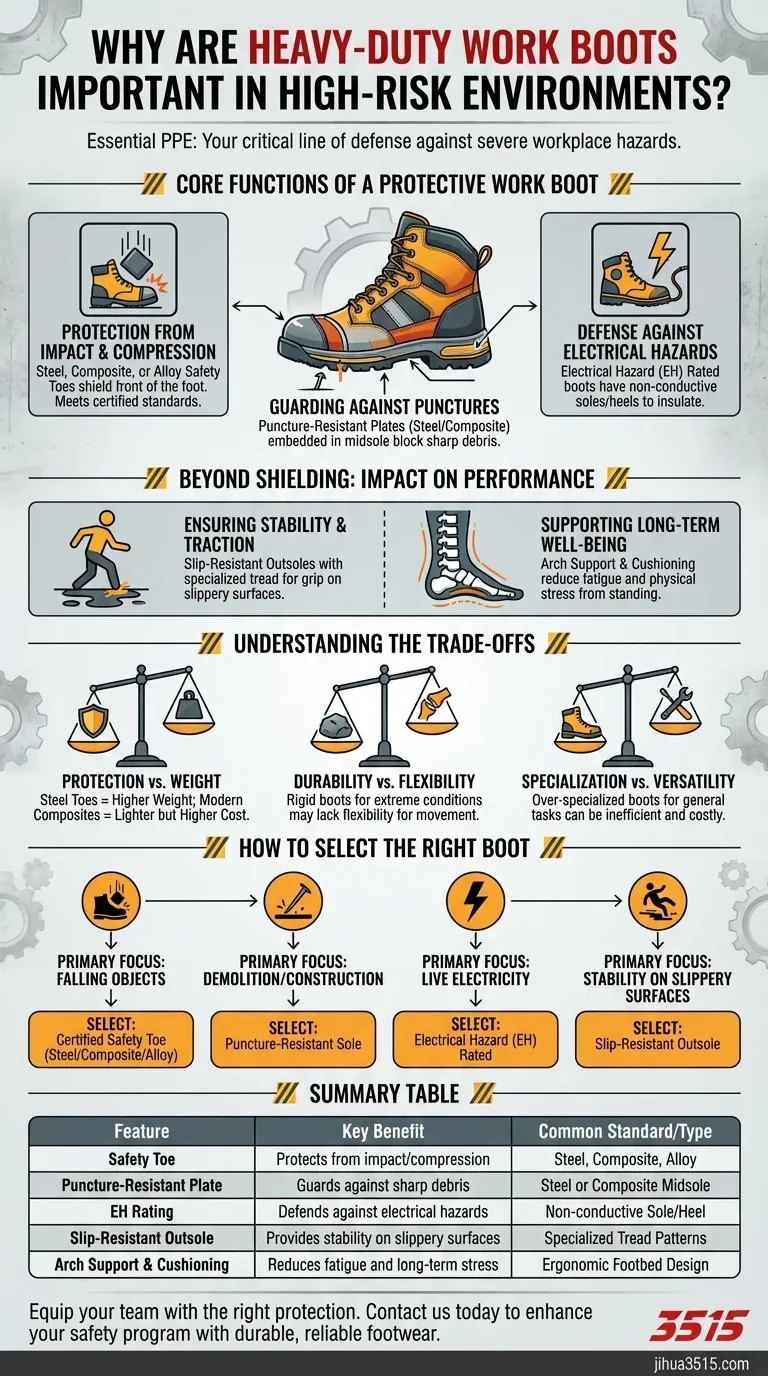
Visual Guide
Related Products
- Wholesale Heavy-Duty Waterproof Steel Toe Work Boots OEM Manufacturer
- Wholesale Durable 6-Inch Work Boots | Custom & Private Label Manufacturer
- Durable Leather Work Boots for Wholesale & Custom Manufacturing
- Durable Leather Work Boots for Wholesale & Custom OEM Manufacturing
- Durable Moc-Toe Wedge Work Boots | Wholesale Manufacturing for Brands
People Also Ask
- What are the pros and cons of steel toe work boots? A Guide to Maximum Protection vs. Comfort
- What are the different types of steel toe work boots? Choose the Right Boot for Your Job
- What is the history of steel toe work boots? From German Invention to Modern Safety Standard
- How much weight can steel toe work boots withstand? Unpacking the 3,372 lb. Safety Standard
- What are some common myths about steel toe work boots? Debunked for Modern Workers