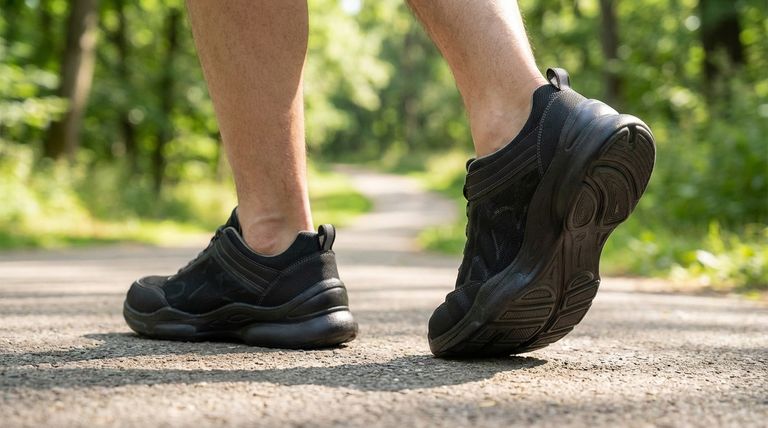
At its core, athletic shoes are recommended for walking because they are specifically engineered to provide the support and cushioning necessary to protect your body from the repetitive impact of each step. This design helps reduce the risk of injury, especially for walks lasting longer than 30 minutes.
The decision to wear athletic shoes for walking is not just about foot comfort; it's a matter of biomechanical health. The right shoe provides crucial shock absorption and structural support that protects your joints—from your ankles to your spine—with every stride.
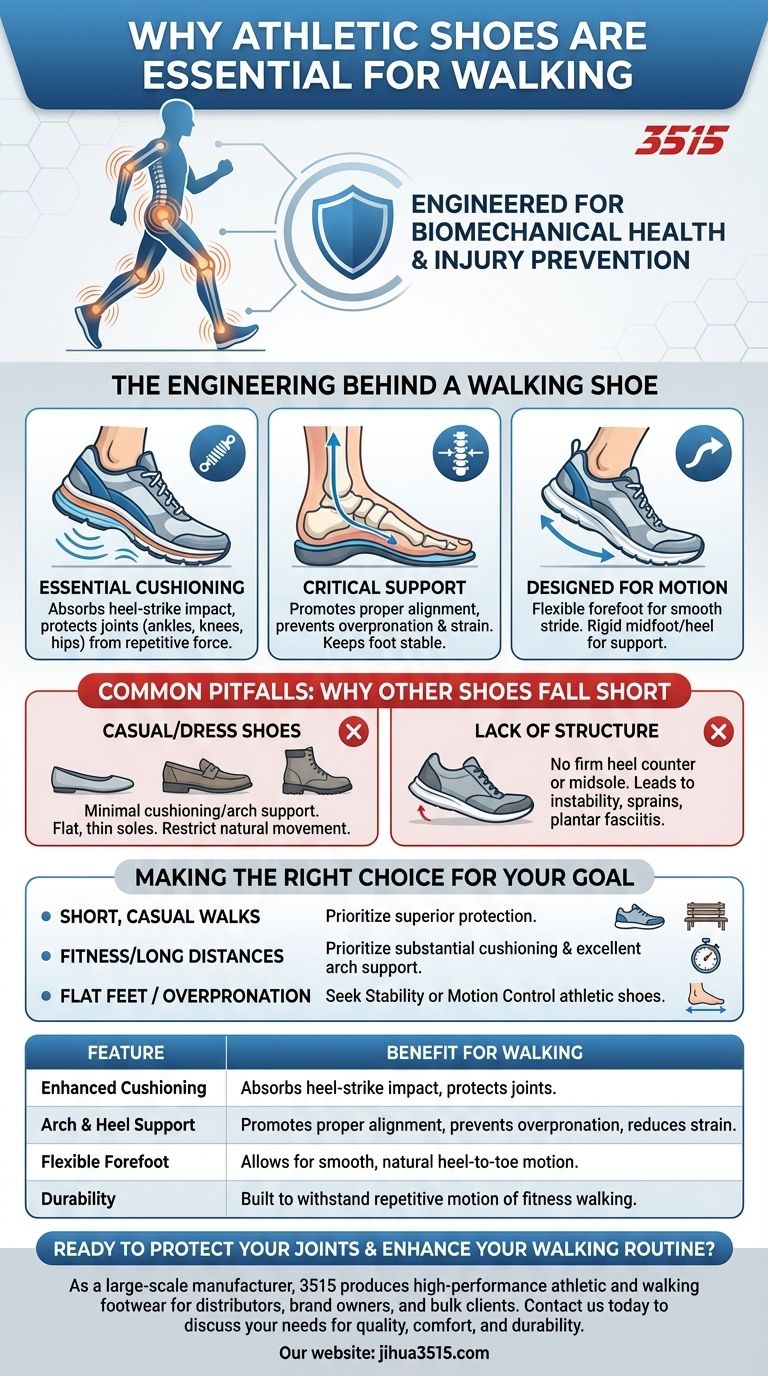
The Engineering Behind a Walking Shoe
Walking is a low-impact activity, but the forces are constant and cumulative. Over thousands of steps, even small misalignments or a lack of cushioning can lead to strain and injury. Athletic shoes are designed to manage these forces.
Essential Cushioning for Shock Absorption
The primary role of cushioning is to absorb the impact when your heel strikes the ground. This reduces the shock that travels up through your ankles, knees, and hips.
Without adequate cushioning, this repetitive force can contribute to joint pain and conditions like shin splints.
Critical Support for Proper Alignment
Proper support, especially in the arch, is what keeps your foot in a stable, neutral position. This is vital for your entire body's alignment.
Many people have conditions like flat feet or overpronation (where the foot rolls excessively inward). An athletic shoe with proper arch support helps correct this, preventing strain on the ankles and knees.
Designed for Repetitive Motion
Unlike casual shoes, athletic footwear is built for the specific heel-to-toe rolling motion of walking.
They are designed to be flexible at the ball of the foot, allowing for a smooth and efficient stride, while remaining rigid and supportive through the midfoot and heel.
Common Pitfalls: Why Other Shoes Fall Short
Choosing the wrong footwear for regular walks can actively work against your body's natural mechanics, leading to discomfort and potential injury.
The Problem with Casual or Dress Shoes
Most casual shoes, like flats, loafers, or sandals, offer minimal to no arch support or cushioning. Their flat, thin soles do little to absorb shock.
Similarly, dress shoes or boots are often rigid and heavy. They restrict natural foot movement and fail to provide the shock absorption needed for fitness walking.
The Lack of Protective Structure
Non-athletic shoes lack key structural features like a firm heel counter (the part that cups your heel) or a supportive midsole.
This absence of structure can lead to instability, increasing the risk of sprains and contributing to long-term issues like plantar fasciitis.
Making the Right Choice for Your Goal
Selecting the right footwear depends on the intensity and duration of your walking routine.
- If your primary focus is short, casual walks: A comfortable shoe may feel adequate, but a dedicated walking or athletic shoe will always provide superior protection.
- If your primary focus is fitness walking or long distances: Prioritize an athletic shoe with substantial cushioning and excellent arch support to prevent fatigue and reduce injury risk.
- If you have flat feet or overpronation: You must seek a "stability" or "motion control" athletic shoe specifically designed to guide your foot into a neutral position.
Investing in a proper athletic shoe is a direct investment in your comfort and long-term joint health.
Summary Table:
| Feature | Benefit for Walking |
|---|---|
| Enhanced Cushioning | Absorbs heel-strike impact, protecting ankles, knees, and hips. |
| Arch & Heel Support | Promotes proper alignment, prevents overpronation, and reduces strain. |
| Flexible Forefoot | Allows for a smooth, natural heel-to-toe rolling motion. |
| Durability | Built to withstand the repetitive motion of fitness walking. |
Ready to protect your joints and enhance your walking routine?
As a large-scale manufacturer, 3515 produces a comprehensive range of high-performance athletic and walking footwear for distributors, brand owners, and bulk clients. Our production capabilities encompass all types of shoes and boots engineered with the precise cushioning and support detailed in this article.
Contact us today to discuss how our footwear solutions can meet your needs for quality, comfort, and durability.
Visual Guide
Related Products
- Athletic Safety Shoes with Dial Closure & Steel Toe for Wholesale & Custom Manufacturing
- Wholesale Breathable Training Shoes Custom Athletic Footwear Manufacturer
- Wholesale Breathable Athletic Sneakers - Custom Lightweight Cushioned Footwear Manufacturer
- Premium KPU Athletic Safety Shoes for Wholesale
- Wholesale Lightweight Cushioned Athletic Sneakers for Custom Bulk Production
People Also Ask
- What are the primary protective functions of safety shoes with steel toes in the automotive repair industry?
- In what ways do high-performance Athletic Shoes support stability and proprioception? Enhance Your Movement Precision
- What is the importance of grip in athletic footwear? Prevent Lower Limb Injuries with Optimal Slip Resistance
- How do specialized lightweight foam midsole materials contribute to the performance and safety of athletic shoes?
- Why is it important to wear proper footwear during sports activities? Prevent Injury & Boost Performance