
At its core, a two-piece snow boot is a modular footwear system designed for maximum protection in severe winter conditions. It consists of two distinct components: a soft, removable inner liner focused on insulation, and a rugged, waterproof outer shell engineered for durability and traction. This design's primary advantage is its superior moisture management, as separating the parts allows them to dry significantly faster than a unified boot.
The fundamental advantage of a two-piece snow boot is not just warmth, but moisture management. By allowing you to separate the liner from the shell, it solves the critical problem of drying your boots overnight in cold, damp conditions, ensuring your feet stay warm and dry day after day.
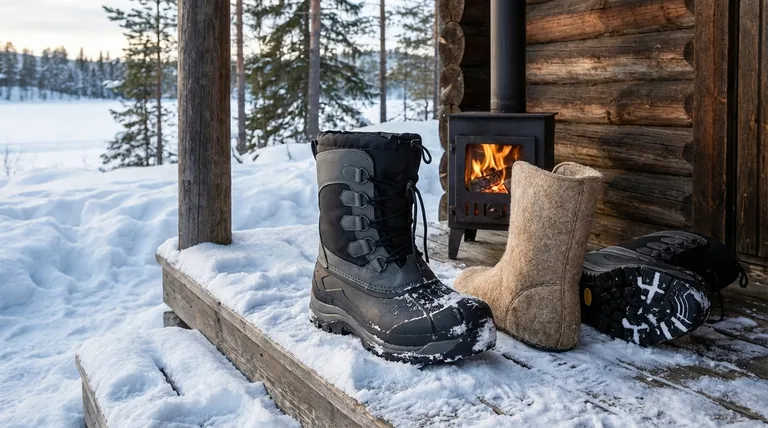
Deconstructing the Two-Piece System
Understanding a two-piece boot means understanding how its components work together to create a formidable barrier against the cold. It is essentially a boot within a boot.
The Inner Liner: Your Engine for Warmth
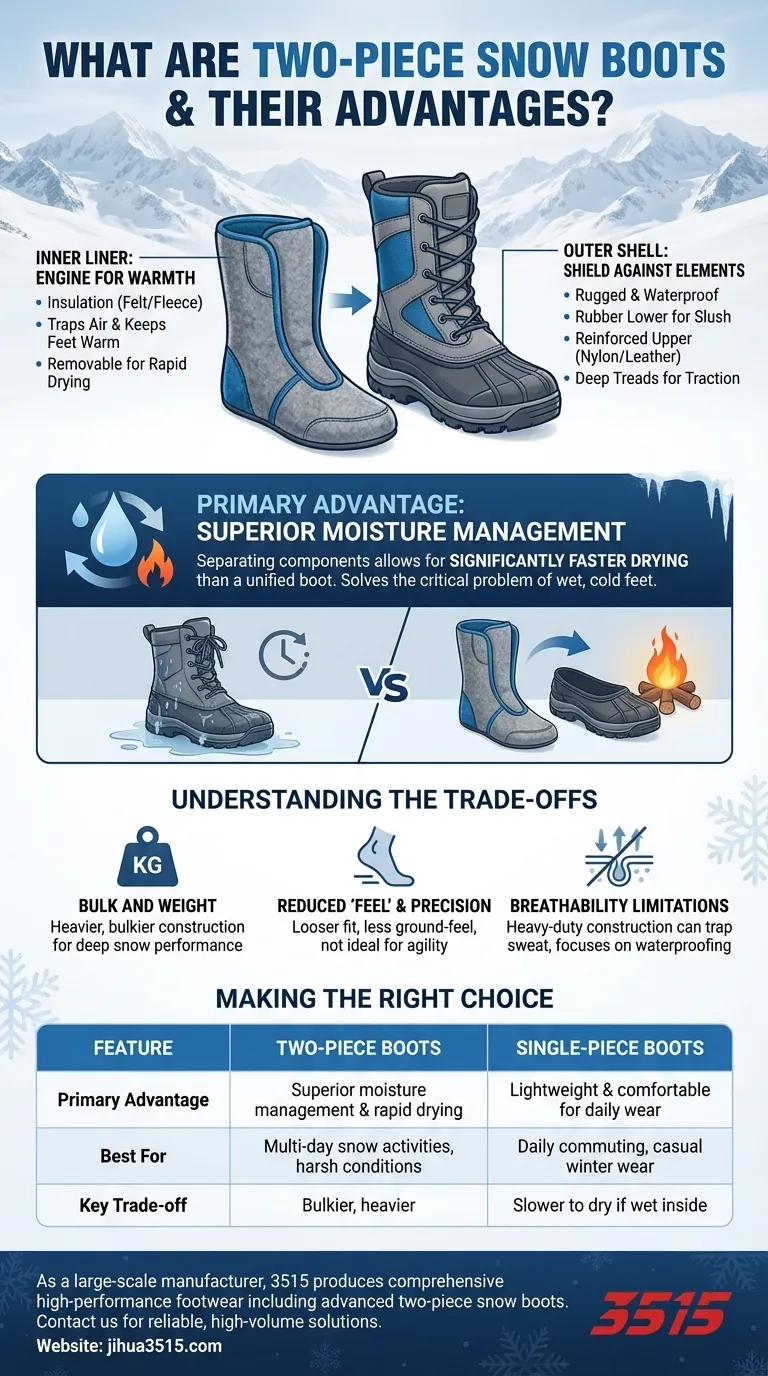
The removable inner liner is the heart of the boot's insulation system. It is typically made of felt, fleece, or other synthetic materials designed to trap air and keep your feet warm.
Because it can be removed, it functions almost like a heavy-duty sock or slipper that can be worn on its own inside a cabin or tent.
The Outer Shell: Your Shield Against the Elements
The outer shell provides structure and protection. Its lower portion is almost always made of waterproof rubber, protecting you from slush and standing water.
The upper part is a reinforced, water-resistant material like nylon or treated leather that extends mid-calf to keep deep snow out. The sole features deep treads, or lugs, for essential traction on snow and ice.
The Primary Advantage: Solving the Moisture Problem
While total warmth is the obvious goal, the true enemy of warm feet in winter is moisture—both from the outside and from sweat on the inside.
Why Fast Drying is Mission-Critical
Trapped moisture inside a boot dramatically reduces the effectiveness of any insulation. A damp boot from one day's activity will be a dangerously cold boot the next morning.
Single-piece boots can take a very long time to dry thoroughly, especially in a cold or humid environment.
The Practicality of a Removable Liner
The two-piece design directly solves this problem. At the end of the day, you can pull the wet liner out and place it near a heat source for rapid drying.
The outer shell can be wiped down and left to air out separately. This simple act is the single greatest advantage for anyone spending consecutive days in the snow.
Understanding the Trade-offs
No design is perfect for every situation. The modularity of a two-piece boot comes with specific compromises you must consider.
Bulk and Weight
The dual-layer construction makes these boots inherently heavier and bulkier than their single-piece counterparts. They are not designed for casual daily wear but for performance in deep snow.
Reduced "Feel" and Precision
The separation between liner and shell can create a looser fit and less ground-feel. This makes them less ideal for activities requiring agility or precision, such as driving or navigating uneven, rocky terrain hidden by snow.
Breathability Limitations
While built to lock moisture out, their heavy-duty construction can also trap sweat. Although some models incorporate breathable membranes, their primary function is waterproofing, which often comes at the expense of maximum breathability.
Making the Right Choice for Your Activity
To select the right boot, you must match its core strengths to your intended use.
- If your primary focus is multi-day snow activities or work in harsh conditions: The superior drying capability of a two-piece boot makes it the definitive choice.
- If your primary focus is daily winter commuting or casual wear: A lighter, more comfortable single-piece insulated and waterproof boot is a more practical option.
- If your primary focus is active winter sports like hiking or snowshoeing: You may prefer a modern, single-piece winter boot that offers a better balance of warmth, weight, and precision.
Ultimately, choosing the right boot means matching its design philosophy to the reality of your winter environment.
Summary Table:
| Feature | Two-Piece Boots | Single-Piece Boots |
|---|---|---|
| Primary Advantage | Superior moisture management & rapid drying | Lightweight & comfortable for daily wear |
| Best For | Multi-day snow activities, harsh conditions | Daily commuting, casual winter wear |
| Key Trade-off | Bulkier, heavier | Slower to dry if wet inside |
As a large-scale manufacturer, 3515 produces a comprehensive range of high-performance footwear for distributors, brand owners, and bulk clients.
Our production capabilities encompass all types of boots, including advanced two-piece snow boots designed for durability and superior protection. If you are looking for reliable, high-volume footwear solutions for demanding winter markets, our expertise can help you meet your clients' needs.
Contact us today to discuss your specific requirements and discover how we can partner to deliver quality winter footwear.
Visual Guide
Related Products
- Factory Direct Wholesale Rain Boots Durable Waterproof & Fully Customizable
- Heavy-Duty Waterproof Nubuck Safety Boots Safety Shoes for Bulk Supply
People Also Ask
- What are the characteristics of rain boots? A Guide to Waterproof Footwear for Every Need
- What factors should be considered when choosing rain boots? Find the Perfect Boot for Your Needs
- What are the main differences between rain boots and snow boots? Choose the Right Boot for Your Climate
- How should one decide between PVC and rubber for rain boots? A Guide to Choosing the Right Material
- Why are rain boots more flexible and comfortable than snow boots? The Key Differences Explained

