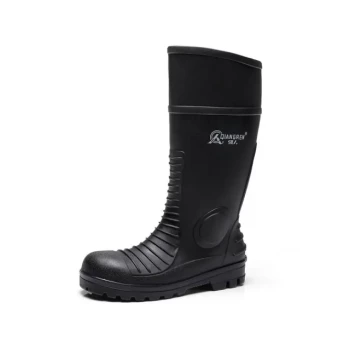
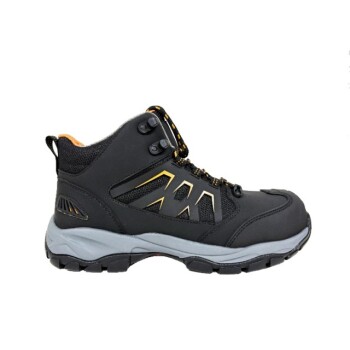
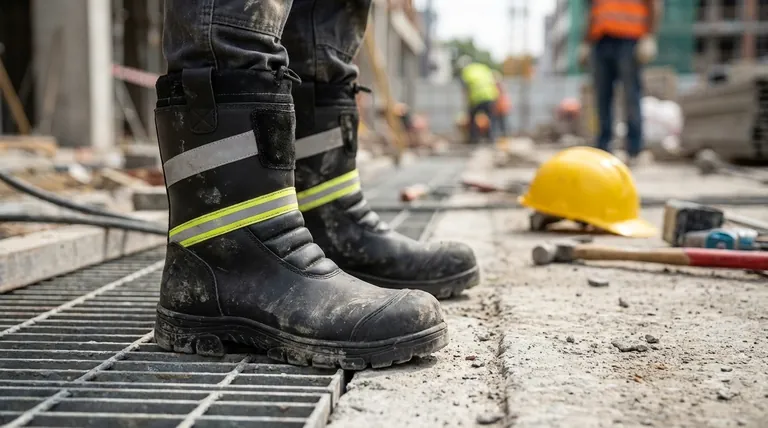
Simply put, composite toe boots are ideal for professionals who need certified toe protection without the weight, electrical conductivity, or metallic properties of traditional steel toes. They are particularly beneficial for mobile workers, electricians, frequent travelers, and any tradesperson who spends long hours on their feet or works in environments with metal detectors.
The decision to choose composite toe boots over steel is not about superior protection—both must meet the same safety standards. Instead, the choice is driven by the need for secondary benefits like reduced weight, electrical hazard resistance, and thermal comfort.
The Core Advantages Driving Adoption
Composite toe boots, made from non-metal materials like Kevlar, carbon fiber, or specialized plastics, offer a modern alternative to steel. Understanding their key properties clarifies exactly who benefits the most.
Advantage 1: Lightweight Design
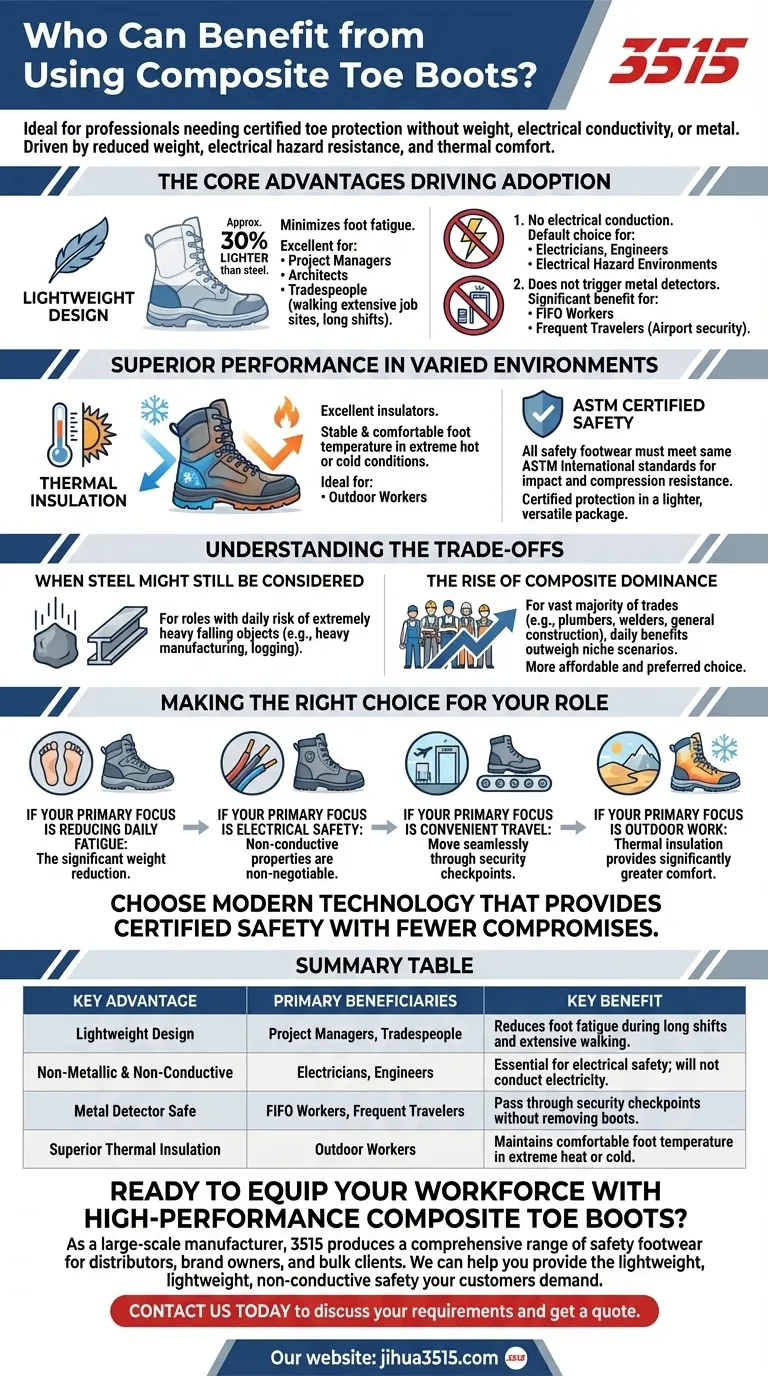
A composite safety cap is typically about 30% lighter than a steel one. While this seems minor, the difference accumulates over thousands of steps a day.
This weight reduction directly minimizes foot fatigue, making these boots an excellent choice for any professional who is constantly on the move.
This includes project managers, architects, and tradespeople who walk extensive job sites or work long shifts.
Advantage 2: Non-Metallic and Non-Conductive
Because they contain no metal, composite boots offer two critical safety and convenience features.
First, they do not conduct electricity. This makes them the default choice for electricians, engineers, and anyone working in environments with a risk of electrical hazards.
Second, they do not trigger metal detectors. This is a significant benefit for Fly-In/Fly-Out (FIFO) workers and frequent travelers who need to pass through airport-style security without the hassle of removing their footwear.
Superior Performance in Varied Environments
Beyond the primary benefits, composite materials also handle environmental factors more effectively than steel.
Thermal Insulation
Steel readily conducts ambient temperature, becoming uncomfortably cold in winter and hot in summer.
Composite materials are excellent insulators. They provide a much more stable and comfortable temperature for your feet, regardless of the weather outside.
This makes them ideal for anyone who spends a significant amount of time working outdoors in either very hot or very cold conditions.
Certified Safety Without the Downsides
It is a common misconception that composite is inherently less safe than steel.
All safety footwear, regardless of material, must meet the same ASTM International standards for impact and compression resistance.
This means you get certified protection in a lighter, more comfortable, and more versatile package suited to the demands of modern worksites.
Understanding the Trade-offs
While composite toe boots offer many advantages, it's important to understand their context. The primary choice is not about which is "stronger" but which is right for the specific job hazards.
When Steel Might Still Be Considered
For roles involving the daily risk of extremely heavy falling objects, such as in heavy manufacturing or logging, some professionals still prefer steel.
While both meet the minimum standards, steel can sometimes withstand a higher ultimate failure point, and its cap can be made with a slightly thinner profile.
The Rise of Composite Dominance
However, for the vast majority of trades—including plumbers, welders, and general construction—the daily benefits of a lighter, non-conductive boot far outweigh the niche scenarios where steel might have a marginal edge.
As manufacturing technology has improved, composite toe boots have become more affordable and are now the preferred choice for a wide range of occupations.
Making the Right Choice for Your Role
To determine if composite toe boots are the right fit, evaluate the primary demands of your workday.
- If your primary focus is reducing daily fatigue: The significant weight reduction of composite toe boots makes them the superior choice for any job requiring long hours on your feet.
- If your primary focus is electrical safety: The non-conductive properties of composite materials are non-negotiable for electricians or engineers working near live circuits.
- If your primary focus is convenient travel: Choose composite toe boots to move seamlessly through security checkpoints at airports, power plants, or secure facilities.
- If your primary focus is outdoor work: The thermal insulation of composite boots provides significantly greater comfort in both extreme heat and cold.
Ultimately, choosing composite toe boots is about selecting modern technology that provides certified safety with fewer compromises.
Summary Table:
| Key Advantage | Primary Beneficiaries | Key Benefit |
|---|---|---|
| Lightweight Design | Project Managers, Tradespeople | Reduces foot fatigue during long shifts and extensive walking. |
| Non-Metallic & Non-Conductive | Electricians, Engineers | Essential for electrical safety; will not conduct electricity. |
| Metal Detector Safe | FIFO Workers, Frequent Travelers | Pass through security checkpoints without removing boots. |
| Superior Thermal Insulation | Outdoor Workers | Maintains comfortable foot temperature in extreme heat or cold. |
Ready to equip your workforce with high-performance composite toe boots?
As a large-scale manufacturer, 3515 produces a comprehensive range of safety footwear for distributors, brand owners, and bulk clients. Our production capabilities encompass all types of composite toe boots designed to meet the specific needs of modern professionals.
We can help you provide the lightweight, non-conductive safety your customers demand.
Contact us today to discuss your requirements and get a quote.
Visual Guide
Related Products
- Wholesale Durable Safety Boots Manufacturer Customizable Steel Toe Work Boots
- Durable Leather Moc Toe Work Boots for Wholesale & Custom Manufacturing
- Wholesale Mesh Steel Toe Safety Shoes with Dial Closure Factory Production
- Wholesale Durable Breathable Safety Boots Custom OEM Manufacturer
- Wholesale Customizable Safety Boots Durable & Protective Footwear Manufacturing
People Also Ask
- What are the pros and cons of steel toe work boots? A Guide to Maximum Protection vs. Comfort
- What are the different types of steel toe work boots? Choose the Right Boot for Your Job
- What is the history of steel toe work boots? From German Invention to Modern Safety Standard
- How much weight can steel toe work boots withstand? Unpacking the 3,372 lb. Safety Standard
- What are some common myths about steel toe work boots? Debunked for Modern Workers