
For premium sneakers, rubber is unequivocally the superior material for the outsole. Its unique combination of exceptional durability, reliable grip, and foundational comfort makes it the benchmark against which all other materials are measured for high-quality footwear.
The key insight is not that one material makes an entire sole "better," but that a premium sneaker uses a system of materials. The best soles combine a durable rubber outsole for grip and longevity with a high-performance midsole (often foam-based) for cushioning and comfort.
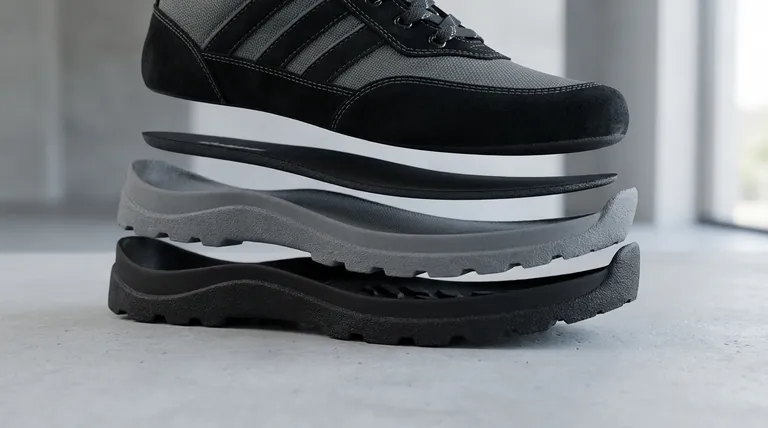
Deconstructing the "Sole": More Than Just Rubber
To understand what makes a sneaker "premium," we must look at the sole as an engineered system composed of distinct layers, each with a specific job.
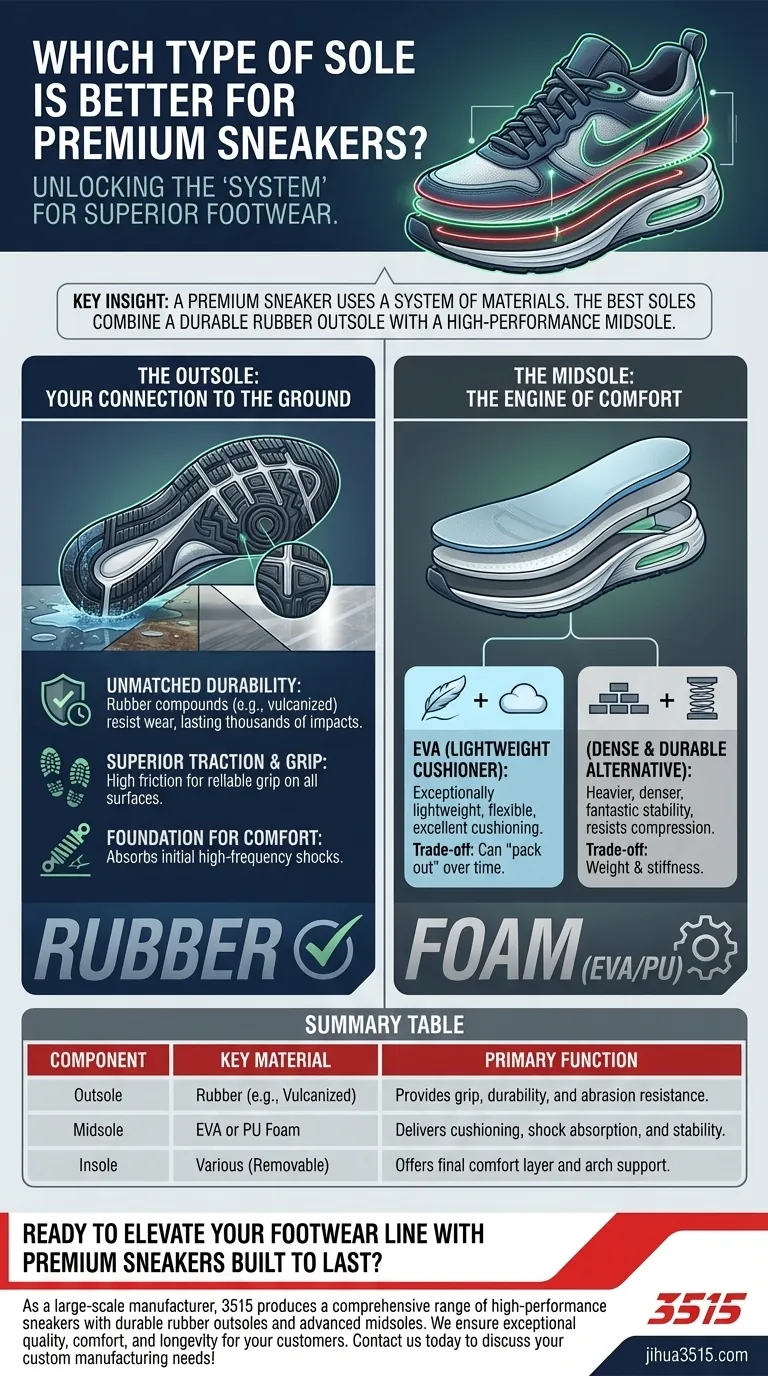
The Outsole: Your Connection to the Ground
This is the outermost layer that makes direct contact with surfaces. It is responsible for grip and resisting abrasion.
For this critical layer, rubber is the material of choice due to its inherent properties of high friction and toughness.
The Midsole: The Engine of Comfort
Sandwiched between the outsole and your foot, the midsole provides the bulk of the sneaker's cushioning, stability, and shock absorption.
This is where materials like EVA (ethylene-vinyl acetate) or PU (polyurethane) are typically used, valued for their lightweight and energy-returning properties.
The Insole: The Final Touch
This is the removable sock liner inside the shoe that provides the final layer of cushioning and arch support. While important for feel, the outsole and midsole define the shoe's core performance.
Why Rubber Dominates the Premium Outsole
A premium sneaker is an investment in performance and longevity. A rubber outsole is the critical foundation for delivering on that promise.
Unmatched Durability
Rubber compounds, especially vulcanized rubber, are incredibly resistant to wear and tear. They can withstand thousands of impacts and abrasions without significant degradation.
This ensures the sneaker maintains its structural integrity and performance characteristics for a much longer lifespan.
Superior Traction and Grip
The high coefficient of friction in rubber provides a reliable grip on a wide variety of surfaces, from wet pavement to polished floors.
This quality is non-negotiable for both athletic performance and everyday safety, preventing slips and providing a stable footing.
A Foundation for Comfort
While the midsole provides primary cushioning, the rubber outsole contributes by absorbing the initial, high-frequency shocks from impact.
Its flexibility also allows the foot to move naturally, working in concert with the midsole to create a smooth and comfortable ride.
Understanding the Trade-offs
While rubber is the king of outsoles, the choice of midsole material involves balancing different priorities. This is where most brands differentiate their products.
EVA: The Lightweight Cushioner
Most running and lifestyle sneakers use EVA foam in the midsole. It is exceptionally lightweight, flexible, and provides excellent cushioning.
The primary trade-off is that over time and with repeated compression, EVA can "pack out" and lose some of its responsive, cushioning ability.
PU: The Dense and Durable Alternative
Polyurethane (PU) is a denser, heavier, and more durable foam. It offers fantastic stability and resists compression far better than EVA.
However, its weight and relative stiffness mean it is often reserved for work boots, heavy-duty walkers, or classic court shoes where longevity is prioritized over lightweight performance.
Making the Right Choice for Your Goal
Understanding this system empowers you to select a sneaker based on its construction, not just its brand.
- If your primary focus is athletic performance: Seek a sneaker with a technically patterned rubber outsole and a responsive, lightweight EVA midsole.
- If your primary focus is all-day casual comfort: A thicker, softer EVA midsole paired with a durable, full-coverage rubber outsole is the ideal combination.
- If your primary focus is maximum longevity: Look for models that feature high-density rubber outsoles and potentially PU elements in the midsole for robust, long-term wear.
Ultimately, a well-made sole is a clear indicator of a sneaker's quality, designed to deliver performance and comfort that lasts.
Summary Table:
| Component | Key Material | Primary Function |
|---|---|---|
| Outsole | Rubber (e.g., Vulcanized) | Provides grip, durability, and abrasion resistance. |
| Midsole | EVA or PU Foam | Delivers cushioning, shock absorption, and stability. |
| Insole | Various (Removable) | Offers final comfort layer and arch support. |
Ready to elevate your footwear line with premium sneakers built to last? As a large-scale manufacturer, 3515 produces a comprehensive range of footwear for distributors, brand owners, and bulk clients. Our production capabilities encompass all types of shoes and boots, including high-performance sneakers with durable rubber outsoles and advanced midsoles. We ensure exceptional quality, comfort, and longevity for your customers. Contact us today to discuss your custom manufacturing needs and bring superior footwear to market!
Visual Guide
Related Products
- Wholesale Breathable Athletic Sneakers - Custom Lightweight Cushioned Footwear Manufacturer
- Durable High-Traction Canvas Sneakers Wholesale & Custom Manufacturing
- Wholesale Durable Camouflage Canvas Shoes with High-Traction Cleated Rubber Sole
- Lightweight Breathable Sneakers with Wet-Traction Grip for Wholesale & Private Label
- Wholesale Durable & Breathable Training Shoes for Custom Brands
People Also Ask
- Why are breathable sneakers necessary for tropical commuting? Stay Cool and Dry in High Humidity
- In what ways do high-performance Athletic Shoes support stability and proprioception? Enhance Your Movement Precision
- What is the primary role of shoes in physical activities? Protection, Support & Performance
- What are athletic shoes designed to do? Achieve Peak Performance and Protection
- What materials are best for athletic activities in warm climates? Stay Cool with Moisture-Wicking Fabrics



















