
For those in demanding environments, the professions that benefit most from 90-degree heel work boots include electricians, landscapers, contractors, and outdoor construction workers. These boots are specifically engineered for individuals who frequently encounter uneven terrain or rely on ladders for their work, where stability and grip are paramount safety concerns.
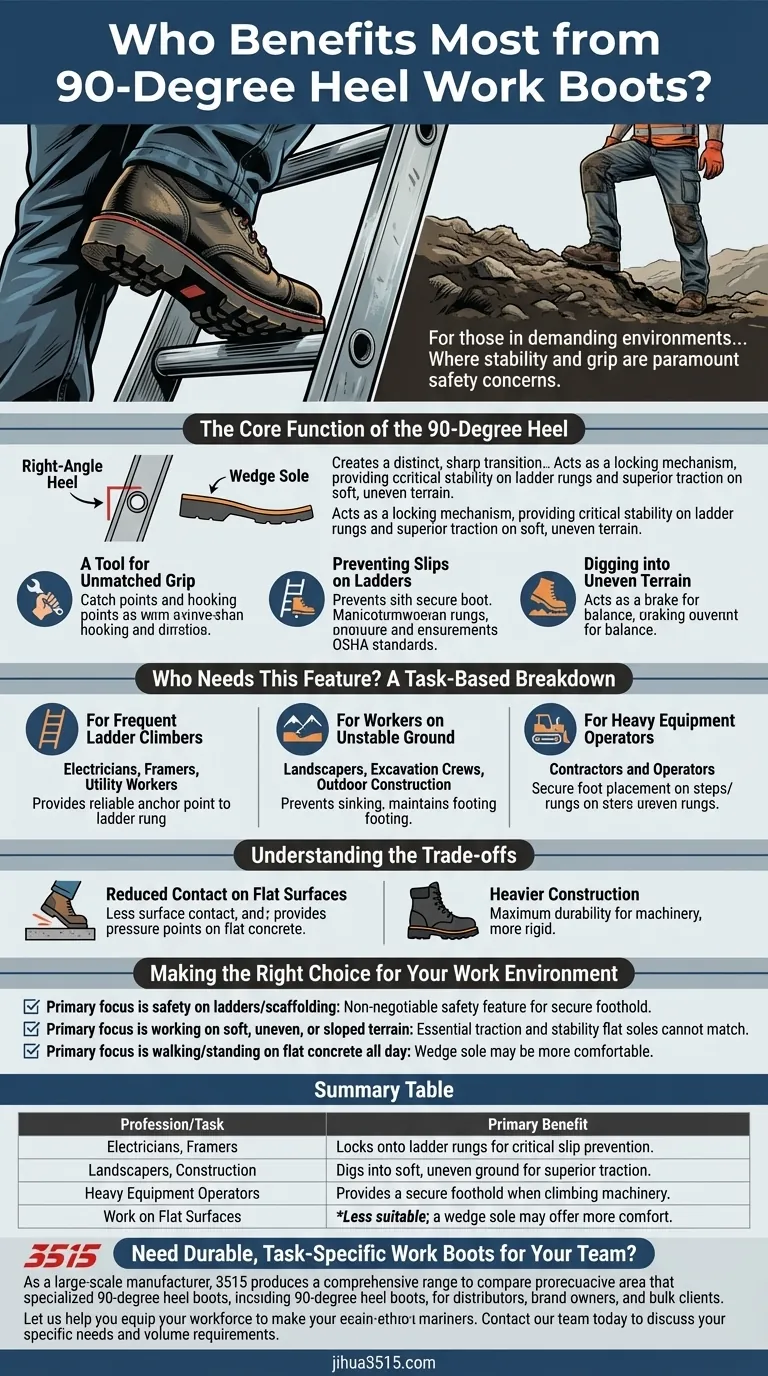
The benefit of a 90-degree heel is not about the heel itself, but about the sharp, defined edge it creates. This edge acts as a locking mechanism, providing critical stability on ladder rungs and superior traction on soft, uneven terrain.
The Core Function of the 90-Degree Heel
A 90-degree heel, often called a "right-angle heel," is a specific design feature with a clear purpose. It creates a distinct, sharp transition between the sole and the heel block.
A Tool for Unmatched Grip
This design is fundamentally about creating a catch point. Unlike a smoother wedge sole, the abrupt edge of a 90-degree heel can dig into soft surfaces or hook onto structures.
Preventing Slips on Ladders
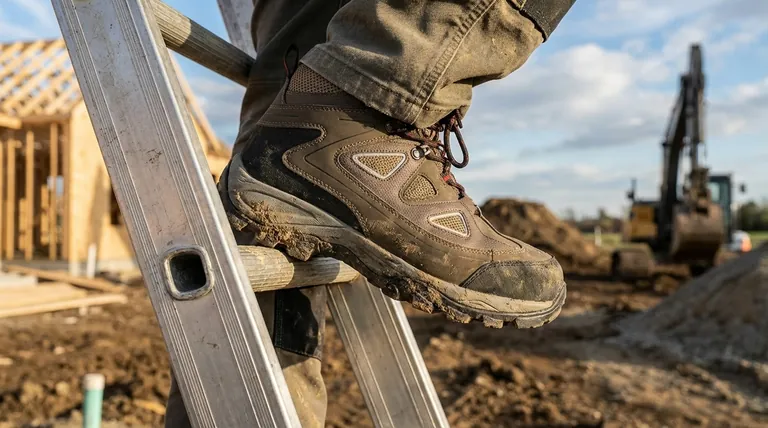
This is the most critical safety application. The heel is designed to lock securely onto a ladder rung, significantly reducing the risk of the boot slipping forward or backward. This feature may even be required by OSHA standards for jobs involving frequent ladder use.
Digging into Uneven Terrain
For those working on landscaping or construction sites, the heel provides purchase on soft ground, mud, gravel, or sloped surfaces. It acts as a brake, preventing the foot from sliding and helping maintain balance on unpredictable ground.
Who Needs This Feature? A Task-Based Breakdown
Instead of just job titles, consider the specific tasks you perform daily. The need for a 90-degree heel is dictated by your environment and actions.
For Frequent Ladder Climbers
Electricians, framers, and utility workers spend significant time ascending and descending. The defined heel provides a reliable anchor point on every step, which is a crucial safety advantage.
For Workers on Unstable Ground
Landscapers, excavation crews, and outdoor construction workers constantly navigate rough, rocky, and wet terrain. The heel offers the stability and traction needed to prevent sinking into mud and maintain footing on loose surfaces.
For Heavy Equipment Operators
Many contractors and operators must climb on and off large machinery using integrated steps or rungs. A 90-degree heel ensures a secure foot placement during this routine but potentially hazardous action.
Understanding the Trade-offs
While essential for specific tasks, the 90-degree heel is not the ideal choice for every situation. Understanding its limitations is key to making an informed decision.
Reduced Contact on Flat Surfaces
On smooth, flat surfaces like concrete warehouse floors, a 90-degree heel provides less surface contact than a wedge sole. This can lead to increased pressure points and may be less comfortable for long periods of standing or walking on hard, even ground.
Heavier Construction
Boots with this feature are typically built for maximum durability in harsh conditions. This often means they are heavier and more rigid than boots designed for lighter, indoor work.
Making the Right Choice for Your Work Environment
To select the correct boot, evaluate your most common and most hazardous tasks.
- If your primary focus is safety on ladders and scaffolding: The 90-degree heel is a non-negotiable safety feature required for a secure foothold.
- If your primary focus is working on soft, uneven, or sloped terrain: The defined heel provides essential traction and stability that flat soles cannot match.
- If your primary focus is walking or standing on flat concrete all day: You may find a wedge sole boot more comfortable due to its superior surface contact and even pressure distribution.
Ultimately, choosing a 90-degree heel is about prioritizing stability and safety in vertical or unpredictable environments.
Summary Table:
| Profession/Task | Primary Benefit of 90-Degree Heel |
|---|---|
| Electricians, Framers | Locks onto ladder rungs for critical slip prevention. |
| Landscapers, Construction | Digs into soft, uneven ground for superior traction. |
| Heavy Equipment Operators | Provides a secure foothold when climbing machinery. |
| Work on Flat Surfaces | Less suitable; a wedge sole may offer more comfort. |
Need Durable, Task-Specific Work Boots for Your Team?
As a large-scale manufacturer, 3515 produces a comprehensive range of occupational footwear, including specialized 90-degree heel boots designed for the stability demands of distributors, brand owners, and bulk clients. Our production capabilities ensure durable, safety-compliant footwear for those working on ladders and unstable terrain.
Let us help you equip your workforce with the right tools for safety and performance.
Contact our team today to discuss your specific needs and volume requirements.
Visual Guide
Related Products
- Durable Leather Moc Toe Work Boots for Wholesale & Custom Manufacturing
- Durable Moc-Toe Wedge Work Boots | Wholesale Manufacturing for Brands
- Durable Goodyear Welt Leather Work Boots for Wholesale & Private Label
- Wholesale Durable Safety Boots Manufacturer Customizable Steel Toe Work Boots
- Wholesale Durable 6-Inch Work Boots | Custom & Private Label Manufacturer
People Also Ask
- What are moc toe work boots designed for? Superior Comfort and Mobility for Tradespeople
- What are the key features to look for when purchasing moc toe boots? A Guide to Durability & Fit
- How did moc toe boots originate? A Legacy of Workwear Durability and Style
- What clothing items complement the Outdoorsman/Heritage Look with moc toe boots? Build a Timeless, Rugged Wardrobe
- What types of outfits can moc toe boots be worn with? Versatile Style Guide













