
To properly maintain your boots, your primary focus should be on the soles, outsoles, and any hard-to-reach crevices. These specific areas accumulate the most dirt, moisture, and abrasive debris, which can significantly shorten the lifespan and compromise the performance of your footwear if left unattended.
True boot care goes beyond surface aesthetics. The most critical cleaning happens in the areas you can't easily see—the soles and crevices—as trapped debris can degrade materials and compromise the boot's structural integrity over time.
Why These Areas Are Critical for Boot Longevity
A quick wipe-down of the upper part of a boot is simple, but the real work of preservation happens underneath. The areas that make contact with the ground are constantly under attack from abrasive and corrosive elements.
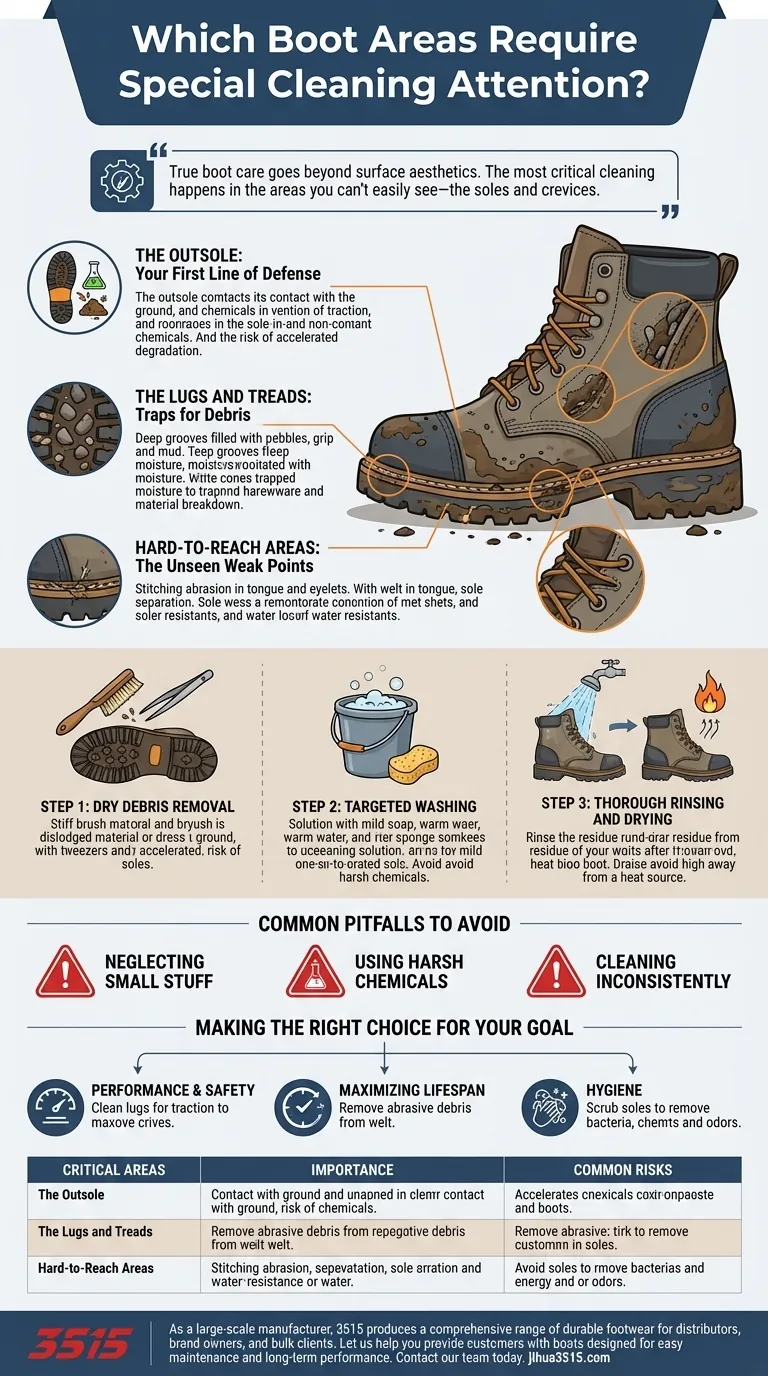
The Outsole: Your First Line of Defense
The outsole is the entire surface that makes direct contact with the ground. It is engineered for traction and durability.
Allowing mud, chemicals, or sharp debris to remain caked on the outsole can accelerate the degradation of the rubber or synthetic compounds.
The Lugs and Treads: Traps for Debris
The deep grooves, or lugs, of your boot's tread are essential for grip. They are also perfect traps for pebbles, mud, and other debris.
When these treads are packed with dirt, their ability to provide traction is severely compromised. Furthermore, trapped organic matter can hold moisture against the sole, promoting material breakdown.
Hard-to-Reach Areas: The Unseen Weak Points
This category includes the welt (the seam connecting the upper to the sole) and the spaces around the tongue and eyelets.
Debris lodged in these seams acts like sandpaper, slowly abrading the stitching with every step. This can eventually lead to sole separation or a loss of water resistance.
The Proper Cleaning Protocol
A methodical approach ensures you remove damaging materials without harming the boot itself.
Step 1: Dry Debris Removal
Before introducing any water, your first step is to dislodge all dry and caked-on material.
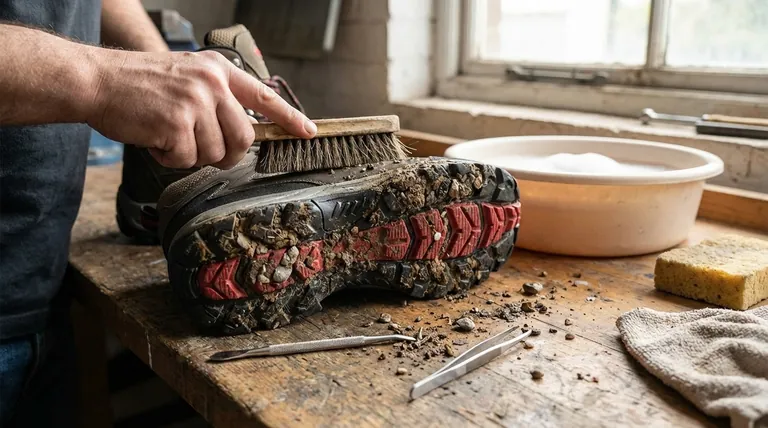
Use a stiff brush to scrub the outsole and lugs vigorously. For deeply embedded stones or stubborn debris, a pair of tweezers or a small, sturdy pick is highly effective.
Step 2: Targeted Washing
Once the loose debris is gone, you can proceed with washing.
Use a simple solution of mild soap and warm water. Avoid harsh detergents or chemicals, as they can strip essential oils from leather or damage the adhesives used in boot construction.
Step 3: Thorough Rinsing and Drying
Rinse the cleaned areas completely to ensure no soap residue is left behind, as this can attract more dirt.
Most importantly, allow your boots to air dry completely away from direct heat sources like radiators or fires. High heat can crack leather and warp the sole, causing permanent damage.
Common Pitfalls to Avoid
Proper cleaning is as much about what you don't do as what you do.
Neglecting the Small Stuff
Ignoring small pebbles or bits of gravel is a common mistake. These tiny abrasives are a primary cause of premature wear on the outsole's highest-contact points.
Using Harsh Chemicals
Never use household cleaners, solvents, or harsh detergents. Stick to products specifically designed for footwear or a simple, mild soap solution to preserve the integrity of the materials.
Cleaning Inconsistently
Allowing dirt to sit for weeks or months gives it time to work its way into seams and for moisture to slowly degrade materials. Regular, quick cleanings are far more effective than infrequent deep scrubs.
Making the Right Choice for Your Goal
Your cleaning intensity can be tailored to your primary objective.
- If your primary focus is performance and safety: Keep the lugs and treads completely free of mud to ensure maximum traction on varied terrain.
- If your primary focus is maximizing lifespan: Diligently remove all abrasive debris from the outsole and welt seams to prevent premature wear and tear.
- If your primary focus is hygiene: Regularly scrub the soles to remove organic matter that can harbor bacteria and cause odors.
Consistent, targeted cleaning of your boot's soles and crevices is the single best investment you can make in your footwear.
Summary Table:
| Critical Area | Why It Matters | Common Risk |
|---|---|---|
| Outsole | Direct ground contact; provides traction. | Accelerated degradation from mud and chemicals. |
| Lugs/Treads | Essential for grip; traps debris. | Reduced traction and moisture-induced breakdown. |
| Hard-to-Reach Crevices (Welt, Tongue) | Seams and joints; critical for structure. | Stitching abrasion, leading to sole separation. |
As a large-scale manufacturer, 3515 produces a comprehensive range of durable footwear for distributors, brand owners, and bulk clients. Proper boot care starts with quality construction. Our production capabilities ensure every pair is built to last, from the outsole up.
Let us help you provide customers with boots designed for easy maintenance and long-term performance. Contact our team today to discuss your footwear needs and explore our full catalog of shoes and boots.
Visual Guide
Related Products
- Premium Wholesale Tactical Style Safety Shoes Boots with Quick Lacing
- High Performance Fire-Retardant Waterproof Safety Boots
- Premium Waterproof High-Cut Industrial Safety Boots for Wholesale and Bulk Orders
- Durable Leather Work Boots for Wholesale & Custom Manufacturing
- Durable Leather Work Boots for Wholesale & Custom OEM Manufacturing
People Also Ask
- How are gait analysis research findings applied to the functional design of safety shoes and tactical boots?
- How does anthropomorphic design influence material selection? Enhance Footwear Performance through Biological Alignment
- Why is the synchronization of craftsmanship and UX development emphasized for bulk customization of safety shoes?
- How do quality certification standards for safety shoes reduce perceived risk? Buy Online with Technical Certainty
- How can specialized footwear mitigate safety risks? High-Volume OEM/ODM Solutions since 1951



















