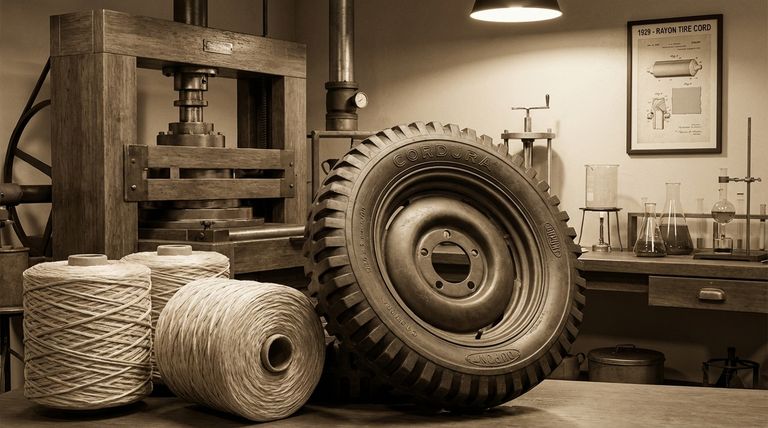
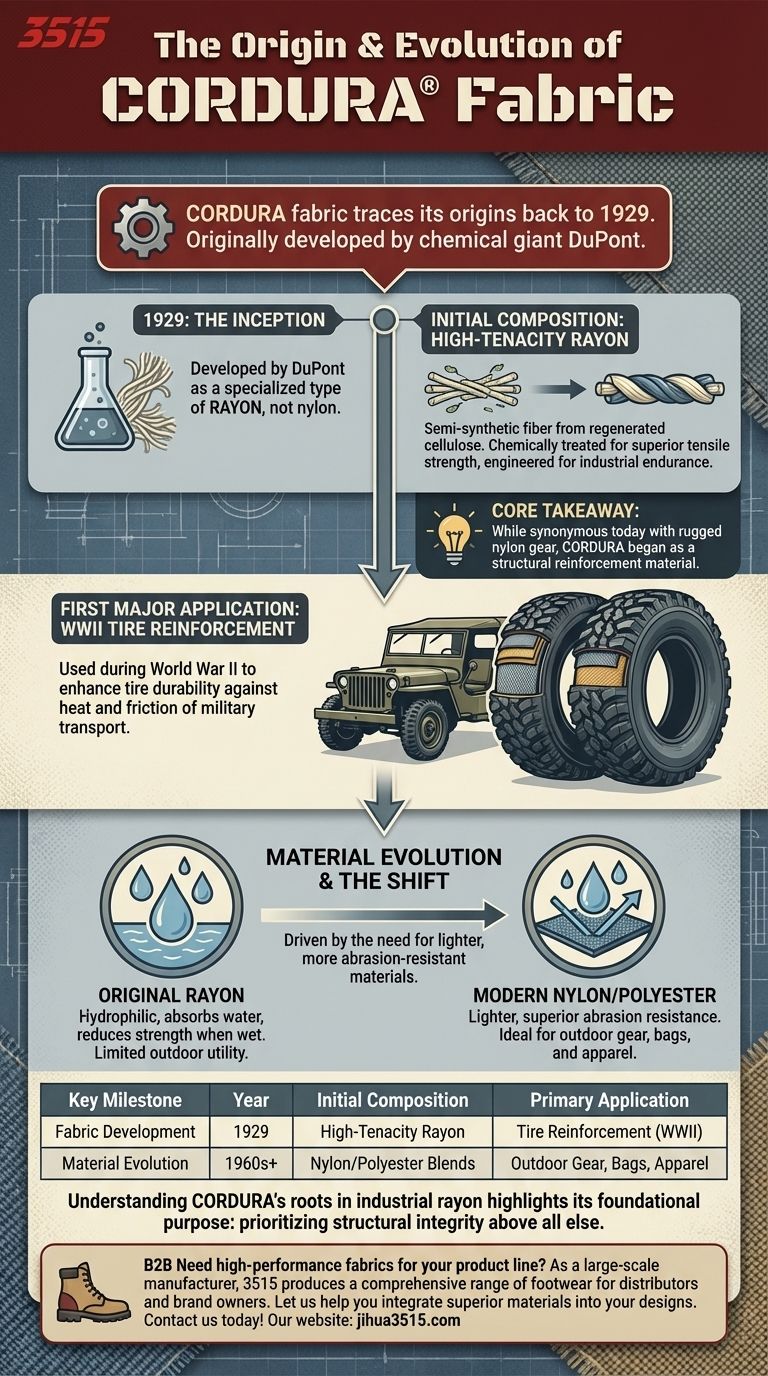
CORDURA fabric traces its origins back to 1929. Originally developed by chemical giant DuPont, the material was not the synthetic nylon commonly recognized today, but was initially composed of a specialized type of rayon.
Core Takeaway While synonymous today with rugged nylon gear, CORDURA began as a structural reinforcement material. Its initial rayon formulation was engineered for industrial tensile strength, specifically to enhance the durability of tires during World War II.
The Evolution of High-Performance Textiles
The 1929 Inception
The development of CORDURA marked a significant shift in textile engineering.
Created in 1929, it represented one of the earliest efforts to create a fiber specifically for high-stress endurance rather than apparel or aesthetic purposes.
The Initial Composition: Rayon
Contrary to modern assumptions, the original CORDURA was not a fully synthetic nylon.
It was composed of rayon, a semi-synthetic fiber made from regenerated cellulose. This "super-rayon" was chemically treated to possess superior tensile strength compared to standard natural fibers of that era.
The First Major Application
The strength of this initial rayon formulation found its primary use case in the military sector.
During World War II, CORDURA was utilized as a critical reinforcement material for tires. Its ability to withstand the heat and friction of military transport set the standard for the brand's reputation for durability.
Understanding Material Evolution
The Shift in Utility
It is crucial to understand that the "CORDURA" of 1929 was defined by its function, not just its chemistry.
The transition from rayon to the nylon formulations seen today was driven by the need for lighter, more abrasion-resistant materials.
Limitations of Early Rayon
While the original rayon reinforced tires effectively, it had distinct limitations compared to modern synthetics.
Rayon is hydrophilic, meaning it absorbs water, which can increase weight and reduce strength when wet. This physical property limited its utility for the exposed outdoor gear (like backpacks) that the brand is famous for today.
Making the Right Choice for Your Goal
Understanding the lineage of CORDURA helps distinguish between historical specifications and modern performance standards.
- If your primary focus is historical accuracy: Note that pre-1960s CORDURA references typically pertain to high-tenacity rayon used in industrial and military vehicle applications.
- If your primary focus is modern application: Recognize that current CORDURA fabrics are almost exclusively nylon or polyester blends, offering abrasion resistance that far exceeds the original rayon formula.
Understanding CORDURA's roots in industrial rayon highlights its foundational purpose: prioritizing structural integrity above all else.
Summary Table:
| Key Milestone | Year | Initial Composition | Primary Application |
|---|---|---|---|
| Fabric Development | 1929 | High-Tenacity Rayon | Tire Reinforcement (WWII) |
| Material Evolution | 1960s+ | Nylon/Polyester Blends | Outdoor Gear, Bags, Apparel |
Need high-performance fabrics for your product line?
As a large-scale manufacturer, 3515 produces a comprehensive range of footwear for distributors, brand owners, and bulk clients. Our production capabilities encompass all types of shoes and boots, and we understand the critical role of durable materials like modern CORDURA. Let us help you integrate superior materials into your designs for maximum durability and customer satisfaction.
Contact us today to discuss your manufacturing needs!
Visual Guide
Related Products
- Lightweight Breathable Sneakers with Wet-Traction Grip for Wholesale & Private Label
- Lightweight Breathable Training Shoes for Wholesale & Custom OEM Manufacturing
- Wholesale Durable Safety Boots Manufacturer Customizable Steel Toe Work Boots
- Wholesale Durable Camouflage Canvas Shoes with High-Traction Cleated Rubber Sole
- Durable High-Ankle Tactical Boots Wholesale Manufacturer for Custom & Bulk Orders
People Also Ask
- Why are breathable sneakers necessary for tropical commuting? Stay Cool and Dry in High Humidity
- What role do lightweight training shoes play in urban traffic? Boost Agility and Reaction for Safer City Navigation
- How do lightweight shoes provide support? The Science of Efficient Cushioning & Stability
- What are the style advantages of lightweight shoes? Sleek, Versatile & Modern Comfort
- How do lightweight shoes contribute to healthier feet? Reduce Fatigue & Prevent Foot Problems