
In short, vulcanized footwear first appeared commercially in 1892. The Colchester Rubber Co. produced what are considered the first vulcanized basketball sneakers, predating many other iconic brands. This company would later evolve into the well-known Keds brand in 1916.
The core takeaway is that while the vulcanization process was invented decades earlier, its application to footwear for commercial sale began in the late 19th century, fundamentally changing the shoe industry and paving the way for the modern sneaker.
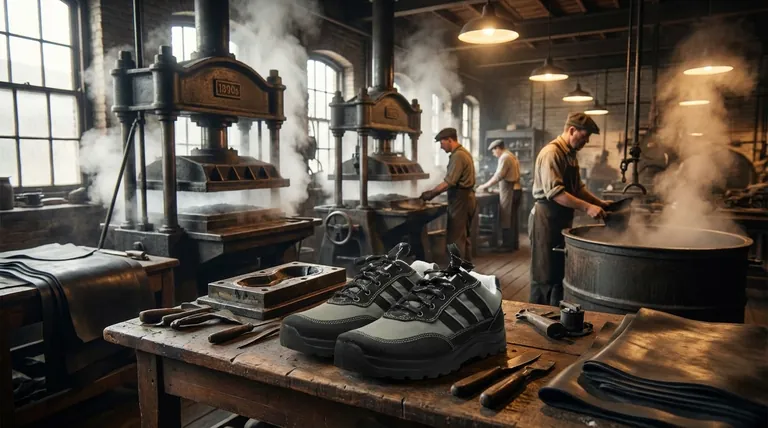
The Origins of a Revolution in Footwear
The story of vulcanized footwear isn't just about a single product; it's about a technological leap that made durable, flexible, and affordable shoes possible for the masses.
The Problem with Early Rubber
Before vulcanization, rubber was a difficult material. It would melt in the heat and become brittle and crack in the cold. This made it impractical for products that needed to be durable and reliable, like shoe soles.
The Invention of Vulcanization
In the 1840s, Charles Goodyear developed the process of vulcanization. By heating rubber with sulfur, he transformed it into a stable, strong, and elastic material. This new "vulcanized" rubber could withstand temperature changes and wear, making it perfect for industrial and consumer goods.
From Process to Product: The First Sneakers
While the process existed for decades, it took time for manufacturers to apply it effectively to footwear. The Colchester Rubber Co. was the pioneer, launching its basketball sneakers in 1892. These shoes combined a canvas upper with a vulcanized rubber sole, creating a product that was both comfortable and tough enough for athletic activity.
How Vulcanization Changed the Game
The introduction of this manufacturing technique was not just an incremental improvement. It created an entirely new category of footwear and set the stage for brands that would become household names.
The Birth of Iconic Brands
Following Colchester's lead, other companies quickly adopted the technology. Converse was founded in 1908, and Keds (the evolution of Colchester) was officially established in 1916. These brands built their empires on the foundation of vulcanized rubber soles.
A New Standard for Durability
The key benefit of vulcanization is the bond it creates. The process uses heat and pressure to fuse the rubber sole directly to the canvas upper, creating a single, integrated unit. This results in a shoe that is incredibly durable and resistant to separation.
Understanding the Trade-offs of Vulcanization
While revolutionary, the vulcanization process isn't the only way to make sneakers, and it comes with its own set of characteristics.
Flexibility vs. Cushioning
Vulcanized shoes are known for their excellent flexibility and "board feel," which is why they remain popular in skateboarding. The sole is relatively thin and molds well to the foot. However, this comes at the cost of cushioning and complex arch support found in more modern, cold-cemented athletic shoes.
Simplicity in Construction
The construction process is relatively straightforward, which originally made the shoes affordable and easy to mass-produce. This simplicity, however, limits the ability to incorporate multiple layers of different foam compounds or advanced support structures seen in high-performance running shoes today.
Making the Right Choice for Your Goal
Understanding this history helps contextualize why you might choose different types of footwear today.
- If your primary focus is classic style and board feel: A vulcanized shoe from a heritage brand like Converse or Vans is an excellent choice.
- If your primary focus is high-impact athletic performance: You are better served by modern shoes that use different construction methods to maximize cushioning and support.
This single innovation from the 19th century laid the groundwork for the entire sneaker culture we know today.
Summary Table:
| Key Milestone | Year | Significance |
|---|---|---|
| Invention of Vulcanization | 1840s | Charles Goodyear develops the process, creating stable, durable rubber. |
| First Commercial Vulcanized Shoes | 1892 | Colchester Rubber Co. launches the first vulcanized basketball sneakers. |
| Official Keds Brand Formation | 1916 | The company that pioneered the shoes evolves into the Keds brand. |
Looking for a reliable manufacturer of vulcanized footwear?
As a large-scale manufacturer, 3515 produces a comprehensive range of durable and stylish vulcanized shoes and boots for distributors, brand owners, and bulk clients. Our expertise in this classic construction method ensures high-quality, flexible, and affordable footwear perfect for your market.
Contact us today to discuss your production needs and bring your footwear vision to life.
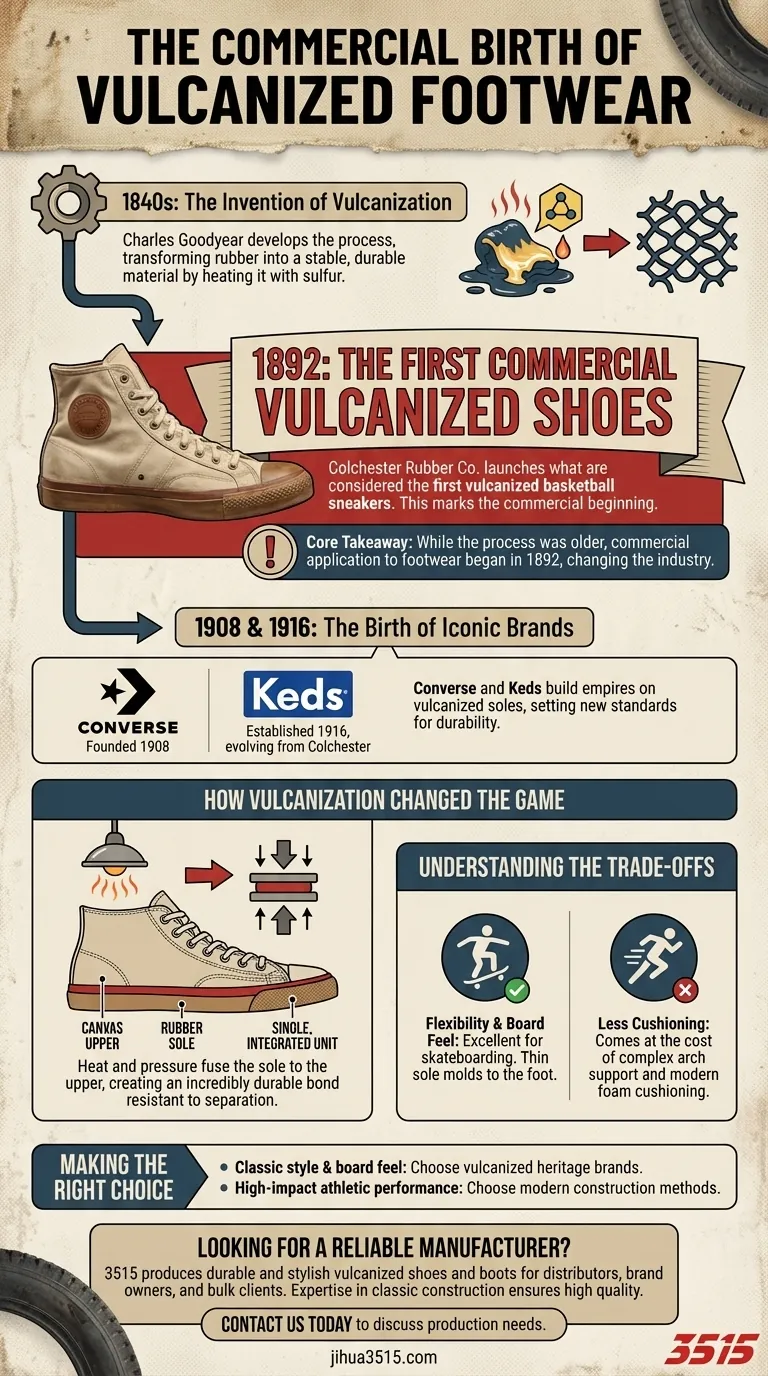
Visual Guide
Related Products
- Durable Rubber-Soled Utility Shoes for Wholesale & Custom Brand Manufacturing
- Durable Rubber Sole Outdoor Shoes Wholesale & Custom Manufacturing
- Wholesale Durable Camo Canvas Shoes with High-Traction Rubber Soles
- Wholesale Durable Camouflage Canvas Shoes with High-Traction Cleated Rubber Sole
- Durable High-Ankle Tactical Boots Wholesale Manufacturer for Custom & Bulk Orders
People Also Ask
- Why are rubber-soled shoes considered multi-weather footwear? Unlock All-Season Traction & Protection
- Why should we wear rubber soled shoes? Unlock Superior Safety and Durability
- How do rubber soles affect a shoe's appearance? Defining Your Shoe's Style and Formality
- What are the types of rubber sole shoes available? Choose the Right Sole for Durability & Comfort
- When were rubber sole shoes invented? From 1800s Concept to Modern Mainstay


















