
At its core, the range of women's Wellington boots is defined by two key factors: height and intended function. While most people recognize the classic tall style, variations like mid-calf, short, and ankle boots offer different levels of convenience and protection. These are further specialized into categories like rugged work boots, insulated winter boots, and versatile all-season designs.
The most effective way to choose a Wellington boot is to look past simple style and instead match the boot's specific features—like tread depth, insulation, and material—to the demands of your primary activity.
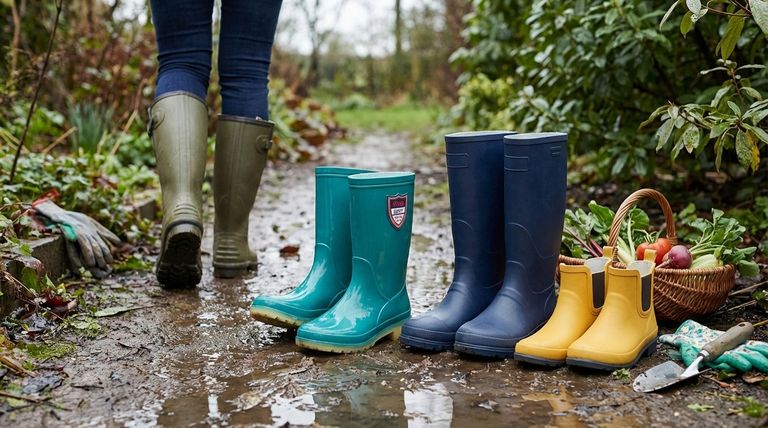
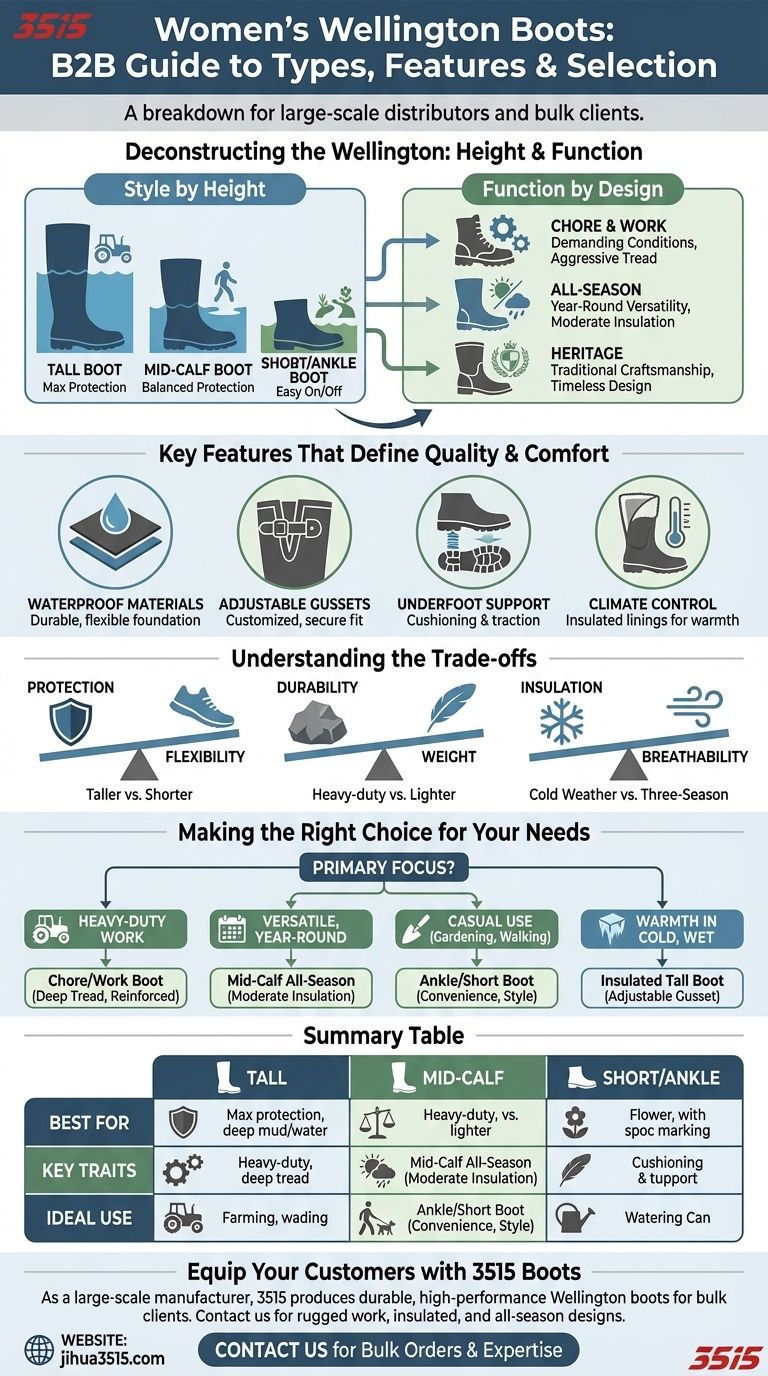
Deconstructing the Wellington: Beyond Just Height
Choosing the right boot begins with understanding how its physical form relates to its function. The boot's height is the most obvious differentiator, but its underlying construction reveals its true purpose.
Style by Height: The First Decision Point
The height of a Wellington boot dictates its balance between protection and mobility.
- Tall Boots offer maximum protection from water, mud, and debris, making them ideal for deep puddles, farming, or wading.
- Mid-Calf Boots provide a compromise, offering substantial protection while being slightly lighter and less restrictive than tall models.
- Short & Ankle Boots are the easiest to put on and take off, perfect for casual gardening, quick errands in the rain, or as a more fashion-forward choice.
Function by Design: The Core Purpose
Beyond height, boots are engineered for specific environments and tasks, often reflected in their names.
- Chore & Work Boots are built for demanding conditions. They feature heavy-duty construction, reinforced materials, and often have aggressive, deep tread patterns for superior traction on unstable ground.
- All-Season (or 365) Boots are designed for year-round versatility. They typically have moderate insulation and a durable but comfortable build suitable for everything from walking the dog to daily commutes in wet weather.
- Heritage Boots focus on traditional craftsmanship and classic styling. While fully functional, they often prioritize timeless design alongside reliable waterproof protection.
Key Features That Define Quality and Comfort
High-performance Wellingtons are distinguished by specific technical features that directly impact their durability, safety, and comfort. Understanding these components is critical for making a wise investment.
The Foundation: Waterproof Materials
The primary material dictates the boot's durability and flexibility. Most quality Wellingtons use natural rubber for its excellent waterproofing and flexibility, while neoprene is often used in the boot shaft for added warmth and a closer fit.
The Perfect Fit: Adjustable Gussets
An adjustable gusset is a waterproof, expandable section at the top of the boot, typically secured with a strap. This feature is crucial for achieving a customized, secure fit around the calf, accommodating different sizes and allowing you to tuck in trousers.
Underfoot Support: Cushioning and Traction
For all-day wear, look for boots with shock-absorbing cushions in the midsole to reduce fatigue. The outsole's tread pattern is a critical safety feature; deep, multi-directional lugs provide stability and grip on slippery or uneven surfaces.
Climate Control: Insulation
For use in cold weather, insulated linings (often neoprene or fleece) are essential. This feature traps heat and keeps your feet warm, turning a simple rain boot into a functional winter boot.
Understanding the Trade-offs
No single boot is perfect for every situation. The ideal choice always involves balancing competing features based on your specific needs.
Protection vs. Flexibility
A taller boot offers more protection from the elements but is inherently more restrictive and heavier. Ankle boots provide excellent mobility and are easy to wear but leave you vulnerable in deeper water or mud.
Durability vs. Weight
Heavy-duty work boots are exceptionally durable but can be cumbersome and fatiguing for casual, everyday wear. Lighter, more flexible boots are more comfortable for walking but won't withstand the rigors of a demanding work environment.
Insulation vs. Breathability
Insulated boots are a necessity for cold climates but can cause your feet to overheat and sweat in milder temperatures. A non-insulated boot is far more versatile for three-season use.
Making the Right Choice for Your Needs
To select the best Wellington boot, start by defining its primary purpose. This clarity will guide your decision toward the right combination of height, features, and durability.
- If your primary focus is heavy-duty work or farming: Prioritize a Chore or Work boot with a deep, aggressive tread, reinforced construction, and a comfortable, shock-absorbing footbed.
- If your primary focus is versatile, year-round wear: A mid-calf, all-season design with moderate insulation and a comfortable fit offers the best balance for daily tasks.
- If your primary focus is casual use like gardening or walking: An ankle or short boot provides the ideal combination of convenience, style, and sufficient protection.
- If your primary focus is warmth in cold, wet weather: Choose an insulated tall boot, preferably with an adjustable gusset to create a seal against cold air.
By matching the boot's design to your environment, you ensure it will function as a reliable and comfortable tool.
Summary Table:
| Feature | Tall Boots | Mid-Calf Boots | Short/Ankle Boots |
|---|---|---|---|
| Best For | Maximum protection, deep mud/water | Balanced protection & mobility | Casual use, easy on/off |
| Key Traits | Heavy-duty, deep tread, insulated options | Versatile, all-season wear | Lightweight, fashion-forward |
| Ideal Use | Farming, wading, harsh conditions | Daily commutes, dog walking, general tasks | Gardening, quick errands, light rain |
Ready to equip your customers with the perfect Wellington boots?
As a large-scale manufacturer, 3515 produces a comprehensive range of durable, high-performance Wellington boots for distributors, brand owners, and bulk clients. Whether you need rugged work boots with deep treads, insulated winter designs, or versatile all-season styles, our production capabilities cover all types of women's footwear to meet your market demands.
Contact us today to discuss your specific needs and leverage our expertise in delivering quality footwear at scale.
Visual Guide
Related Products
- Durable Waterproof Rain Boots | Custom Manufacturer for Wholesale & Brands
- Wholesale Women's Leather Derby Shoes Custom Factory Production
- Wholesale Classic Leather Lace-Up Ankle Boots for Brand Manufacturing
- Durable Goodyear Welt Leather Work Boots for Wholesale & Private Label
- Durable Moc-Toe Wedge Work Boots | Wholesale Manufacturing for Brands
People Also Ask
- What are the main materials for waterproof rain boots? Choose the Right Material for Durability & Comfort
- What is the overall recommendation for choosing rain boot materials? A Guide to Rubber vs. PVC
- How does boot height affect waterproofing? Choose the Right Height for Ultimate Protection
- Why are rain boots more flexible and comfortable than snow boots? The Key Differences Explained
- What are the best types of shoes for different gardening conditions? Find Your Perfect Match.



















