
For Western riding, the safest and most recommended options are smooth leather soles or modern, riding-specific rubber soles with a light tread. The core principle guiding this recommendation is safety: the boot must be able to slide freely from the stirrup in an emergency to prevent a rider from being dragged.
The ideal Western boot sole strikes a critical balance between safety in the stirrup and traction on the ground. Your choice between traditional leather and modern rubber depends entirely on how you prioritize these two functions.
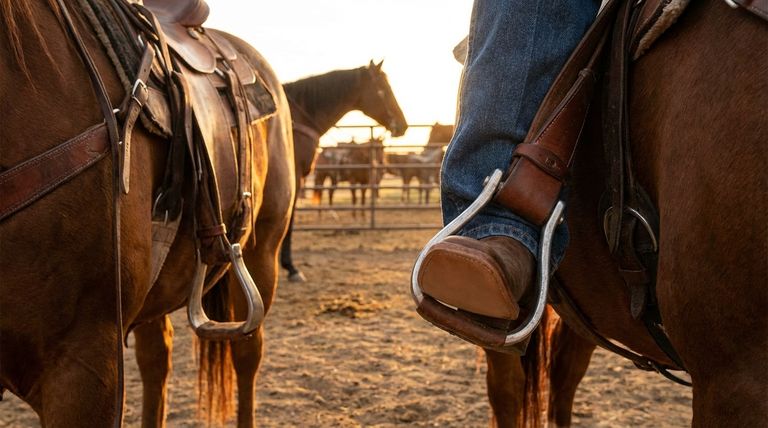
The Core Principle of the Western Boot Sole: Safety First
Understanding the "why" behind sole design is crucial for making a safe choice. The interaction between the boot and the stirrup is the single most important safety consideration.
Preventing Stirrup Entanglement
The greatest risk in a fall is a foot getting caught in the stirrup. A boot with a smooth, clean profile allows the foot to slide out easily.
There should be no deep grooves or breaks in the sole's design from the toe to the heel that could snag on the edge of the stirrup.
The Essential Role of the Heel
The heel acts as a crucial safety brake. It is designed to be taller and more defined than on a walking shoe, typically between one-half and one-and-a-half inches high.
This heel block prevents your foot from accidentally sliding all the way through the stirrup, which would be extremely dangerous.
Comparing the Primary Sole Materials
While both leather and rubber can be safe, they offer different performance characteristics. Your intended use—be it for competition, ranch work, or pleasure riding—will determine the best material.
The Traditional Choice: Smooth Leather Soles
For decades, the standard for riding and competition has been the "slick" leather sole. This design prioritizes safety above all else.
Its primary advantage is the smooth surface, which provides minimal friction and ensures the boot will not hang up in the stirrup during a quick dismount or a fall.
The main drawback is poor traction. On wet, muddy, or slick surfaces, leather soles can be very slippery when you are on the ground.
The Modern Alternative: Hybrid Rubber Soles
Modern rubber soles designed for riding are not the same as those on hiking or work boots. They are engineered to balance grip with safety.
These soles offer superior traction and durability for groundwork, making them ideal for ranch work or riders who spend significant time on their feet.
Safe designs feature a light, shallow tread pattern. Some may have "offset" treads that are not aggressive enough to catch on the stirrup, providing grip without compromising safety.
Understanding the Trade-offs
Choosing a boot sole is not about finding a single "best" option, but about understanding the compromises inherent in each design.
The Hazard of Aggressive Treads
You must avoid any boot with a deep, high-traction lug sole, like those found on heavy work or hiking boots.
These aggressive treads are extremely dangerous for riding. They are designed to grip, which means they can easily become wedged in a stirrup and create a life-threatening situation.
Sole Thickness and Rider Feel
The thickness of the sole impacts your connection with the horse. A thinner sole allows for greater dexterity and a better "feel" of the stirrup underfoot.
This is often preferred by competitors and experienced riders. Thicker soles, while offering more cushion for walking, can feel clumsy and reduce sensitivity while riding.
Beyond the Sole: The Importance of Proper Fit
No matter how well-designed the sole is, an ill-fitting boot is both unsafe and uncomfortable.
Your heel should remain snug, but your toes need room to wiggle. A proper fit ensures the boot functions as intended and supports your foot correctly, both in the stirrup and on the ground.
Making the Right Choice for Your Needs
Select your boot sole based on your most common activities.
- If your primary focus is competition or arena riding: A smooth leather sole offers the ultimate in-stirrup safety and traditional feel.
- If your primary focus is ranch work or all-day wear: A modern, riding-specific rubber sole provides the best balance of on-the-ground traction and riding safety.
- If you are a beginner rider: Prioritize a boot with a smooth, non-aggressive sole and a distinct heel to build safe habits from day one.
Choosing the right sole is a foundational step in ensuring both your safety and performance every time you ride.
Summary Table:
| Sole Type | Primary Use | Key Advantage | Key Consideration |
|---|---|---|---|
| Smooth Leather | Competition, Arena Riding | Maximum safety, slides easily from stirrups | Poor traction on wet/uneven ground |
| Hybrid Rubber | Ranch Work, All-Day Wear | Good ground traction with riding-safe design | Must have a light, shallow tread pattern |
| Aggressive Lug Soles | AVOID FOR RIDING | Excellent ground grip | Extremely dangerous, high risk of stirrup entanglement |
Need High-Quality, Safe Western Riding Boots for Your Customers?
As a large-scale manufacturer, 3515 produces a comprehensive range of safe and durable Western boots for distributors, brand owners, and bulk clients. Our production capabilities ensure every pair meets the critical balance of stirrup safety and on-ground performance, whether you require traditional leather soles or modern hybrid rubber designs.
Contact us today to discuss your specific needs and get a quote!
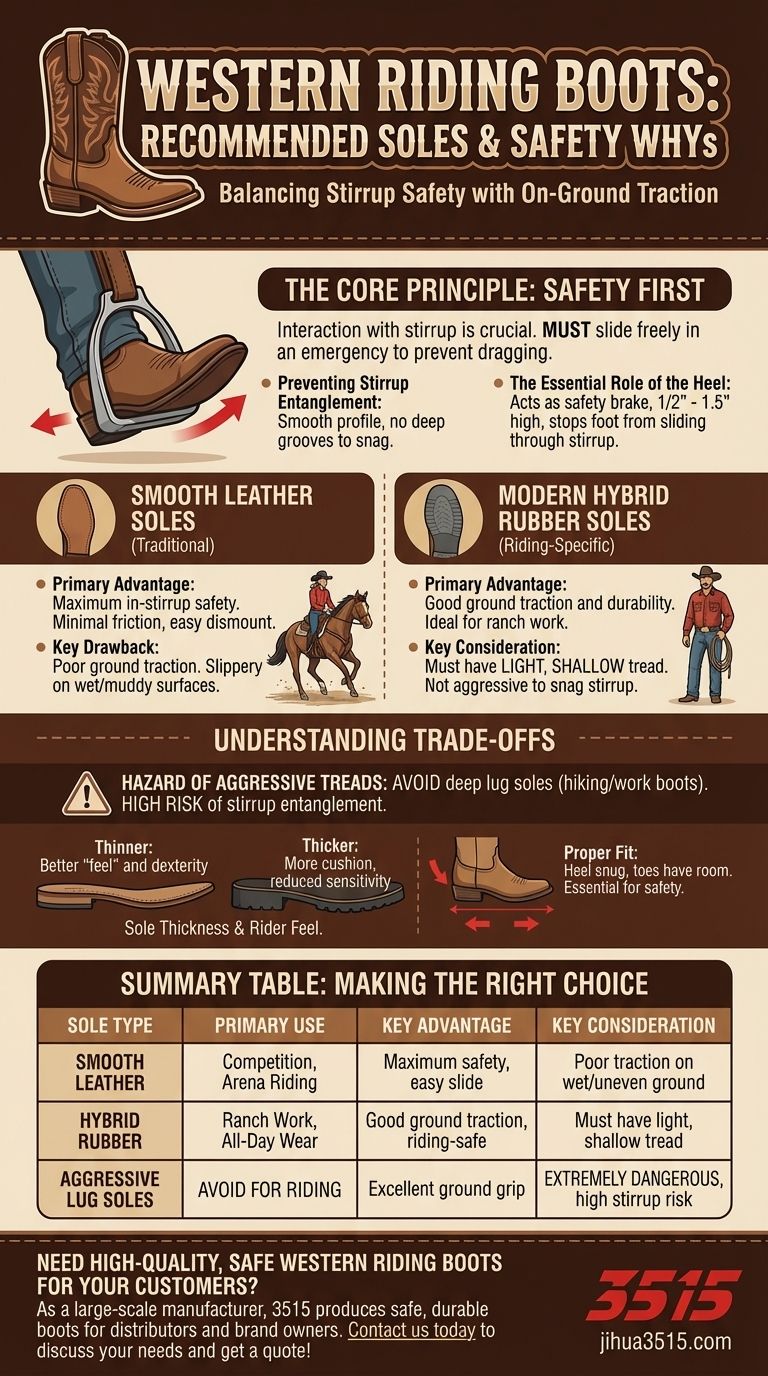
Visual Guide
Related Products
- Durable Goodyear Welt Leather Work Boots for Wholesale & Private Label
- Wholesale High-Traction Camo Boots - Custom Manufacturer for Brands
- High-Traction Suede Tactical Boots Wholesale & Custom Manufacturing
- Wholesale Waterproof Tactical Boots Custom Suede & High-Traction Soles
- Wholesale Tactical Boots High-Traction & Reflective for Bulk & Brand Orders
People Also Ask
- What is the difference between full-grain and top-grain leather? Premium Material Guide for Boot Manufacturers
- What are the advantages of leather as an upper material for work boots? Unmatched Durability & Custom Comfort
- Why is it important to waterproof leather work boots? Protect Your Investment and Performance
- How should new leather work boots be broken in? A Guide to Comfort and Durability
- What are the advantages of leather uppers in work boots? Unmatched Durability & Protection



















