
The most common linings used in Wellington boots for warmth and comfort are neoprene, fleece, polyester, and cotton. Each material is chosen for a specific balance of insulation, moisture management, durability, and feel against the skin.
The ideal Wellington boot lining is not about a single "best" material, but about a trade-off. Your choice depends entirely on your intended use, whether you need maximum insulation for cold weather, moisture control for active work, or simple comfort for casual wear.
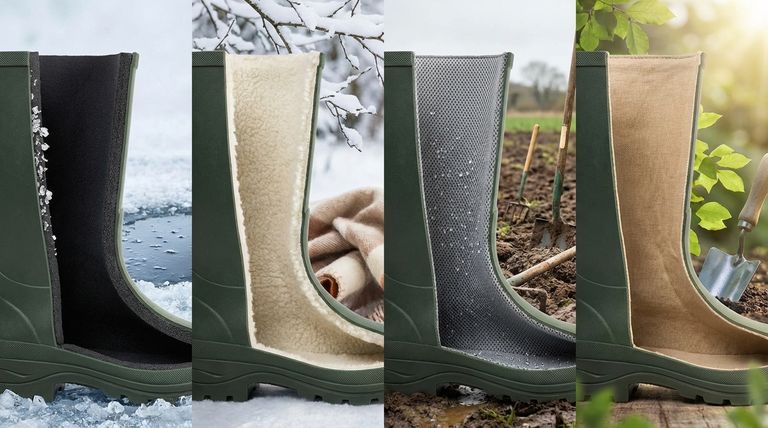
A Breakdown of Common Lining Materials
To select the right boot, you must first understand the distinct properties of each lining. They are not created equal, and each serves a different primary purpose.
Neoprene: The Standard for Insulation
Neoprene is a synthetic rubber, the same material used in wetsuits. It is prized for its exceptional ability to trap heat, making it the top choice for boots designed for cold climates and extended outdoor use. Its inherent waterproofing also adds a layer of protection.
Fleece: For Softness and Warmth
Fleece is a soft, synthetic fabric that provides an excellent insulating layer. It works by trapping warm air close to your feet, significantly enhancing warmth and comfort. It's a versatile choice for general-purpose winter boots.
Polyester: The Durable, Quick-Drying Workhorse
Polyester linings are valued for their durability and excellent moisture-wicking properties. They pull sweat away from the skin, helping to keep your feet dry. Because it dries quickly, polyester is ideal for active use or in conditions where your feet may perspire.
Cotton: Prioritizing Breathability
Cotton is a natural fiber known for its breathability and soft feel against the skin, making it comfortable for casual wear in mild conditions. However, it comes with a significant downside for performance use.
Understanding the Trade-offs
Choosing a lining involves balancing competing benefits. What makes a boot excellent for one scenario can make it unsuitable for another.
Warmth vs. Breathability
The warmest materials, like neoprene, are often the least breathable. They trap heat effectively but can also trap moisture from sweat. More breathable materials like cotton offer comfort in mild weather but provide poor insulation.
The Problem with Cotton in Cold, Wet Conditions
While comfortable when dry, cotton is a poor choice for cold or wet environments. It readily absorbs moisture (from sweat or leaks) and loses all its insulating properties once damp. Wet cotton actively pulls heat away from your body, making you colder faster.
Insulation vs. Fit
Thicker linings, such as heavy fleece or neoprene, provide more warmth but also add bulk. It is crucial to try on insulated boots with the socks you intend to wear. A boot that is too tight will restrict circulation, leading to colder feet regardless of the insulation.
How to Choose the Right Wellington Boot
Your primary activity should guide your decision. Match the boot's features to the demands of your environment.
- If your primary focus is maximum warmth for cold, static activity (e.g., winter fishing, spectating sports): Choose a boot with a neoprene lining for its superior insulation.
- If your primary focus is all-day comfort during active work: A polyester lining offers the best mix of durability and moisture management to keep you dry.
- If your primary focus is casual, mild-weather use (e.g., gardening, summer festivals): A simple cotton lining provides sufficient comfort and breathability.
- If your primary focus is versatile, everyday cold-weather wear: A fleece lining provides a great balance of insulating warmth and soft comfort.
Ultimately, the right Wellington boot is the one that keeps your feet comfortable, dry, and warm for your specific needs.
Summary Table:
| Lining Material | Primary Benefit | Best For |
|---|---|---|
| Neoprene | Maximum Insulation & Waterproofing | Cold climates, extended outdoor use |
| Fleece | Warmth & Soft Comfort | Versatile, everyday cold-weather wear |
| Polyester | Moisture-Wicking & Durability | Active work, all-day comfort |
| Cotton | Breathability & Soft Feel | Casual, mild-weather use |
Ready to source the perfect Wellington boots for your customers?
As a large-scale manufacturer, 3515 produces a comprehensive range of footwear for distributors, brand owners, and bulk clients. Our production capabilities encompass all types of shoes and boots, including Wellington boots with the exact linings your market demands.
We can help you:
- Select the ideal lining (neoprene, fleece, polyester, cotton) for your target audience.
- Ensure consistent quality and comfort with our advanced manufacturing processes.
- Scale production efficiently to meet your volume requirements.
Let's discuss your specific needs. Contact our team today to get a quote and learn how we can support your business.
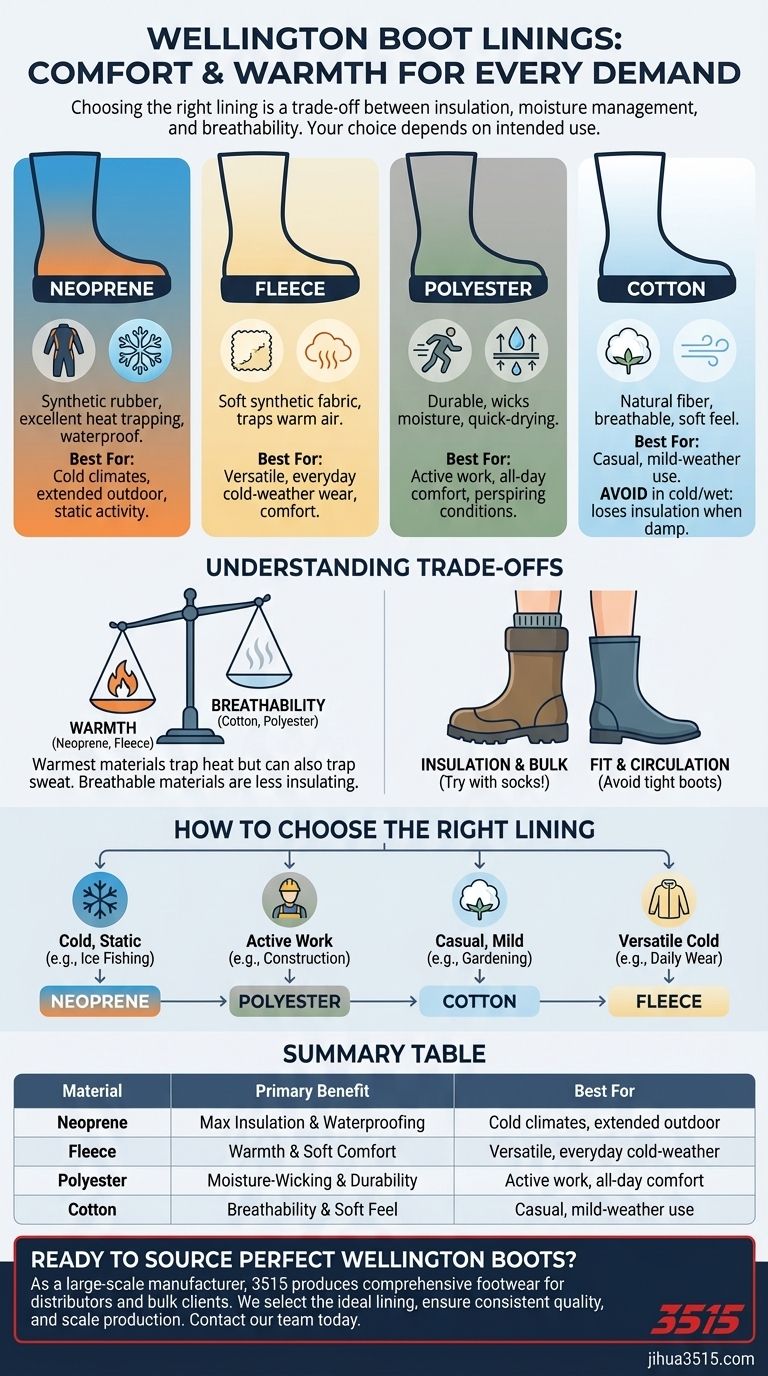
Visual Guide
Related Products
- Durable Waterproof Rain Boots | Custom Manufacturer for Wholesale & Brands
- Durable Goodyear Welt Leather Work Boots for Wholesale & Private Label
- Wholesale Durable Leather Work Boots | 8-Inch Goodyear Welt Manufacturer
- Premium Wholesale Tactical Style Safety Shoes Boots with Quick Lacing
- Durable High-Ankle Tactical Boots Wholesale Manufacturer for Custom & Bulk Orders
People Also Ask
- What are the main materials for waterproof rain boots? Choose the Right Material for Durability & Comfort
- What is the overall recommendation for choosing rain boot materials? A Guide to Rubber vs. PVC
- How does boot height affect waterproofing? Choose the Right Height for Ultimate Protection
- Why are rain boots more flexible and comfortable than snow boots? The Key Differences Explained
- What are the best types of shoes for different gardening conditions? Find Your Perfect Match.



















