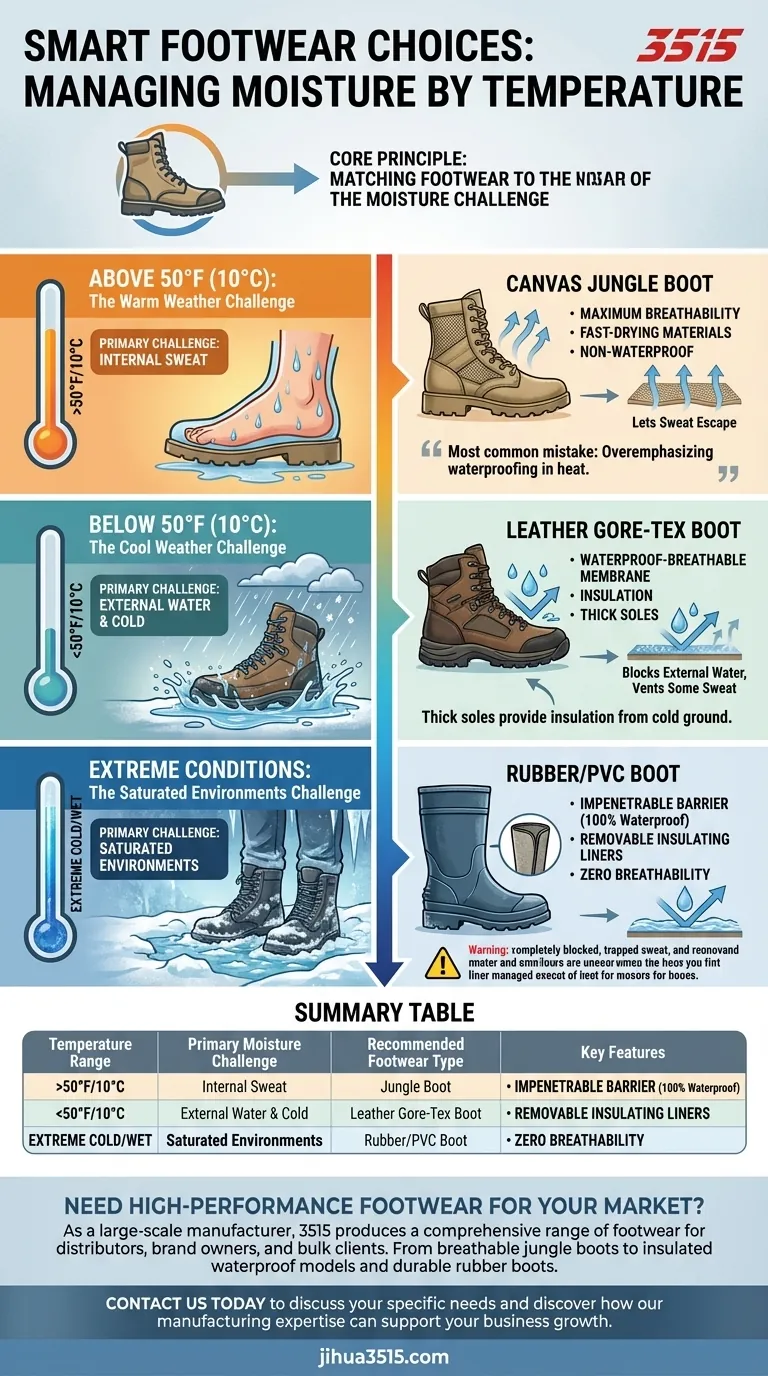
Choosing the right footwear is a critical decision based on a simple principle: managing moisture. For temperatures above 50°F (10°C), prioritize breathability with non-waterproof boots like jungle boots to let sweat escape. Below this threshold, shift your focus to insulated, waterproof boots, such as Gore-Tex lined leather, to protect from external water and cold. In extremely cold or wet conditions, fully waterproof rubber boots with insulating liners are the most effective solution.
The most common mistake in selecting footwear is overemphasizing waterproofing in warm conditions. The key is to understand that your primary challenge changes with the temperature—from managing internal moisture (sweat) in the heat to blocking external moisture (rain, snow) in the cold.
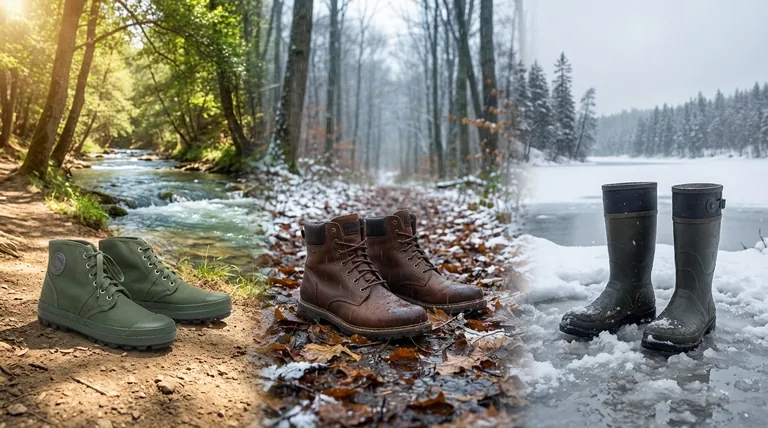
The Core Principle: Matching Footwear to the Moisture Challenge
Your choice of footwear should not be based on a single feature like "waterproof," but on how the boot is designed to handle the most likely source of moisture in a given environment.
The Warm Weather Challenge: Sweat (Above 50°F / 10°C)
In warmer conditions, your own sweat is the biggest threat to foot health and comfort. Trapped moisture softens skin, leading to blisters and fungal infections.
The goal here is maximum breathability. A non-waterproof boot made of canvas or other porous materials allows water vapor to escape easily, keeping your feet drier from the inside out.
Jungle boots are the classic example of this design philosophy. They are designed to get wet from a stream crossing and then dry out quickly while you are on the move.
The Cool Weather Challenge: External Water & Cold (Below 50°F / 10°C)
As the temperature drops, the primary threat shifts from internal sweat to external water and cold from the ground. Your feet produce less sweat, and the risk of cold injury from wet socks increases dramatically.
Here, a waterproof-breathable membrane like Gore-Tex becomes ideal. It blocks liquid water from rain or snowmelt from entering the boot while still allowing some water vapor (sweat) to escape.
Boots with thick soles are also critical in this range, as they provide insulation from the cold ground, which can sap heat from your feet.
The Extreme Conditions Challenge: Saturated Environments
In very cold, slushy, or constantly wet terrain, even waterproof-breathable membranes can be overwhelmed. Here, the priority becomes creating an impenetrable barrier.
Rubber or PVC boots offer complete, non-negotiable waterproofing. Because they have zero breathability, all sweat is trapped inside.
This is why they must be paired with removable felt liners. These liners provide crucial insulation and can be taken out and dried each night to manage the inevitable internal moisture buildup.
Understanding the Trade-offs
No single boot is perfect for all conditions. Choosing one type of protection means accepting a limitation in another area.
The Non-Waterproof Boot
Pro: Unmatched breathability and fast drying times. Con: Offers zero protection from rain, puddles, or wet grass. Your feet will get wet from the outside.
The Waterproof-Breathable Boot (e.g., Gore-Tex)
Pro: A versatile balance that keeps feet dry from moderate rain and snow while venting some sweat. Con: Less breathable than a non-waterproof boot and can feel warm in hot weather. The membrane can also be overwhelmed by high sweat output.
The Impermeable Boot (e.g., Rubber/PVC)
Pro: 100% waterproof against all external moisture, no matter how severe. Con: Zero breathability. Requires disciplined moisture management (e.g., changing socks, drying liners) to prevent issues from trapped sweat.
Making the Right Choice for Your Environment
Analyze your expected conditions and choose the tool designed specifically for that challenge.
- If your primary environment is warm and ranges from dry to intermittently wet (Above 50°F / 10°C): Prioritize breathability with a non-waterproof boot to manage sweat effectively.
- If your primary environment is cool and potentially wet with rain or snow (Below 50°F / 10°C): Choose a waterproof-breathable boot for a balanced defense against external moisture and internal sweat.
- If your primary environment involves extreme cold, deep slush, or standing water: Opt for a fully impermeable rubber or PVC boot with removable liners for absolute protection and insulation.
Ultimately, aligning your footwear's design to the specific temperature and moisture challenge is the key to performance, comfort, and safety.
Summary Table:
| Temperature Range | Primary Moisture Challenge | Recommended Footwear Type | Key Features |
|---|---|---|---|
| Above 50°F (10°C) | Internal Sweat | Non-Waterproof (e.g., Jungle Boots) | Maximum breathability, fast-drying materials |
| Below 50°F (10°C) | External Water & Cold | Waterproof-Breathable (e.g., Gore-Tex) | Waterproof membrane, insulation, thick soles |
| Extreme Cold/Wet | Saturated Environments | Impermeable (e.g., Rubber/PVC Boots) | 100% waterproof, removable insulating liners |
Need High-Performance Footwear for Your Market?
As a large-scale manufacturer, 3515 produces a comprehensive range of footwear for distributors, brand owners, and bulk clients. Our production capabilities encompass all types of shoes and boots—from breathable jungle boots to insulated waterproof models and durable rubber boots—ensuring you get the right product for any climate and application.
Contact us today to discuss your specific needs and discover how our manufacturing expertise can support your business growth.
Visual Guide
Related Products
- Wholesale Durable Camouflage Canvas Shoes with High-Traction Cleated Rubber Sole
- Lightweight Breathable Training Shoes for Wholesale & Custom OEM Manufacturing
- Wholesale Breathable Training Shoes Custom Athletic Footwear Manufacturer
- Durable Leather High-Ankle Tactical Boots for Wholesale & Custom Manufacturing
- Durable Waterproof Rain Boots | Custom Manufacturer for Wholesale & Brands
People Also Ask
- Why is the selection of high-strength fabric materials necessary in the production of canvas shoes and training shoes?
- What are the properties of canvas as a shoe material? A Guide to Lightweight Comfort & Style
- Can canvas shoes be worn in rainy conditions? The Truth About Water Resistance
- What are some examples of vulcanized shoes? Discover the Flexibility and Board Feel of Classic Sneakers
- What are the characteristics of canvas as a shoe material? A Guide to Lightweight, Breathable Footwear