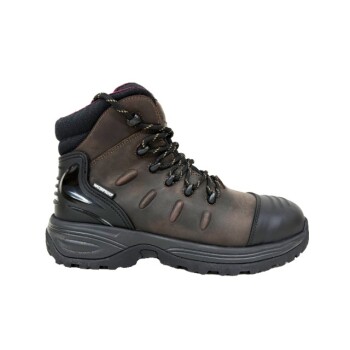
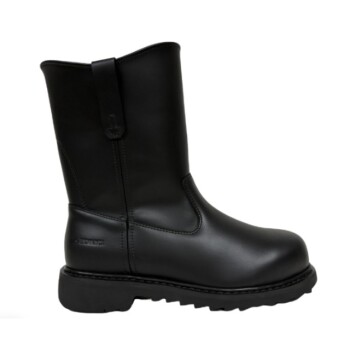
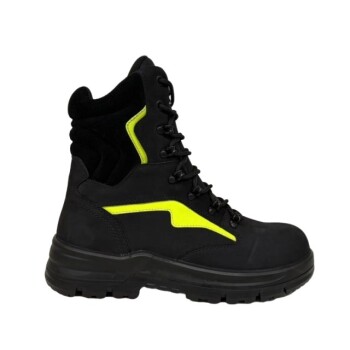
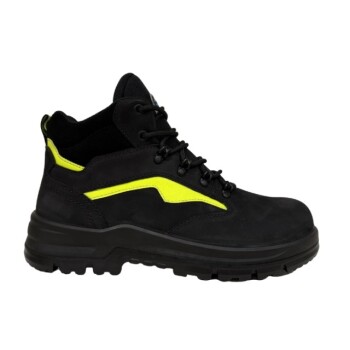
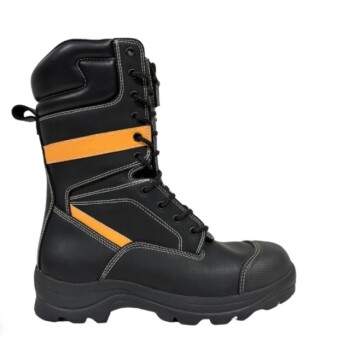
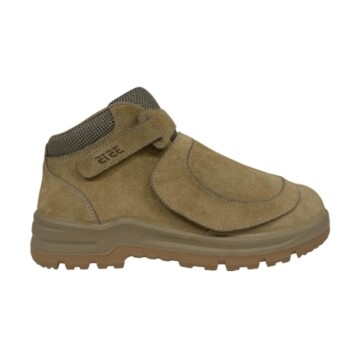
In short, an oil construction worker needs boots that are specifically oil-resistant, slip-resistant, and feature a protective toecap. This combination directly addresses the unique hazards of working with hydrocarbons on a dynamic construction site, where slick surfaces and falling objects are constant threats.
The core challenge isn't just about general construction safety; it's about mitigating the specific risk of slips caused by oil and other chemicals. Therefore, the oil-resistant and slip-resistant qualities of the sole are just as critical as the traditional protective features like a steel toe.
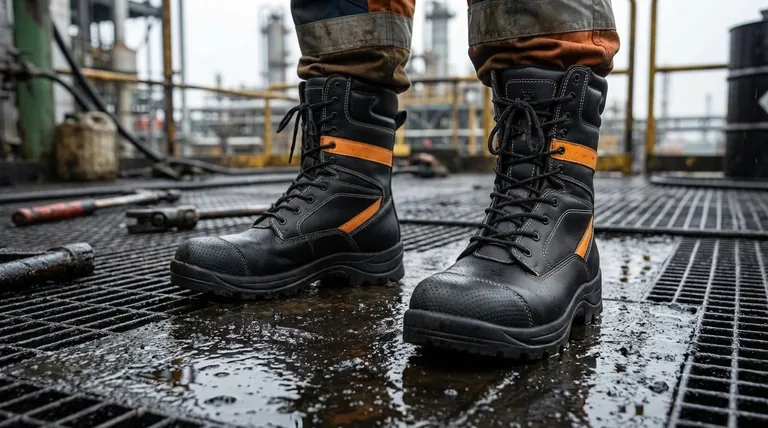
Deconstructing the Essential Boot Features
Choosing the right boot involves understanding how each safety feature directly counteracts a specific risk found on an oil construction site. It's a system where each component has a critical job.
The Foundation: The Outsole
The outsole is your primary point of contact with the ground and the first line of defense against slips and falls, which are amplified in an oily environment.
Oil Resistance is Non-Negotiable
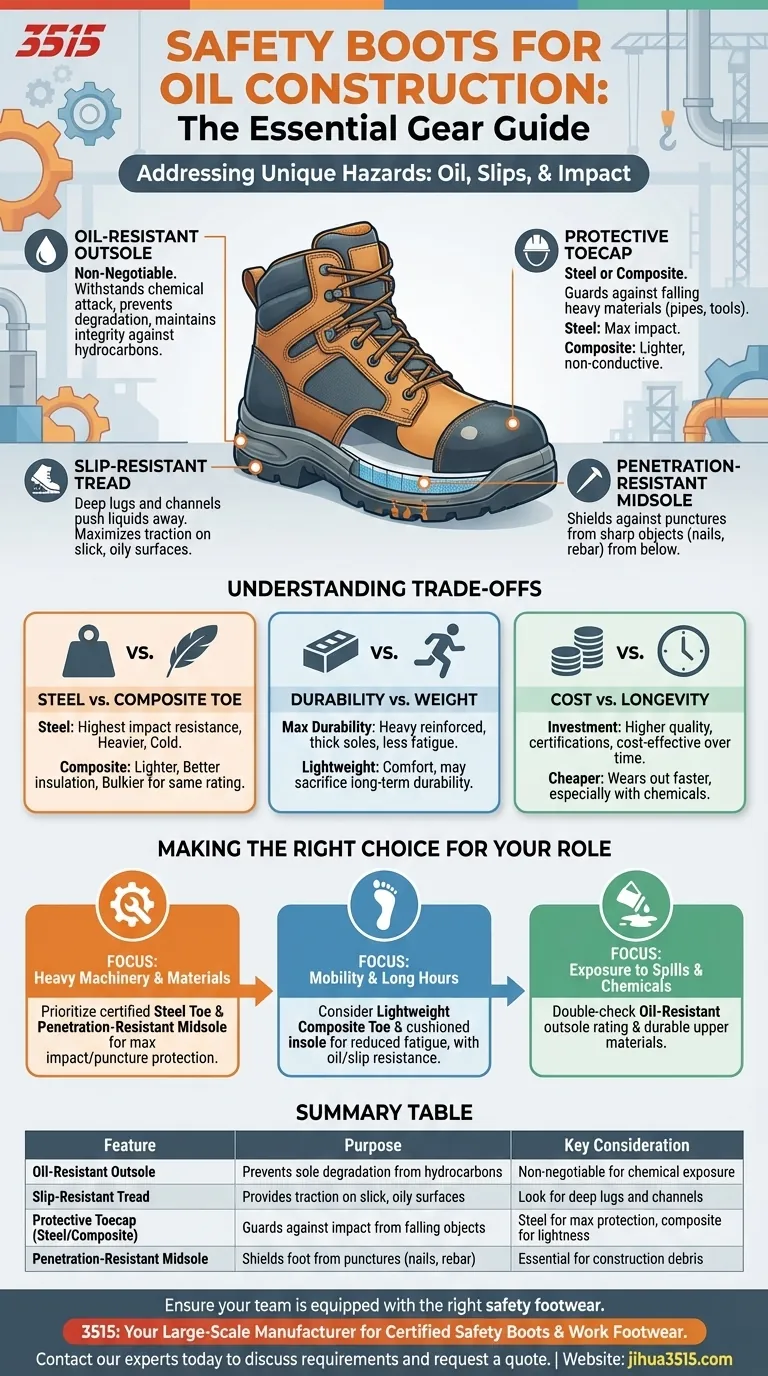
Oil and other hydrocarbons can degrade standard rubber, causing the sole to swell, soften, and lose its structural integrity. Oil-resistant soles are made from compounds specifically formulated to withstand this chemical attack, ensuring they don't break down prematurely.
Traction and Slip Resistance
Beyond just the material, the tread pattern is key. Look for soles with deep, well-defined lugs and channels designed to push liquids away from the point of contact. This maximizes the surface area gripping the ground, providing crucial traction on slick surfaces.
The Shield: Protective Components
The construction aspect of the job introduces significant impact and puncture risks that require robust physical barriers.
Toe Protection (Steel vs. Composite)
A protective toecap is mandatory to guard against falling heavy materials like pipes, tools, or equipment. Steel toes offer maximum protection, while composite toes (made of materials like carbon fiber or Kevlar) are lighter and don't conduct heat or cold, which can be a comfort factor. Both are valid options if they meet safety standards.
Penetration Resistance
Construction sites are littered with sharp objects like nails, rebar, and scrap metal. A penetration-resistant midsole plate sits between the insole and outsole to prevent these hazards from puncturing through the bottom of the boot, protecting your foot from below.
Understanding the Trade-offs
Selecting the right boot always involves balancing competing factors. Being aware of these trade-offs helps you make a more informed decision based on your specific role and environment.
Steel Toe vs. Composite Toe
Steel toes provide the highest level of impact resistance but are heavier and can become very cold in winter environments. Composite toes are lighter and offer better insulation but can be bulkier to achieve the same safety rating.
Durability vs. Weight
Heavily reinforced, durable boots with thick soles and extra protective features offer maximum longevity and safety. However, this often comes at the cost of increased weight, which can lead to fatigue over a long shift. A lightweight design can significantly improve comfort but may sacrifice some long-term durability.
Cost vs. Longevity
Specialized boots with multiple safety certifications are an investment. Cheaper options might meet minimum standards but often use materials that wear out faster, especially when exposed to harsh chemicals. Investing in a higher-quality boot often proves more cost-effective over time.
Making the Right Choice for Your Role
Your specific tasks on the site should guide your final decision. Use this as a quick reference.
- If your primary focus is working around heavy machinery and materials: Prioritize a certified steel toecap and a penetration-resistant midsole for maximum impact and puncture protection.
- If your primary focus is mobility and long hours on your feet: Consider a boot with a lightweight composite toe and a well-cushioned insole to reduce fatigue, ensuring it still has the critical oil- and slip-resistant outsole.
- If your primary focus is exposure to spills and chemicals: Double-check that the outsole is explicitly rated as "oil-resistant" and that the upper materials are also durable and easy to clean.
Ultimately, the right safety boot is the one that provides comprehensive protection against the specific, combined hazards of both construction and the oil industry.
Summary Table:
| Feature | Purpose | Key Consideration |
|---|---|---|
| Oil-Resistant Outsole | Prevents sole degradation from hydrocarbons | Non-negotiable for chemical exposure |
| Slip-Resistant Tread | Provides traction on slick, oily surfaces | Look for deep lugs and channels |
| Protective Toecap (Steel/Composite) | Guards against impact from falling objects | Steel for max protection, composite for lightness |
| Penetration-Resistant Midsole | Shields foot from punctures (nails, rebar) | Essential for construction debris |
Ensure your team is equipped with the right safety footwear for the unique demands of oil construction.
As a large-scale manufacturer, 3515 produces a comprehensive range of certified safety boots and work footwear for distributors, brand owners, and bulk clients. Our production capabilities encompass all types of safety shoes and boots, including models specifically engineered with oil-resistant soles, superior slip resistance, and certified protective features.
We can help you source or customize the perfect safety footwear to protect your workforce and meet project specifications. Contact our experts today to discuss your requirements and request a quote.
Visual Guide
Related Products
- Premium Oil Wax Leather Safety Boots for Bulk Purchase
- Heavy-Duty Goodyear Welted Pull-On Safety Rigger Boot
- Premium Wholesale Waterproof Safety Boots High Performance Protection for Industrial Markets
- Premium Waterproof Nubuck Safety Boots for Wholesale
- Heavy-Duty Waterproof Nubuck Safety Boots Safety Shoes for Bulk Supply
People Also Ask
- What materials are commonly used for outsoles in safety boots? A Guide to Durability, Grip, and Comfort
- How do safety boots reduce cutting hazards? Essential Protection for Your Workforce
- What are the common types of safety boots and their primary uses? A Guide to Industrial Footwear
- Which organizations develop safety standards for work boots? Ensure Compliance & Worker Safety
- What primary protective functions do professional safety boots provide in urban solid waste recovery and waste picking processes? Discover Dual-Layer Protection.