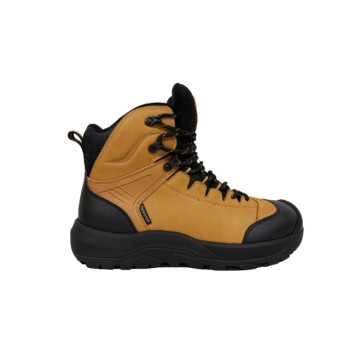
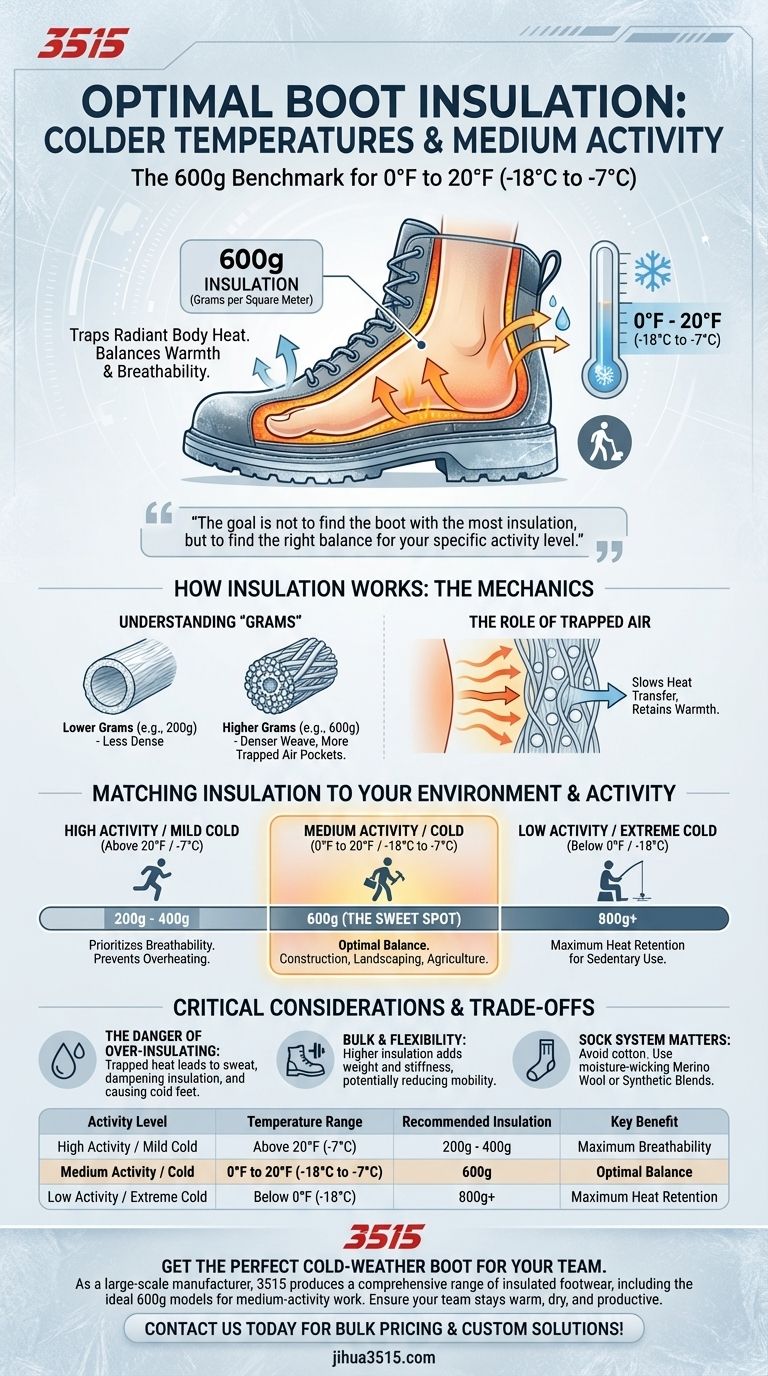
For medium activity in cold temperatures, the established benchmark is 600g insulation in your footwear. This level is specifically engineered to provide substantial warmth for temperatures hovering between 0°F and 20°F (-18°C to -7°C) without causing your feet to overheat and sweat during periods of moderate exertion.
The goal is not to find the boot with the most insulation, but to find the right balance for your specific activity level. Sweat is the primary enemy of warmth, and choosing the correct insulation level is your best defense against it.
How Boot Insulation Actually Works
To make an informed choice, it's crucial to understand the principles behind boot insulation. It's a system that relies on balancing the heat your body generates with the cold of the outside environment.
Understanding 'Grams' of Insulation
The "g" in 600g stands for grams per square meter of the insulation material, most commonly a synthetic microfiber like Thinsulate™.
A higher gram rating means a denser weave of fibers. This denser structure creates more microscopic air pockets within the material.
The Role of Trapped Air
Insulation does not create its own heat. Its sole function is to trap the radiant heat your body naturally produces.
These tiny air pockets slow down heat transfer, keeping the warmth from your feet from escaping into the cold air.
Why Activity Level is the Critical Factor
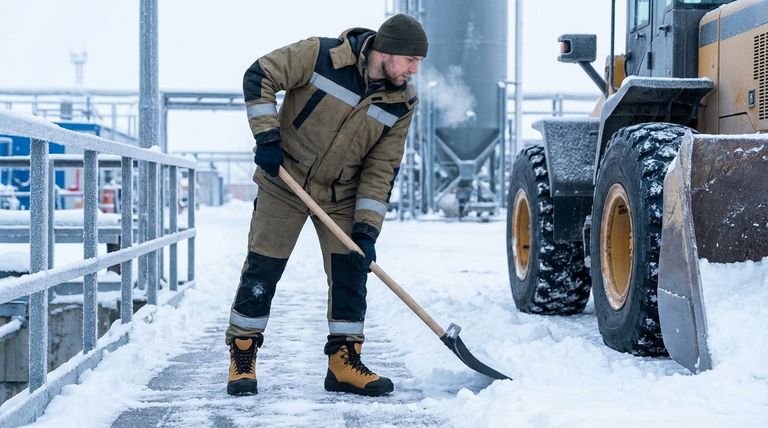
Your activity level dictates how much heat your body generates. Medium activity, like construction or consistent walking, produces a steady amount of heat.
If your insulation is too high for your activity level, you'll trap too much heat. This leads to sweat, which dampens your socks and the boot liner, dramatically reducing their insulating power and leaving your feet cold and clammy.
Matching Insulation to Your Environment
While 600g is the sweet spot for your specific need, understanding the full spectrum helps solidify why it's the right choice.
For Mild Cold or High Activity (200g-400g)
This lower range is ideal for cool conditions or high-exertion activities like hiking or running in the cold. It provides a baseline of warmth while prioritizing breathability to let sweat escape.
The Versatile Mid-Range (600g)
This is the standard for the modern cold-weather work boot. It hits the perfect equilibrium for jobs in construction, landscaping, or agriculture where you alternate between periods of movement and standing still in temperatures from 0°F to 20°F.
For Extreme Cold or Low Activity (800g+)
Once you exceed 800g, you are in the territory of specialized cold-weather gear. This level of insulation is designed for sedentary activities in frigid temperatures, such as ice fishing, hunting from a blind, or standing guard in sub-zero conditions.
Understanding the Trade-offs
Choosing the wrong insulation has consequences beyond simple discomfort. Being aware of the potential pitfalls is key to making the right decision.
The Danger of Over-Insulating
This is the most common mistake. People assume more is always better, but as mentioned, this leads directly to sweat. A wet foot will become a dangerously cold foot far faster than one with slightly less insulation.
Bulk and Flexibility
Higher insulation ratings mean a thicker, heavier, and often stiffer boot. While a 1200g boot offers immense warmth, it can be cumbersome and fatiguing to wear during a full day of active work, reducing your mobility.
The Importance of Your Sock System
Your boots are only half of the equation. Never wear cotton socks in insulated boots. Cotton absorbs and holds moisture against your skin.
Always opt for moisture-wicking socks made of merino wool or synthetic blends. They pull sweat away from your skin, allowing the boot's breathable membrane (if it has one) to do its job.
Making the Right Choice for Your Goal
Select your insulation level based on a realistic assessment of your typical day.
- If your primary focus is active work in typical winter conditions (0°F to 20°F): The 600g insulation level provides the ideal balance of warmth and breathability for all-day comfort.
- If your primary focus is high-exertion activity or milder temperatures: Opt for a lower insulation level like 400g to prioritize managing sweat and preventing overheating.
- If your primary focus is staying warm while stationary in extreme cold: You will need 800g or more to trap sufficient heat when your body is not generating much of its own.
By matching your insulation to your activity level, you ensure your gear works with you, not against you.
Summary Table:
| Activity Level | Temperature Range | Recommended Insulation | Key Benefit |
|---|---|---|---|
| High Activity / Mild Cold | Above 20°F (-7°C) | 200g - 400g | Maximum breathability to prevent sweat |
| Medium Activity / Cold | 0°F to 20°F (-18°C to -7°C) | 600g | Optimal balance of warmth and breathability |
| Low Activity / Extreme Cold | Below 0°F (-18°C) | 800g+ | Maximum heat retention for stationary use |
Get the Perfect Cold-Weather Boot for Your Team
As a large-scale manufacturer, 3515 produces a comprehensive range of insulated footwear for distributors, brand owners, and bulk clients. Our production capabilities encompass all types of insulated boots, including the ideal 600g models for medium-activity work in cold conditions.
We ensure your team stays warm, dry, and productive with boots that offer the perfect balance of insulation and breathability. Let us help you equip your workforce with the right gear for the job.
Contact us today for bulk pricing and custom solutions!
Visual Guide
Related Products
- Premium Insulated Safety Boots and Shoes for Wholesale & Bulk Orders
- Custom Manufactured Air Cushion Leather Business Shoes for Wholesale
- Wholesale Modern Comfort Shoes with Dial Closure for Private Label & Bulk Orders
- Custom OEM Training Shoes Wholesale Manufacturer Durable & Breathable
- Wholesale Breathable Training Shoes Custom Athletic Footwear Manufacturer
People Also Ask
- What are the recommended insulation ratings for mild winter conditions? A Guide for Active & Stationary Workers
- How does insulation thickness correlate with temperature ranges? A Guide to Choosing the Right Warmth
- What insulation level is needed for severe cold and stationary work? 1200g or Higher is Essential
- What safety advantages do insulated boots offer beyond warmth? Dielectric Protection & Superior Grip
- How does fleece lining contribute to the warmth of insulated boots? Trapping Air for Superior Cold Protection