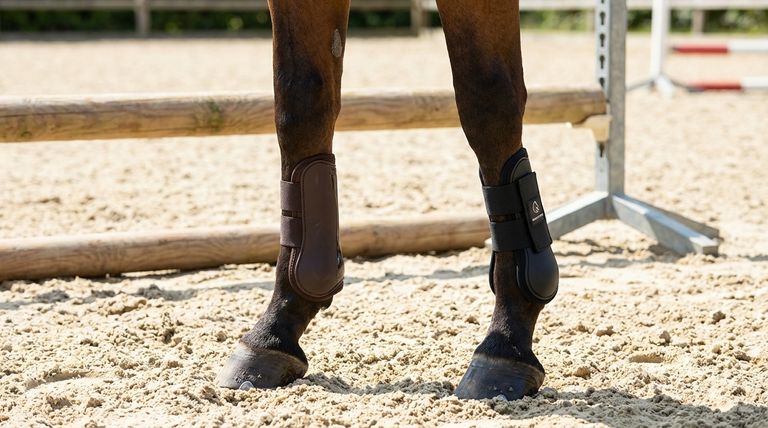
For jumping at a 2-foot height, the most common and practical recommendation is a set of quality general-purpose boots, often called brushing or galloping boots. These provide excellent all-around protection for the type of minor impacts common at this level and are versatile enough to be used for flatwork as well.
The goal is not to find a highly specialized, high-impact boot. Instead, you need a durable, well-fitting, and versatile boot that protects against the most common risk at this level: the horse striking its own legs.
The Core Purpose of Boots at This Level
When jumping smaller fences, the primary risks are different from those at higher levels. Understanding what you are protecting against is key to making the right choice.
Protection from Interference
The most frequent issue is interference, where a horse accidentally strikes the inside of one leg with the opposite hoof. A good boot acts as a durable shield against these scrapes and bruises.
Shielding from Obstacles
While less forceful at 2 feet, a horse can still knock a pole. The boot provides a layer of protection against the direct impact of a fallen or shifted rail, preventing minor injuries.
Minimal Support, Maximum Flexibility
It's a common misconception that boots "support" the soft tissues of the leg. For this type of boot, the function is protection from impact, not anatomical support. The boot should be flexible enough to allow the horse's full, natural range of motion.
Evaluating Your Two Primary Options
For a rider working at this level, the choice almost always comes down to two excellent and widely accepted styles of boots.
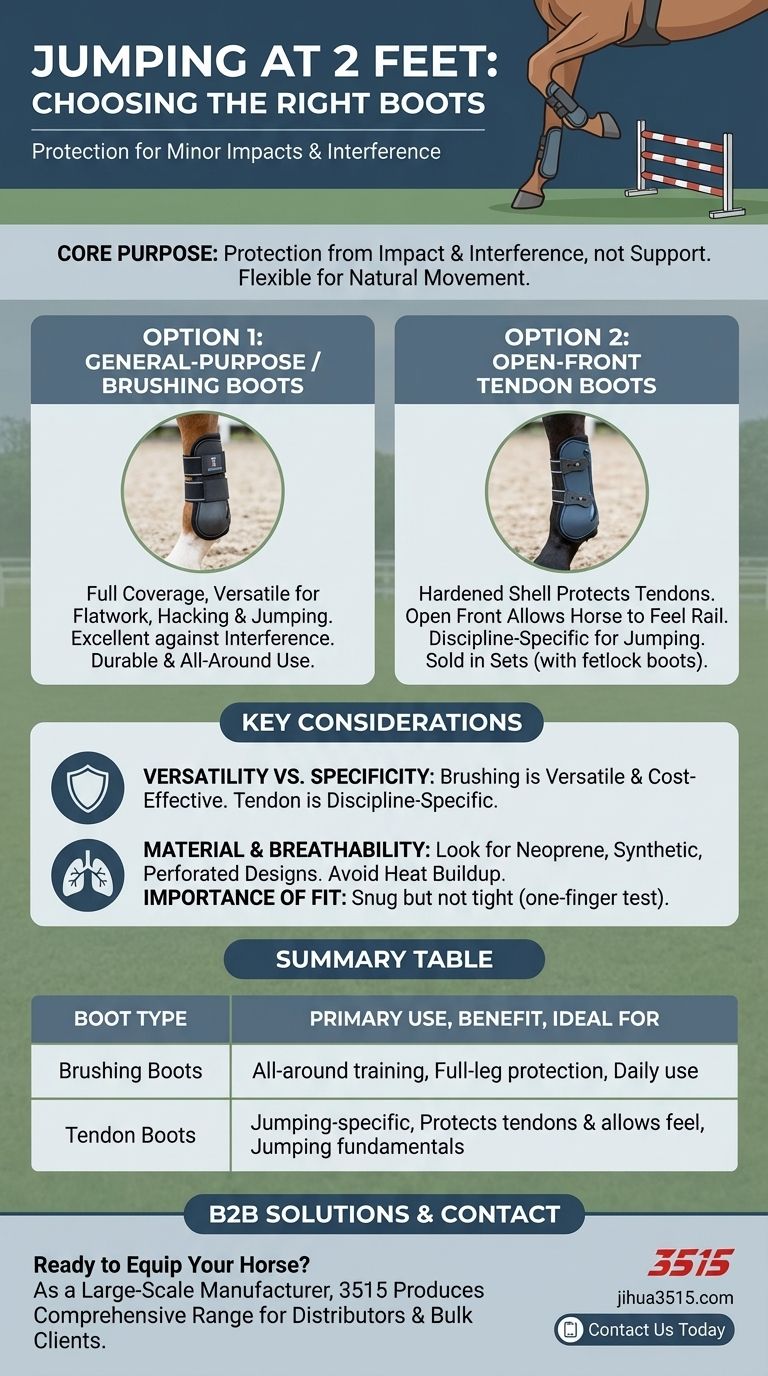
Option 1: The General Purpose / Brushing Boot
This is the workhorse of the equestrian world. These boots, such as the well-known Woof Wear brand, are designed for all-around use.
They offer full coverage around the cannon bone and are excellent at preventing injuries from interference. Their versatility is their greatest strength; you can put them on for flatwork, hacking, and jumping without needing to switch gear.
Option 2: The Open-Front Tendon Boot
This is the classic "show jumping" boot. It features a hardened shell along the back of the leg to protect the critical flexor tendons from being struck by a hind hoof as the horse comes over a fence.
Crucially, the front of the boot is left open or is made of a soft material. This design allows the horse to feel the rail if it gets careless and taps it, which can help teach a horse to be tidier with its front legs. These are typically sold in sets with matching fetlock boots for the hind legs.
Understanding the Trade-offs
While both options are suitable, there are key differences to consider that will help you make a more informed decision.
Versatility vs. Specificity
A general-purpose brushing boot is the most versatile and cost-effective option. An open-front boot is more discipline-specific and is the standard choice as you progress in jumping.
Material and Breathability
Modern boots are often made of neoprene or other synthetic materials that are durable and easy to clean. Pay attention to breathability, as heat buildup under the boot can be detrimental to soft tissues. Look for boots with perforations or breathable linings.
The Importance of Fit
Regardless of the type, a poor fit is dangerous. The boot should be snug enough that it doesn't spin or slide down the leg, but not so tight that it restricts blood flow. You should be able to fit one finger comfortably between the boot and the horse's leg.
Making the Right Choice for Your Goal
Your decision should be based on your immediate needs, your budget, and your long-term goals.
- If your primary focus is versatility and daily use: A quality set of general-purpose brushing boots is the most practical and economical choice for training at home.
- If your primary focus is specifically on jumping fundamentals: A basic set of open-front tendon boots will provide targeted protection and introduce you to the standard equipment used in the sport.
- If your primary focus is simplicity and ease of care: Choose a reputable synthetic boot with simple Velcro closures, which offers proven protection and can be easily washed.
Ultimately, choosing the right boot is about providing sensible protection, allowing you and your horse to focus on building confidence over fences.
Summary Table:
| Boot Type | Primary Use | Key Benefit | Ideal For |
|---|---|---|---|
| General-Purpose Brushing Boots | All-around training (flatwork, hacking, jumping) | Versatile, full-leg protection | Riders seeking one boot for daily use |
| Open-Front Tendon Boots | Jumping-specific protection | Protects tendons, allows horse to feel rails | Riders focused on jumping fundamentals |
Ready to equip your horse with durable, well-fitting boots? As a large-scale manufacturer, 3515 produces a comprehensive range of equestrian footwear for distributors, brand owners, and bulk clients. Our production capabilities encompass all types of boots, from versatile general-purpose designs to specialized jumping boots. We ensure quality materials, breathable construction, and secure fits to protect your horse and enhance performance. Contact us today to discuss your specific needs and benefit from our manufacturing expertise.
Visual Guide
Related Products
- Durable Spiked Camouflage Boots Wholesale & Factory Production
- Wholesale Tactical Boots High-Traction & Reflective for Bulk & Brand Orders
- Wholesale High-Traction Camo Boots - Custom Manufacturer for Brands
- Durable High-Ankle Tactical Boots Wholesale Manufacturer for Custom & Bulk Orders
- Wholesale Waterproof Tactical Boots Custom Suede & High-Traction Soles
People Also Ask
- How does boot height affect waterproofing? Choose the Right Height for Ultimate Protection
- What are the best types of shoes for different gardening conditions? Find Your Perfect Match.
- What role does camouflage play in hunting boots? It's More Than Just a Pattern
- What should you look for to ensure boots are fully waterproof? The Essential 2-Part System
- How does boot construction affect waterproofing? The Science Behind Truly Dry Feet