First, I need to get straight to the point. The user needs an immediate answer on how to choose winter cycling shoes. The core of this decision comes down to the right size to accommodate thick socks, a truly sealed design that includes a high cuff, and cleat compatibility that fits your specific cycling style.
The real value of winter cycling shoes lies in investing in an integrated system for warmth and weather protection. Dedicated shoes offer the best combination of insulation, waterproofing, and a secure fit.
I see the user's deep need as staying warm and dry when cycling in cold weather. It's about a smart cost-benefit analysis. Are the more expensive specialized winter cycling shoes the right solution, or would boot covers and warm socks suffice?
When writing this guide, I'll emphasize that winter cycling shoes are like a carefully-designed 'capsule' for your feet. They need a waterproof, insulated membrane that's designed to seal out the elements. The closure system (Boas, Zips, Velcro) should be easy to use with gloves and make it easy to get them on and off with cold hands. Sizing is crucial: a tight fit restricts blood flow, negating the benefits of insulation.
I must also discuss the trade-offs, and where the alternatives fit in. High-quality boot covers and warm socks can be used with your existing shoes, and are a good option for people who cycle occasionally in cold weather. However, for committed year-round riders, dedicated winter shoes are a worthwhile investment. Their "set it and forget it" design provides far superior warmth and comfort.
To wrap up, I'll highlight key actionable advice.
- If you plan on riding often in the winter: Purchase a dedicated winter shoe with a high cuff and a Boa or zip closure system.
- If you only ride occasionally when it's cold: Start with high-quality waterproof booties and thermal socks, which you can wear with your regular shoes.
- If you often walk around or need to deal with ice: Prioritize a shoe with a 2-bolt MTB-style cleat system, which gives you better traction and walkability.
In the end, this is all about staying comfortable and confident throughout the season. The right shoes are the key to unlocking consistent year-round riding. Choosing the right winter cycling shoes involves prioritizing a sealed, insulated design over all else. The key is to find a shoe with proper sizing to accommodate thicker socks, a high cuff and robust fastening system to block out the elements, and cleat compatibility that suits your specific need for on- and off-bike stability.
The core decision is not just about buying a warmer shoe, but about investing in an integrated system for weather protection. Dedicated winter shoes provide a seamless solution for warmth and dryness, whereas alternatives offer a lower-cost, modular approach with notable performance trade-offs.

Deconstructing the Winter Cycling Shoe
To make an informed choice, you must understand the key components that separate a true winter shoe from a standard one covered with a bootie. These features work together to create a protective micro-environment for your feet.
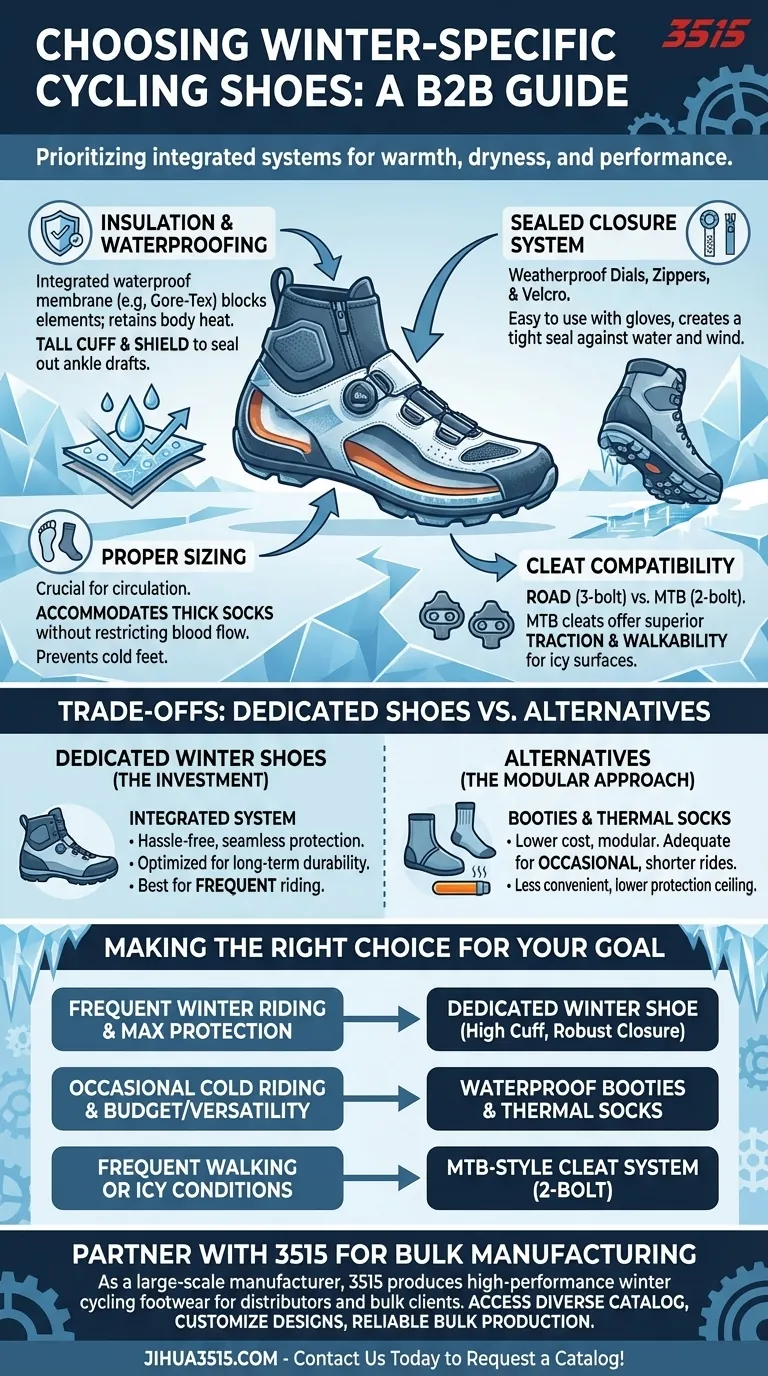
The Core Defense: Insulation and Waterproofing
A true winter cycling shoe is built around an insulated, waterproof membrane. This internal layer is the primary barrier against cold and moisture.
This is paired with a tall, integrated cuff and often a wraparound shield. This complete system works to retain body heat while physically blocking wind, rain, and snow from entering at the ankle.
The Importance of a Sealed Enclosure
Winter shoes intentionally avoid traditional laces, which create entry points for water. Instead, they use systems designed for a weatherproof seal.
Look for closures like Boa dials, weatherproof zippers, and large Velcro tabs. These are not only more resistant to the elements but are also significantly easier to adjust while wearing thick winter gloves.
Sizing is Non-Negotiable
Proper fit is more critical in winter than in any other season. A shoe that is too tight will restrict blood flow to your toes, negating the benefits of the insulation and leading to cold feet.
Always try on winter shoes with the thickest cycling socks you intend to wear. You need enough room to wiggle your toes freely to ensure proper circulation.
Cleat System: The Road vs. MTB Debate
Winter shoes are available for both three-bolt (road) and two-bolt (MTB) cleat systems. The choice has practical implications beyond the pedal interface.
Two-bolt MTB-style cleats are typically recessed into the shoe's outsole. This design provides much better traction and makes walking on wet or icy surfaces significantly easier and safer, a common scenario in winter riding.
Understanding the Trade-offs: Dedicated Shoes vs. Alternatives
The high price tag of winter-specific shoes requires a careful cost-benefit analysis. For many, the investment is justified, but viable alternatives exist for those with different needs or budgets.
The Case for Dedicated Winter Shoes
The primary benefit is integrated, hassle-free performance. You put on one piece of equipment and are protected for the entire ride.
There are no fussy layers to adjust, no vulnerable gaps between a shoe and a cover, and the materials are designed for long-term durability against harsh conditions. For the committed year-round cyclist, they are a worthwhile investment in comfort and consistency.
The Practicality of Alternatives
If you ride infrequently in the cold, a dedicated shoe may be overkill. Solutions like shoe covers (booties), thermal socks, and chemical toe warmers can provide adequate protection for shorter rides.
Taping over the ventilation holes on your summer shoes can also reduce wind chill. These methods are cost-effective but are less convenient and offer a lower ceiling of protection compared to a dedicated winter shoe.
Common Pitfalls to Avoid
Do not simply layer multiple pairs of standard socks. This is a common mistake that compresses your foot, restricts blood flow, and ultimately makes your feet colder.
Likewise, ensure your shoe covers are fully waterproof and windproof, not just water-resistant. A cheap cover that lets in wind and water is functionally useless in truly cold conditions.
Making the Right Choice for Your Goal
Your decision should be guided by your riding frequency, local climate, and budget. Use these points to determine the best path forward for your specific needs.
- If your primary focus is maximum protection for frequent winter riding: Invest in a dedicated winter shoe with a high cuff and a robust closure system like a Boa dial or weatherproof zipper.
- If your primary focus is versatility and budget: Begin with high-quality waterproof shoe covers and a pair of merino wool or thermal socks to use with your existing cycling shoes.
- If you frequently walk or encounter icy conditions: Prioritize a shoe with a 2-bolt MTB-style cleat system for superior off-bike traction and safety.
Ultimately, the right choice empowers you to ride comfortably and confidently through the harshest conditions.
Summary Table:
| Key Factor | What to Look For | Why It Matters |
|---|---|---|
| Insulation & Waterproofing | Integrated membrane (e.g., Gore-Tex) | Blocks wind, rain, and cold; retains body heat |
| Closure System | Boa dials, weatherproof zippers, Velcro tabs | Ensures a tight seal; easy to use with gloves |
| Sizing | Room for thick socks without restricting blood flow | Prevents cold feet by maintaining circulation |
| Cleat Compatibility | 2-bolt (MTB) for traction; 3-bolt (road) for performance | Affects walkability and stability on icy surfaces |
Ready to Gear Up for Winter Riding?
As a large-scale manufacturer, 3515 produces a comprehensive range of high-performance footwear for distributors, brand owners, and bulk clients. Our production capabilities encompass all types of cycling shoes and boots, including specialized winter models designed for ultimate warmth, durability, and weather resistance.
Partner with us to:
- Access a diverse catalog of winter cycling shoes built with advanced insulation and waterproofing technologies.
- Customize designs to meet your brand’s specific needs and market demands.
- Benefit from reliable bulk manufacturing and competitive pricing for your cycling footwear line.
Let’s discuss how we can support your business with quality winter cycling footwear. Contact us today to request a catalog or start a conversation!
Visual Guide
Related Products
- Premium Insulated Safety Boots and Shoes for Wholesale & Bulk Orders
- Wholesale Durable Camouflage Canvas Shoes with High-Traction Cleated Rubber Sole
- Premium Suede Sport Safety Shoes for Wholesale & Bulk Orders
- Advanced KPU Athletic Safety Shoe with Steel Toe Cap Anti-Slip Rotary Lacing System
- Lightweight Breathable Sneakers with Wet-Traction Grip for Wholesale & Private Label
People Also Ask
- What are the recommended insulation ratings for mild winter conditions? A Guide for Active & Stationary Workers
- How does insulation thickness correlate with temperature ranges? A Guide to Choosing the Right Warmth
- What insulation level is needed for severe cold and stationary work? 1200g or Higher is Essential
- What safety advantages do insulated boots offer beyond warmth? Dielectric Protection & Superior Grip
- How does fleece lining contribute to the warmth of insulated boots? Trapping Air for Superior Cold Protection