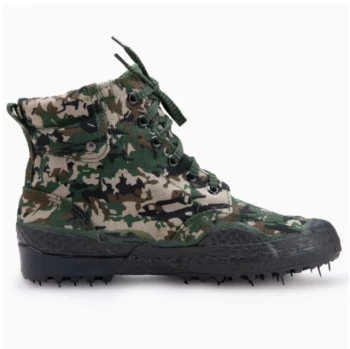
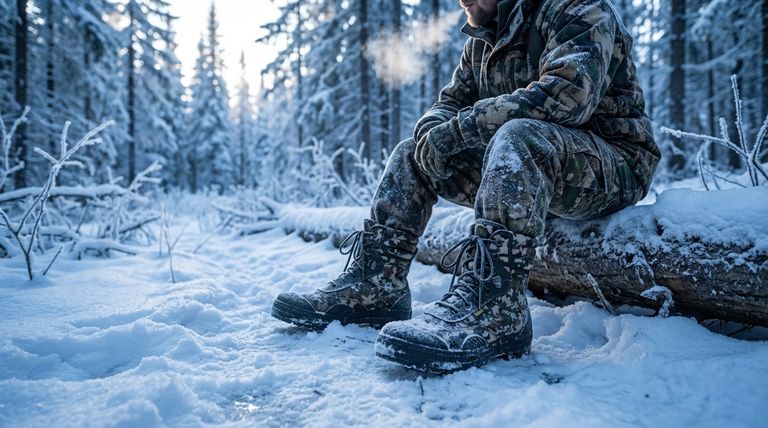
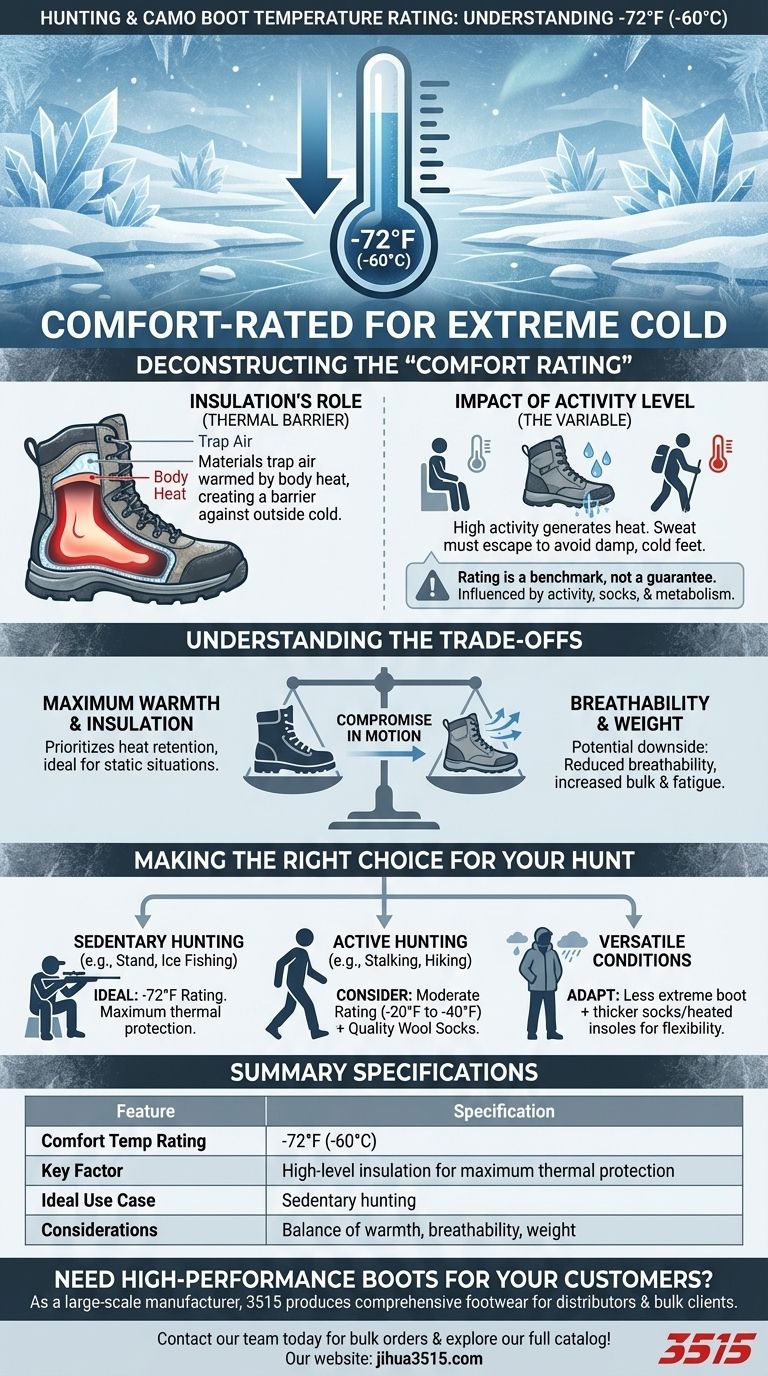
To be precise, the men's hunting and camo boots are comfort-rated to withstand temperatures as low as -72°F (-60°C). This rating indicates they are engineered for extreme cold-weather environments where maintaining warmth is critical for both comfort and safety.
The manufacturer's temperature rating is a vital performance benchmark, but it is not a guarantee of comfort. Your actual warmth will be significantly influenced by your activity level, sock system, and individual metabolism.
Deconstructing the "Comfort Rating"
A temperature rating on a boot is a powerful piece of information, but it's essential to understand the context behind the number. It's less of a simple thermometer reading and more of a complex performance indicator.
What Does "-72°F" Really Mean?
This figure is a manufacturer's guideline, often established through testing, that represents the lowest ambient temperature at which the boot is designed to keep an average person's feet warm.
Crucially, this rating typically assumes a certain level of activity. It's a benchmark for the boot's insulating capability, not a fixed promise for every possible scenario.
The Critical Role of Insulation
The primary factor behind any cold-weather rating is insulation. Materials inside the boot trap air, which is then warmed by your body heat, creating a thermal barrier against the outside cold.
A rating as low as -72°F signifies a very high level of insulation, designed to prevent heat loss even in static situations, such as sitting in a deer stand or an ice fishing shanty.
The Impact of Your Activity Level
This is the most important variable you control. A boot that keeps you warm while sitting still for hours might become excessively hot if you are actively hiking or stalking.
High activity generates significant body heat. If the boot doesn't allow moisture (sweat) to escape, your socks will get damp, and damp feet become cold feet very quickly, regardless of the boot's rating.
Understanding the Trade-offs
Choosing a boot with an extreme temperature rating involves balancing competing factors. What you gain in one area, you often compromise in another.
Extreme Warmth vs. Breathability
Boots engineered for maximum cold resistance prioritize insulation above all else. A potential downside is reduced breathability.
If your feet sweat, that moisture needs to escape. The most heavily insulated boots can sometimes trap this moisture, which can paradoxically lead to your feet getting cold.
Bulk and Weight
There is a direct correlation between the amount of insulation and the boot's overall size and weight. A -72°F boot will almost always be bulkier and heavier than one rated for milder conditions.
For hunters covering many miles on foot, this added weight can contribute to fatigue over the course of a day.
Making the Right Choice for Your Hunt
Use the temperature rating as a starting point, then filter that information through the lens of your specific hunting style.
- If your primary focus is sedentary hunting in extreme cold: A boot with this -72°F rating is an ideal choice, providing the maximum thermal protection you need when your body is not generating much heat.
- If your primary focus is active hunting in very cold conditions: This level of insulation may be excessive; consider a boot with a more moderate rating (-20°F to -40°F) and rely on a high-quality wool sock system to manage warmth and moisture.
- If you hunt in a wide variety of temperatures and conditions: A less extreme boot offers greater versatility. You can adapt to colder temperatures by using thicker socks or heated insoles, giving you more flexibility than a single-purpose, extreme-cold boot.
Ultimately, matching the boot's insulation level to your personal activity level is the true key to ensuring warm, dry feet in the field.
Summary Table:
| Feature | Specification |
|---|---|
| Comfort Temperature Rating | -72°F (-60°C) |
| Key Factor | High-level insulation for maximum thermal protection |
| Ideal Use Case | Sedentary hunting (e.g., deer stands, ice fishing) |
| Considerations | Balance of warmth, breathability, and weight |
Need High-Performance Hunting Boots for Your Customers?
As a large-scale manufacturer, 3515 produces a comprehensive range of footwear for distributors, brand owners, and bulk clients. Our production capabilities encompass all types of shoes and boots, including extreme cold-weather hunting boots engineered for reliability and comfort.
Let us help you equip your customers with the right gear for any condition. Contact our team today to discuss your bulk order needs and explore our full catalog!
Visual Guide
Related Products
- Wholesale High-Traction Camo Boots - Custom Manufacturer for Brands
- Durable Spiked Camouflage Boots Wholesale & Factory Production
- Wholesale Durable Camouflage Canvas Shoes with High-Traction Cleated Rubber Sole
- Premium Insulated Safety Boots and Shoes for Wholesale & Bulk Orders
- Premium Flame-Retardant Waterproof Safety Boots and Shoes
People Also Ask
- What are the key features of the new line of camo boots? Built for Extreme Cold & Rugged Terrain
- Are camo boots necessary for hunting success? Prioritize Performance Over Pattern
- What is the technical logic behind using closed-eye testing for tactical boots? Unlocking Peak Footwear Stability
- How does the Rank Score Test identify the primary causes of premature failure in tactical and work boots? Key Insights
- What shoes to wear for a security job? Durable, Protective Footwear for Long Shifts